 Modelling4Comfort
Henrhyd Falls - South Wales Waterfall Diorama
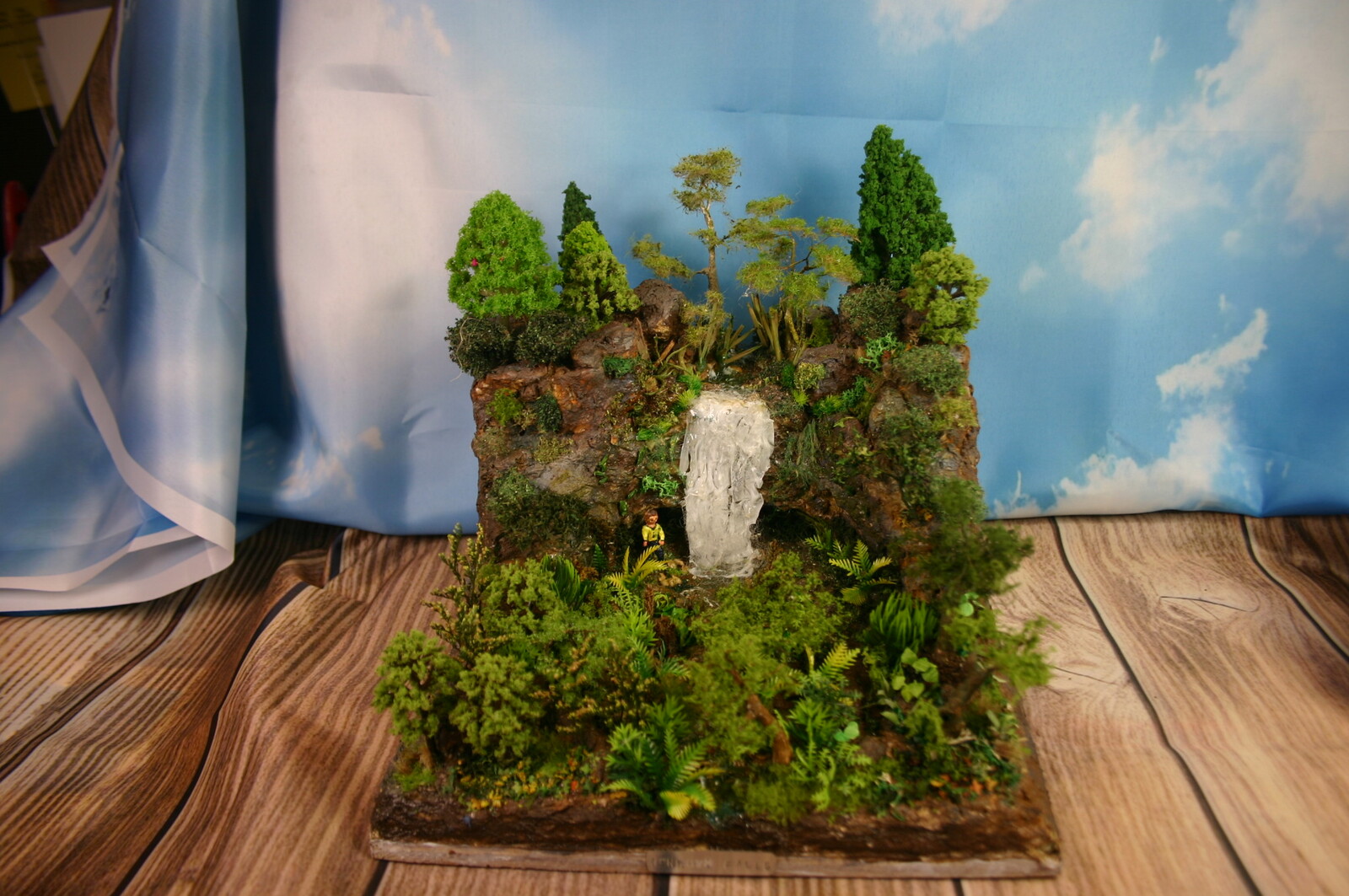
Capturing Wales’ Tallest Waterfall in Miniature
Project Overview
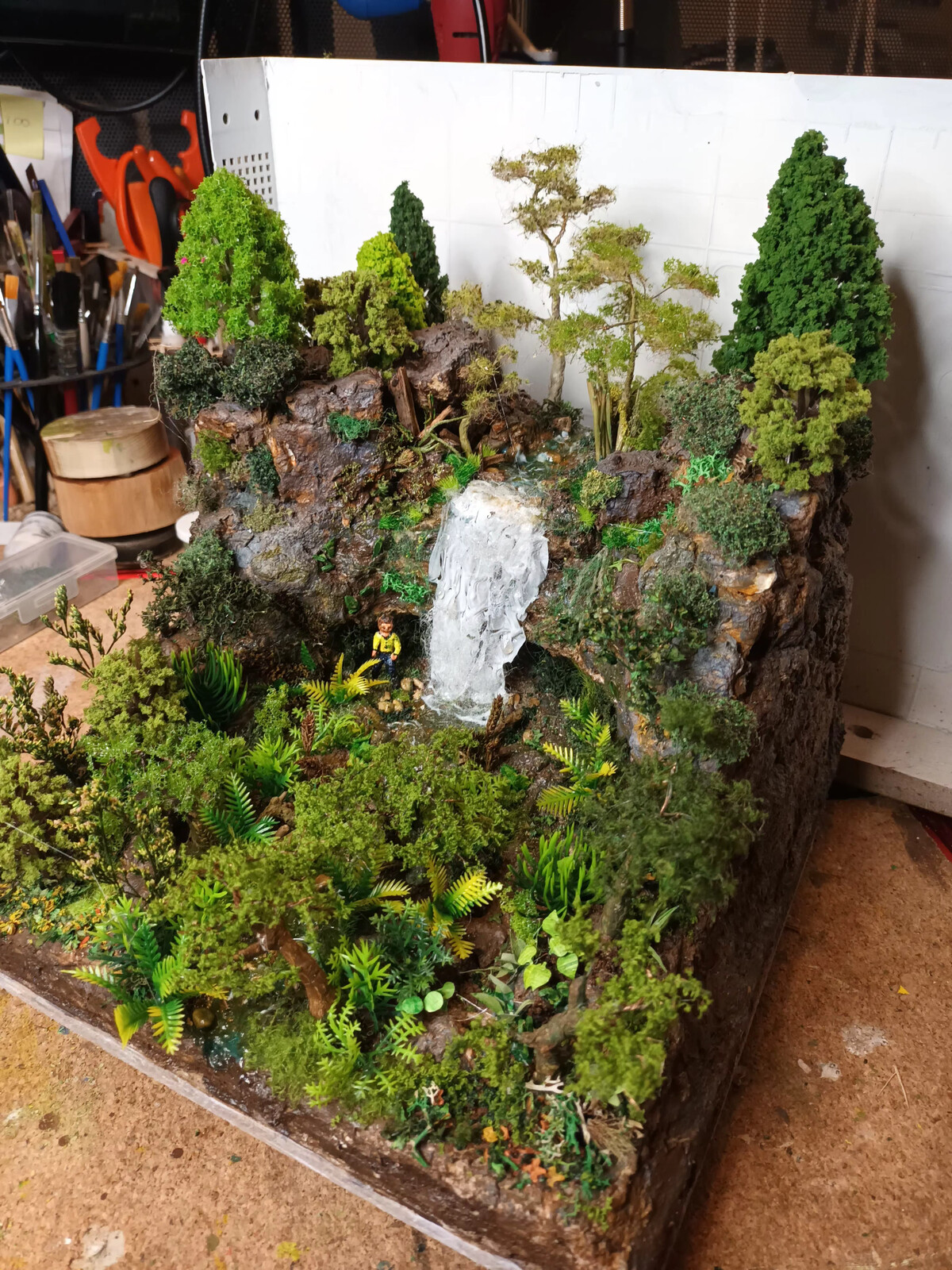
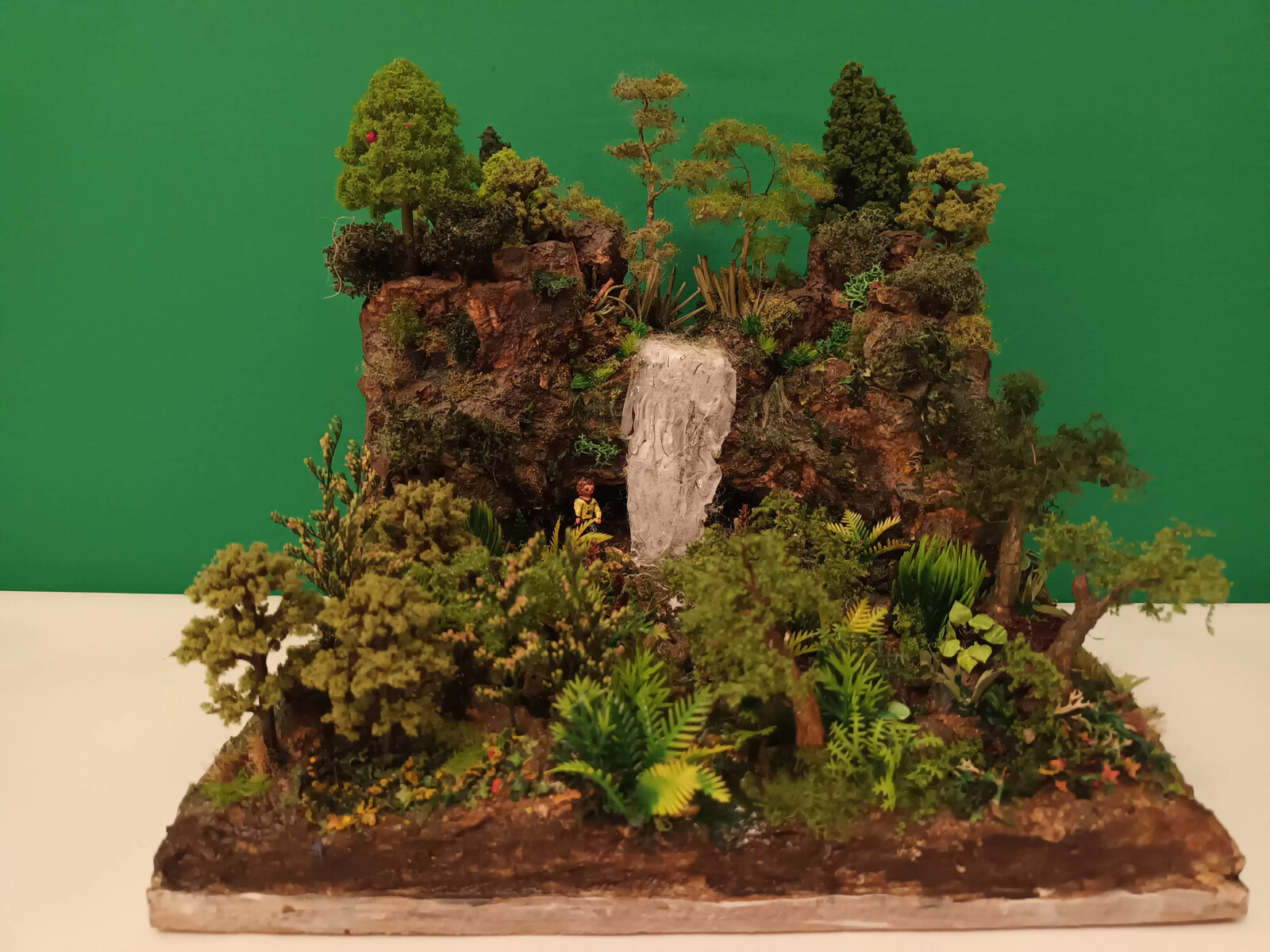
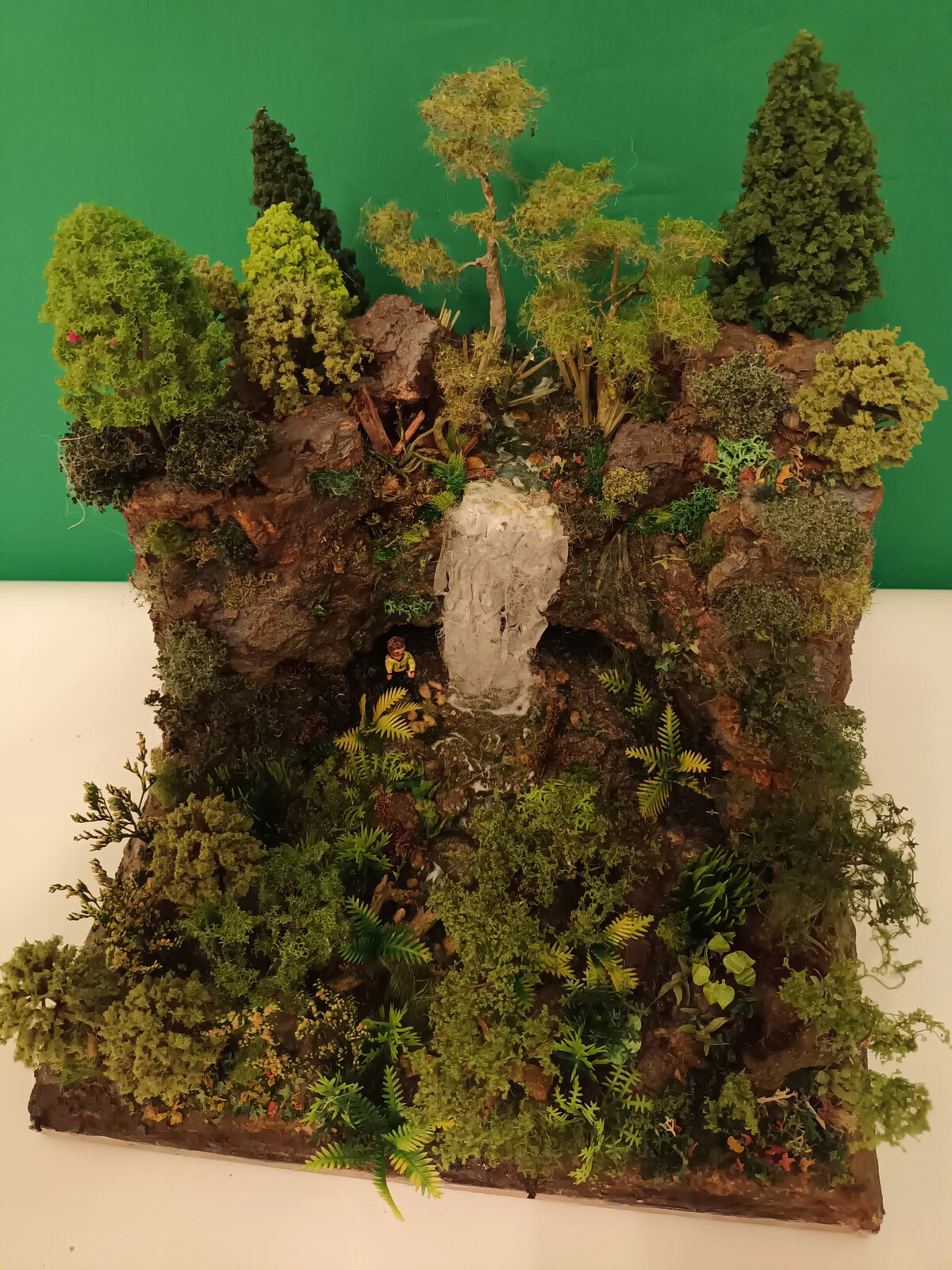
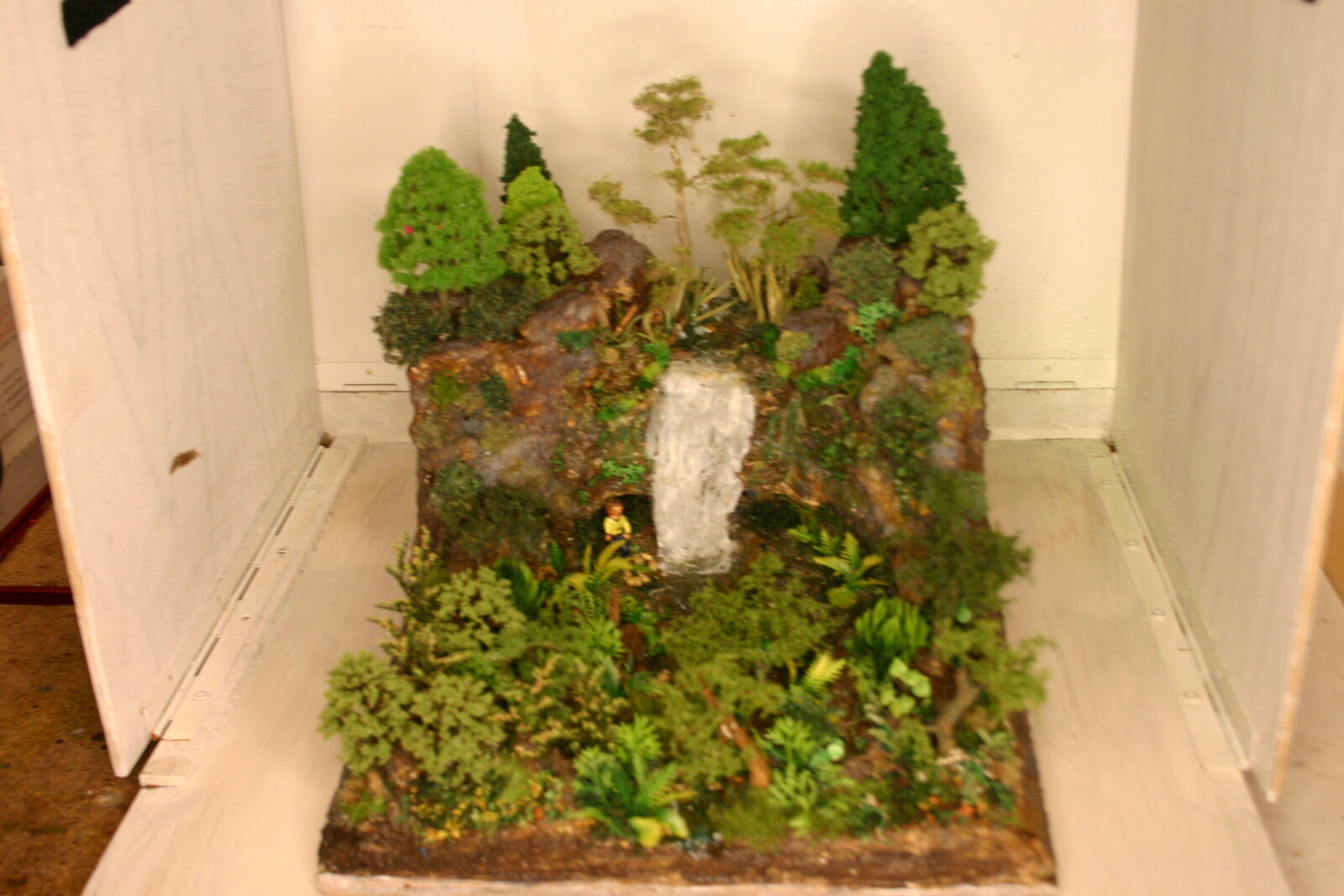
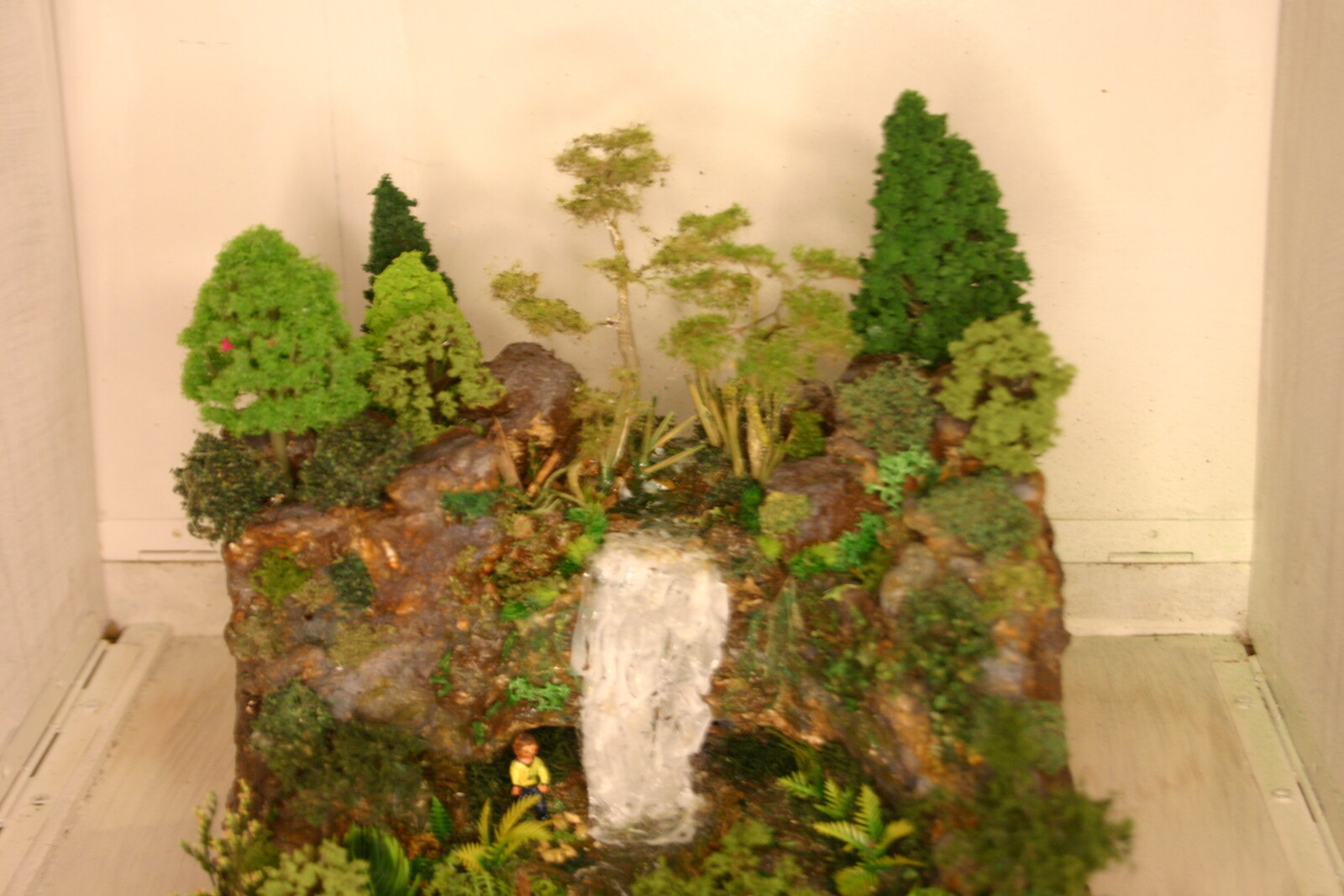
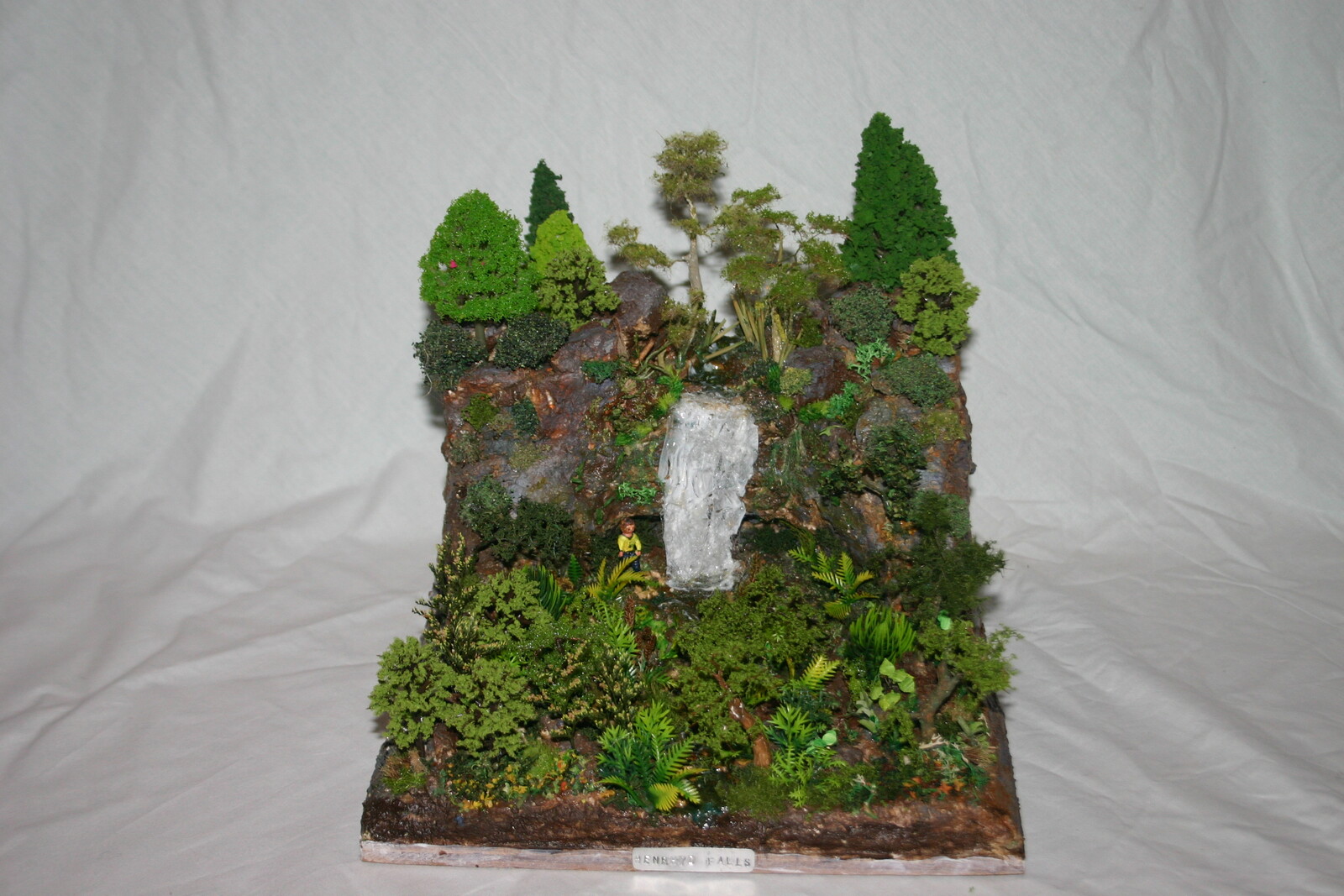
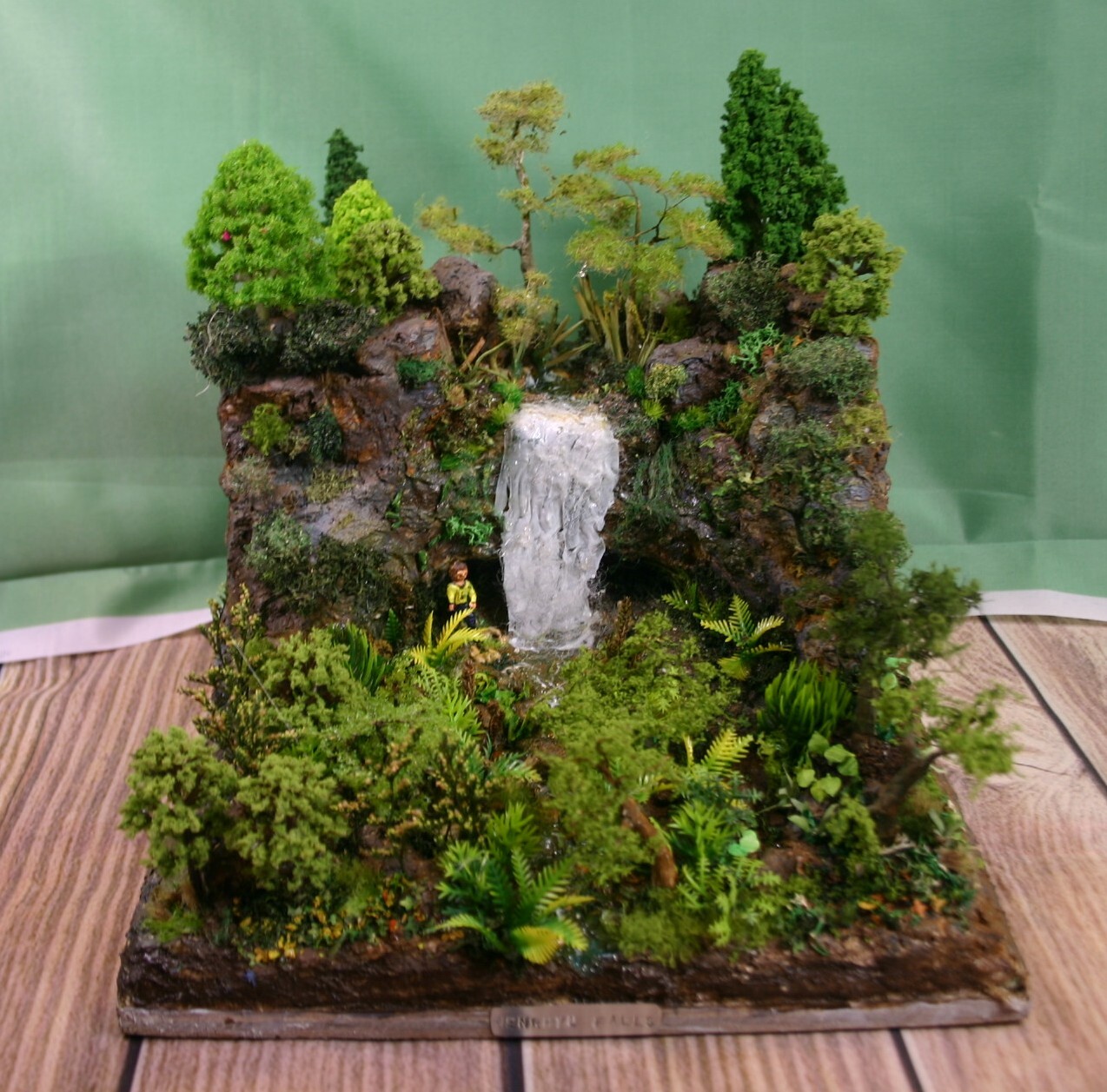
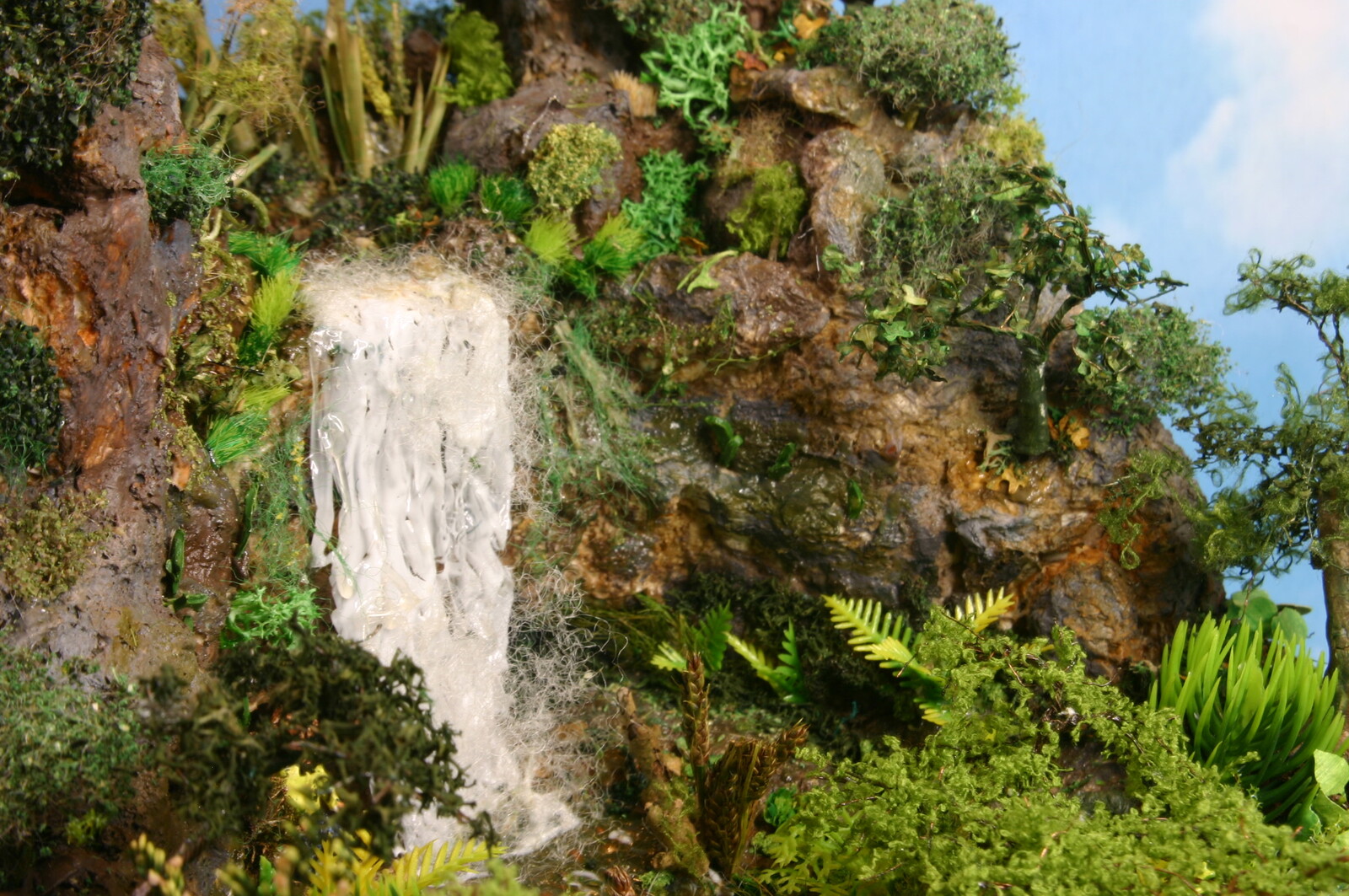
Henrhyd Falls cascades dramatically through the wooded Graig Llech Gorge in the Brecon Beacons National Park. This diorama captures the dramatic verticality of Wales’ tallest southern waterfall, the moss-covered rocky cliffs, and the ancient woodland that thrives in this temperate rainforest microclimate. The falls gained international fame as the filming location for the Batcave entrance in The Dark Knight Rises.
Key Features:
- Dramatic 27-meter waterfall represented at 1:250 scale (~11cm drop)
- Steep rocky cliff face with layered rock formations
- Hidden path winding behind the falls
- Dense Welsh woodland - sessile oak, ash, alder
- Moss and fern-covered boulders
- Cascading water effects over rocky pool
The Real Henrhyd Falls
Location: Henrhyd, Coelbren, Powys, SA10 9PH
Height: 27 meters - the tallest waterfall in South Wales
Setting: Graig Llech Gorge, Bannau Brycheiniog (Brecon Beacons) National Park
The area is characterized by ancient woodland thriving in the moist, shaded environment created by the gorge and waterfall spray - a rare temperate rainforest microclimate in the UK. Sessile oak and ash dominate the canopy, with alder and willow near the riverbanks. The forest floor is rich with mosses, liverworts, ferns, wood sorrel, wild garlic, and seasonal bluebells. Lichens and mosses grow abundantly on tree trunks and rocks, indicating exceptionally clean air and high humidity.
Diorama Design & Planning
Scale Considerations
Scale: 1:250
Base Size: 25cm × 25cm (representing approximately 62.5m × 62.5m real-world area)
Waterfall Height: ~11cm (representing 27m actual drop)
Composition Planning
- Waterfall Position: Center-top, with 16cm wide cliff section
- Stream Path: Runs diagonally from waterfall pool toward bottom-left with rocky cascades
- Pathway: Curves from mid-right to top-right, leading behind the falls
- Foliage Zones: Dense tree clusters along top and right edges for framing
- Rock Features: Large boulders concentrated on left side for elevation contrast
Reference Research
Extensive photographic research documented authentic Welsh geology, woodland characteristics, and water behavior:
- Waterfall & Water: 8 reference images studying flow patterns, spray effects, pool formation
- Landscape Views: 22 reference images capturing the gorge, cliff formations, and overall scene composition
- Rock Formations: 11 reference images of Welsh coastal and inland rock strata, geological folds, limestone formations
- Welsh Woodland: 17 reference images documenting ancient oak/ash forests, beech woodlands, and temperate rainforest characteristics
- AI Design Studies: 4 conceptual renderings exploring composition and scale representation
Build Approach
This project documentation follows an iterative build log structure, capturing the authentic journey from concept to completion.
Build Timeline
October 23, 2025 - November 2025 (approximately 3 weeks)
Construction Journey
Build Log #001: Concept, Research & Planning
Timeline: 23 October 2025
The project began with an AI concept illustration to validate scale feasibility. Research extended to collecting 62 reference images across five categories: AI design studies, waterfall flow patterns, Henrhyd Falls site photos, Welsh rock formations, and ancient woodland character. Scale planning validated that the 27m waterfall (10cm at 1:250 scale) plus surrounding terrain could work on a 25×25cm base, though it would require 18cm of vertical height. Composition planning established the cliff position at 2/3 back, river channel through the middle, and cave formation behind the falls.
Key Achievement: Validated 1:250 scale would work; collected comprehensive reference library
Build Log #002: Base Construction
Timeline: November 2025
Foundation construction began with 10mm plywood base and compressed fiber underlay. Wooden strips (3cm × 20cm × 15cm) provided reinforcement to prevent bending during drying. The breakthrough came with developing a cooked paper pulp mixture: shredded paper, flour, water, vinegar, PVA glue, and filler, thoroughly cooked to create superior bonding. Initial attempts with cold mix proved too rough. A critical setback occurred when impatience led to applying thick layers before proper drying—the entire rockface had to be dismantled and rebuilt. Success came through thin 2cm layers, oven drying at 100°C, and patience. The completed base provides a sturdy 18cm vertical structure, though next time a foam core would reduce weight.
Key Achievement: Developed successful cooked paper pulp technique; learned patience through rebuild
Build Log #003: Rock Cliff Formation & Geological Layers
Timeline: Continued through early November 2025
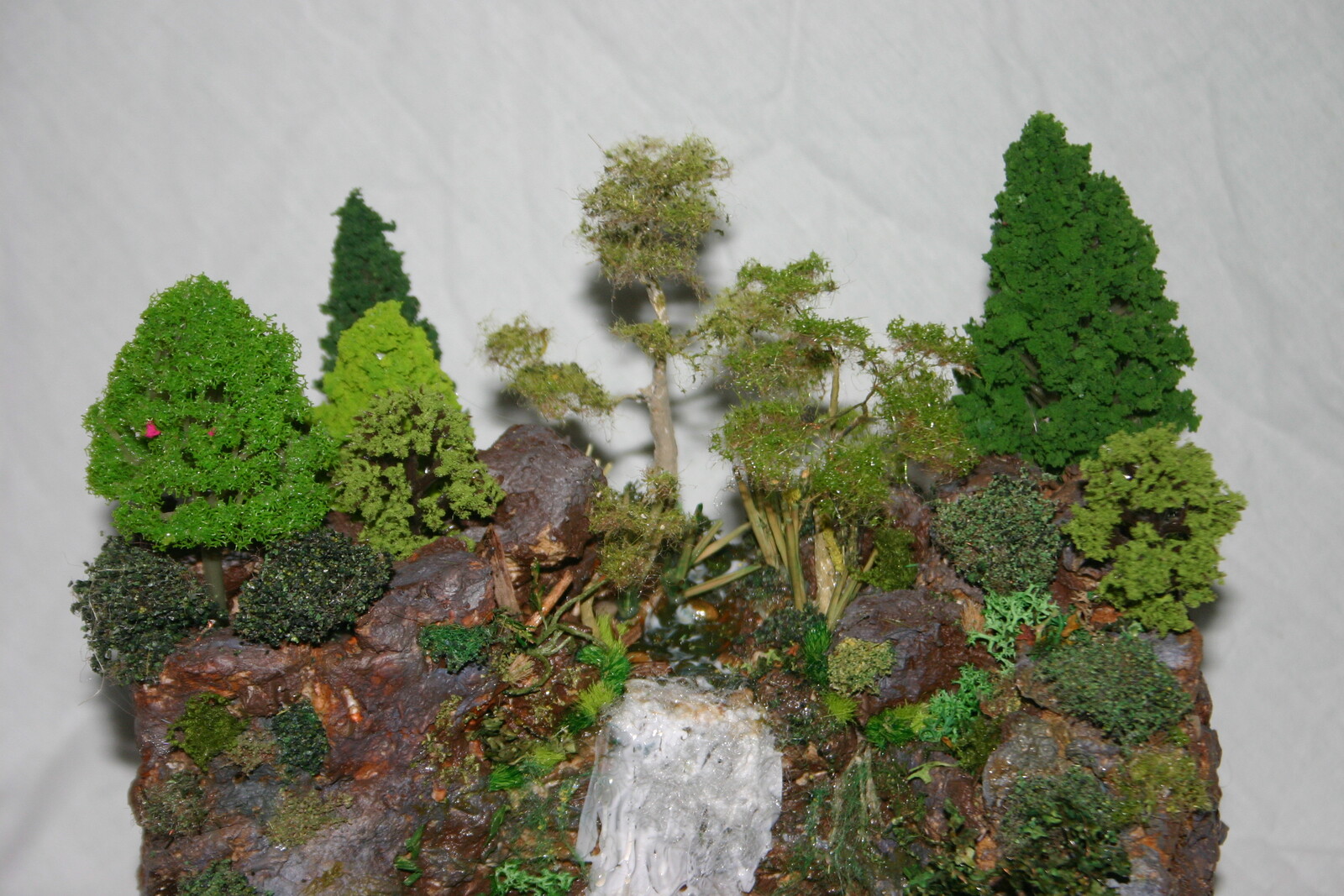
With the base complete, the demanding work of building the dramatic 18cm cliff face began. The structure required different approaches for distinct sections: three cut-away sides with inward angles, outer edges sloping into the valley with hand-sculpted boulders suggesting landslides, a canopy structure at the base forming the cave entrance behind the falls, vertical rock face with carved geological strata beside the waterfall, rocky outcrops at the cliff top where the river flows, and the pool with rocky riverbed at the base. The painting proved most challenging—synthesizing color from diverse Welsh rock reference images showing browns, greys, greens, and blues across different formations and lighting. The solution came through a blended approach: darker brown base layers for depth, then lighter browns, greenish tones for moss effects, bluish-greys for cooler stone, and various greys to match the weathered look of Welsh coastal formations. Multiple painting sessions refined the earthy brown base with grey and green overtones.
Key Achievement: Completed solid cliff structure with authentic Welsh coloring; conquered color challenge through reference-driven refinement
Build Log #004: Waterfall Construction
Timeline: 16 November 2025
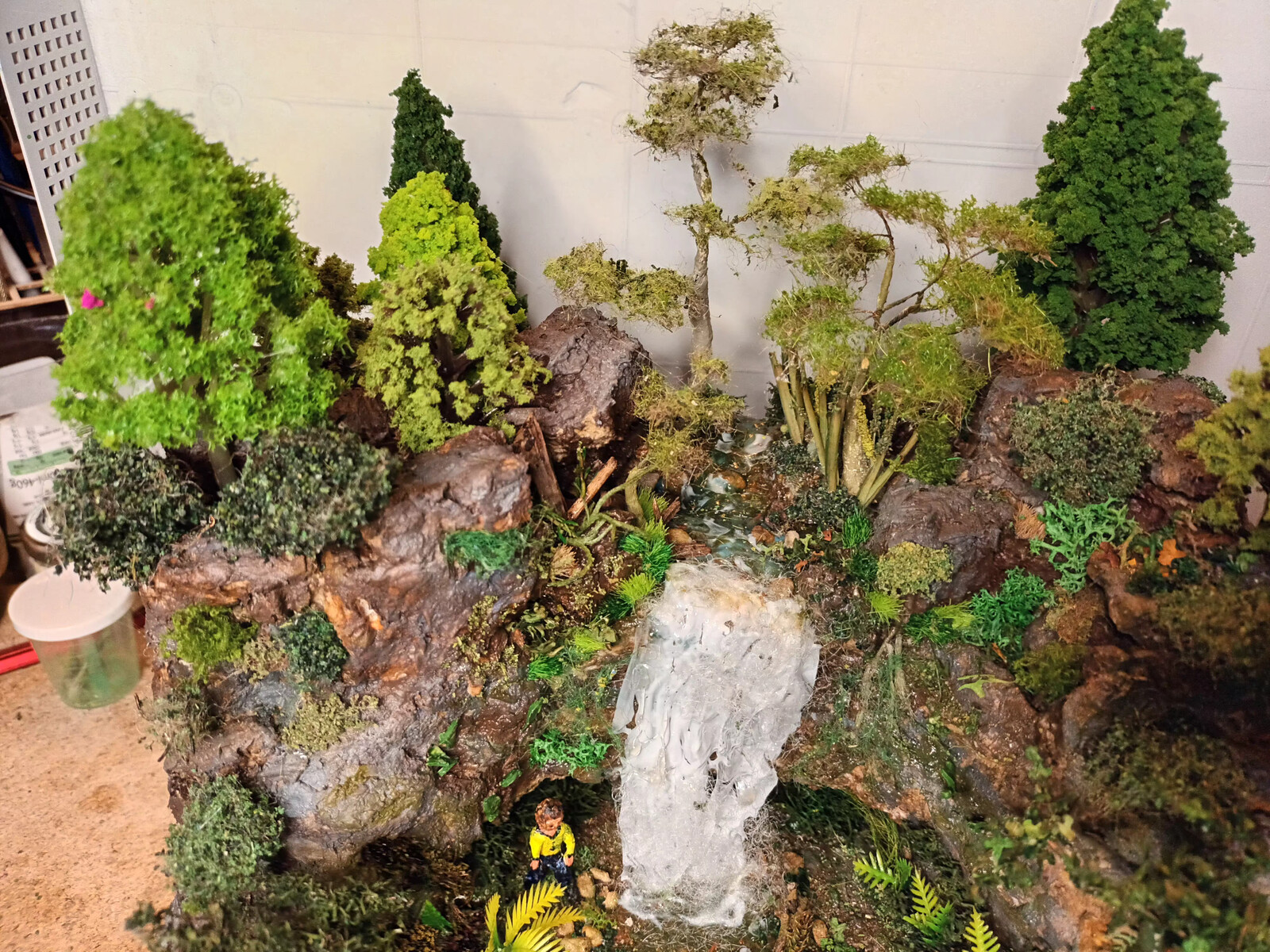
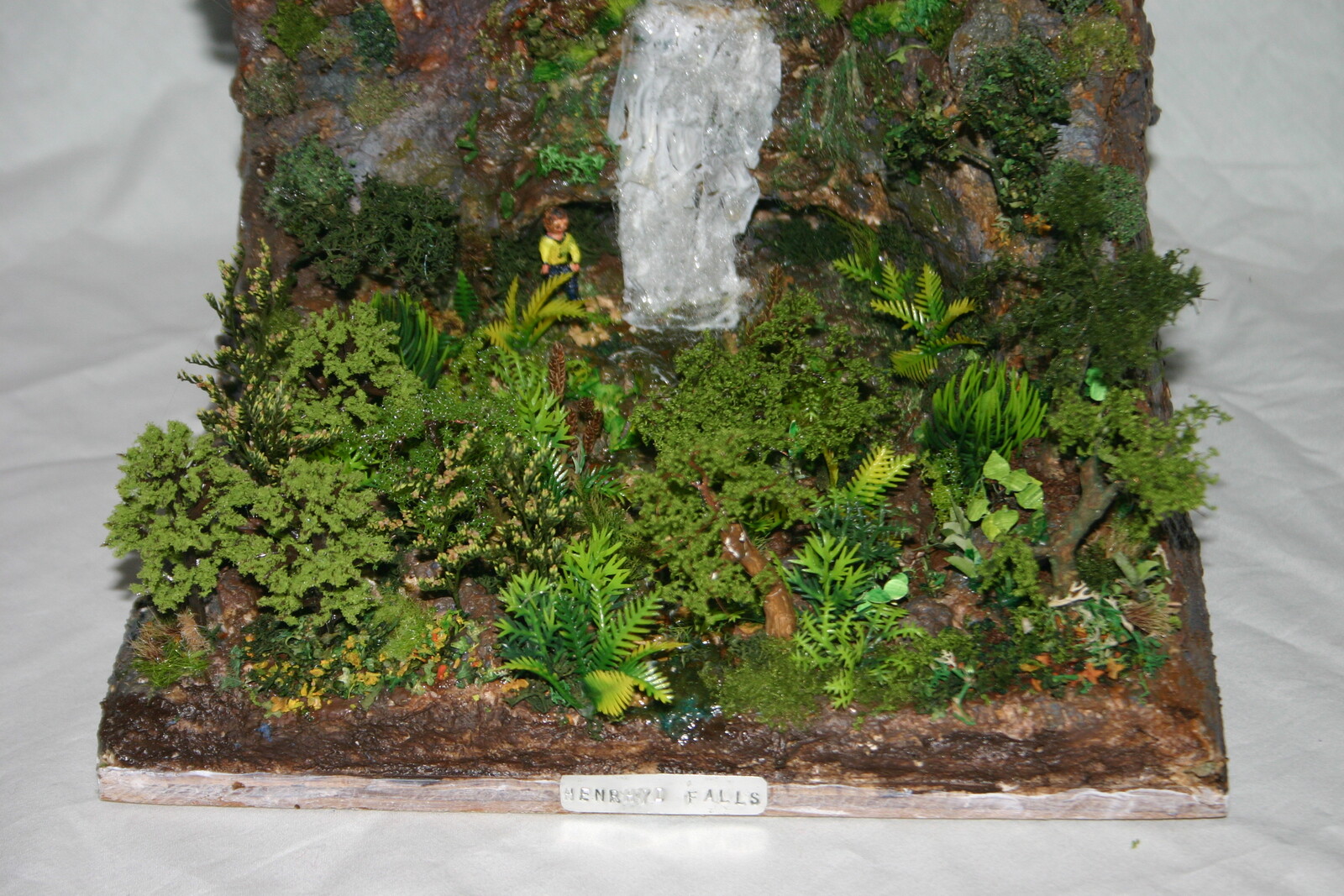
The most challenging aspect of the build: creating realistic water effects for the river, pond, and 10cm waterfall cascade. Water effect gels in blue, green, and white were applied to the pool and river beds with horticultural grit stones showing through for authenticity. Wet rock effects were achieved by thinly painting gel mixture on cliff surfaces near the falls. The waterfall itself was created by running streaks of white gel on plastic sheets, using sharp tools to create flow-line texture, then shaping the dried flexible material to fit the vertical cliff channel. Hollowfibre created mist effects at the base and sides. Critical assessment revealed this first attempt was marginally effective - the pool was too small, the waterfall gel too solid/uniform, and later vegetation would obscure much of the river. The waterfall read clearly as falling water but lacked the translucency and variation of real cascading water. A valuable learning experience about water effects requiring extensive practice and testing.
Key Achievement: Created functional waterfall feature; learned critical lessons about material testing and realistic water representation for future builds
Build Log #005: Woodland & Vegetation
Timeline: 16 November 2025
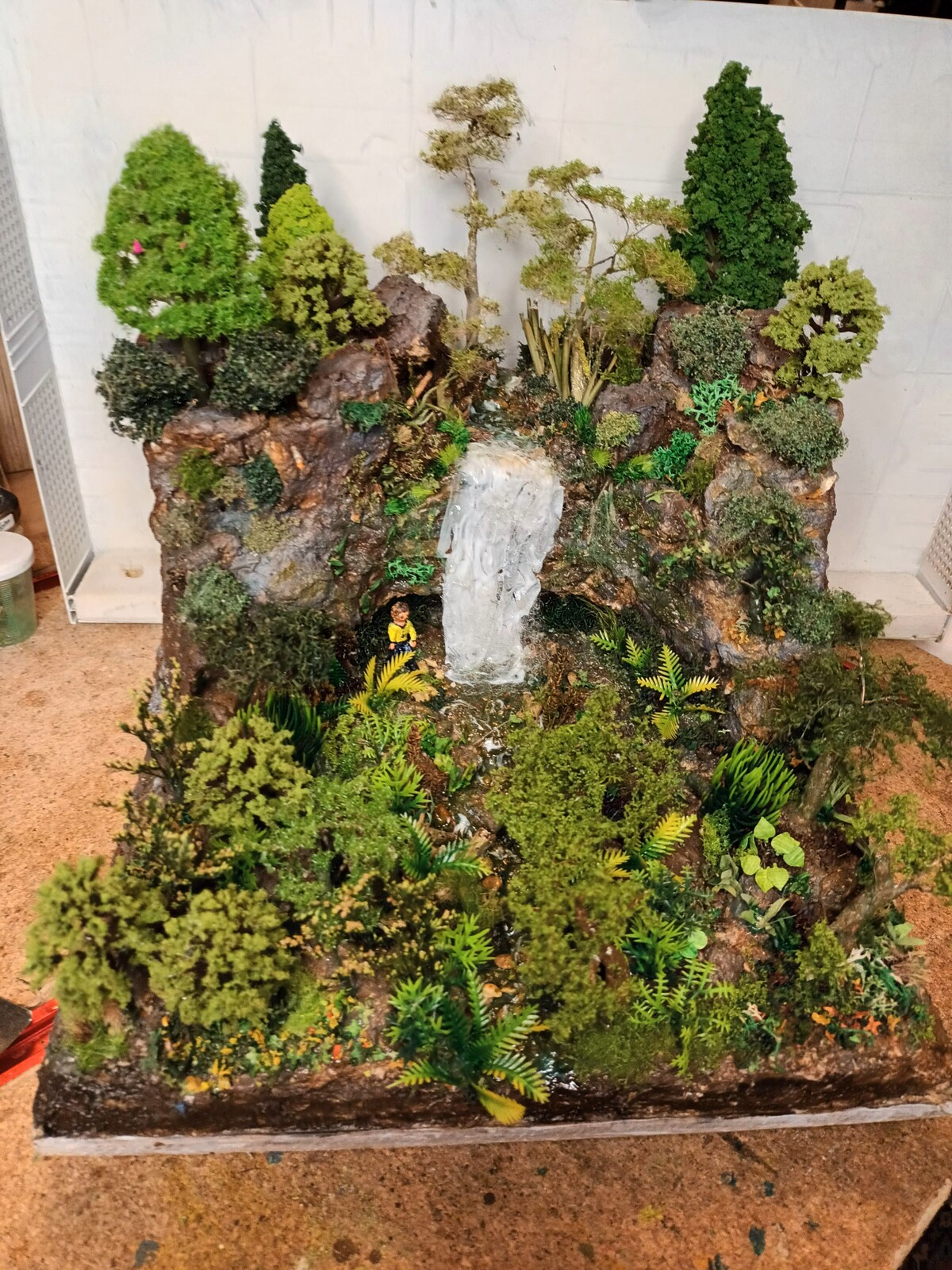
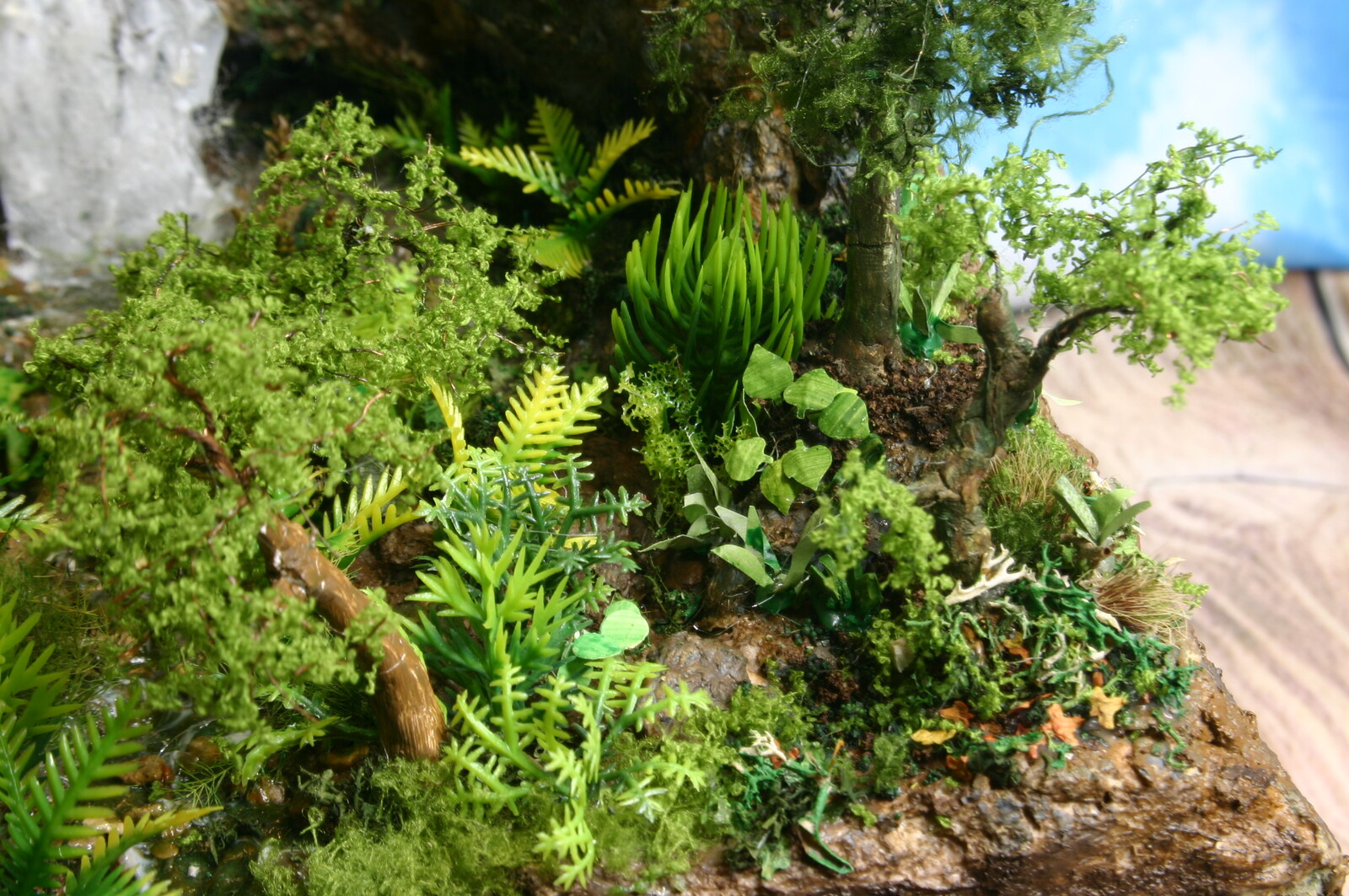
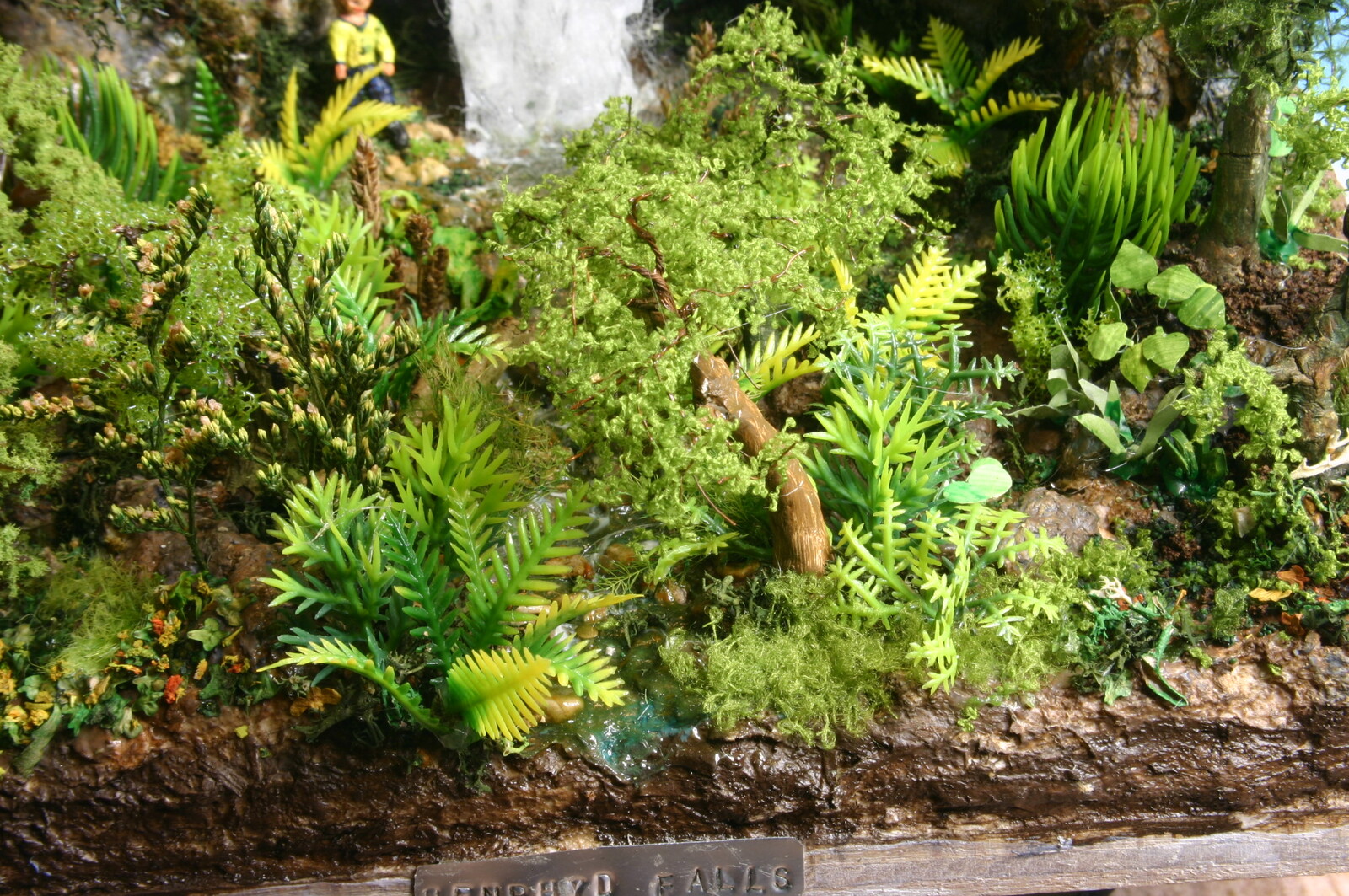
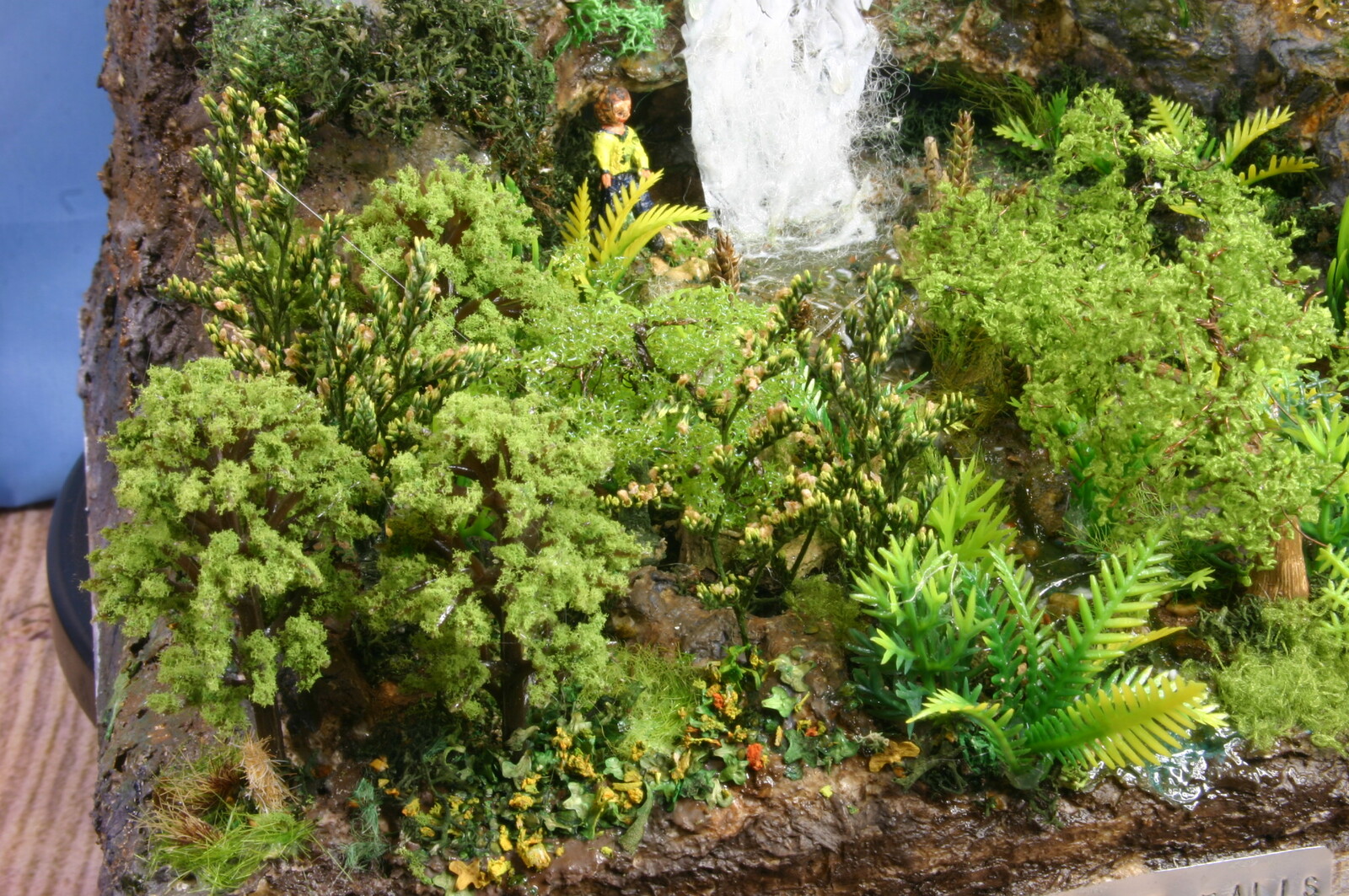
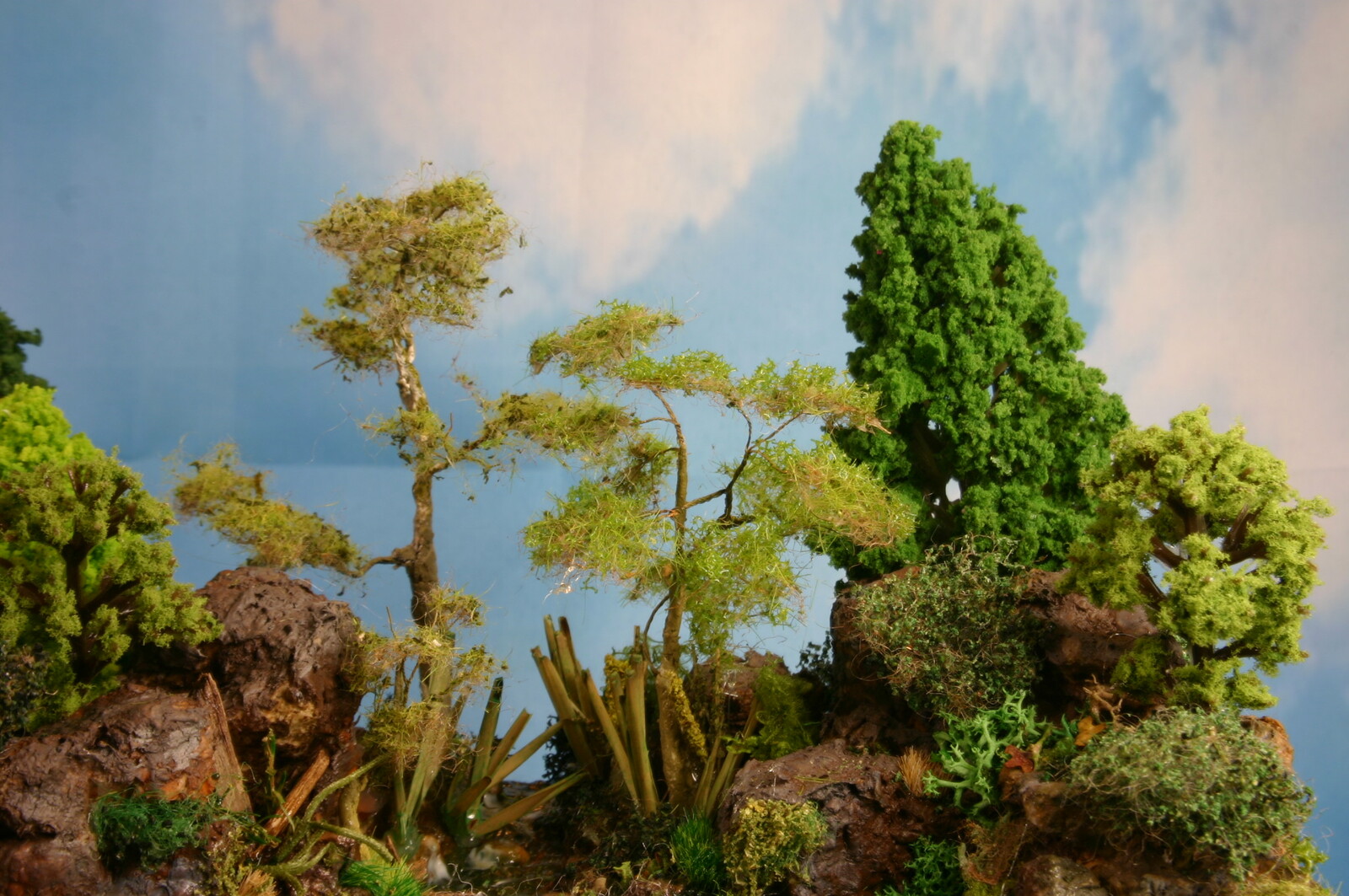
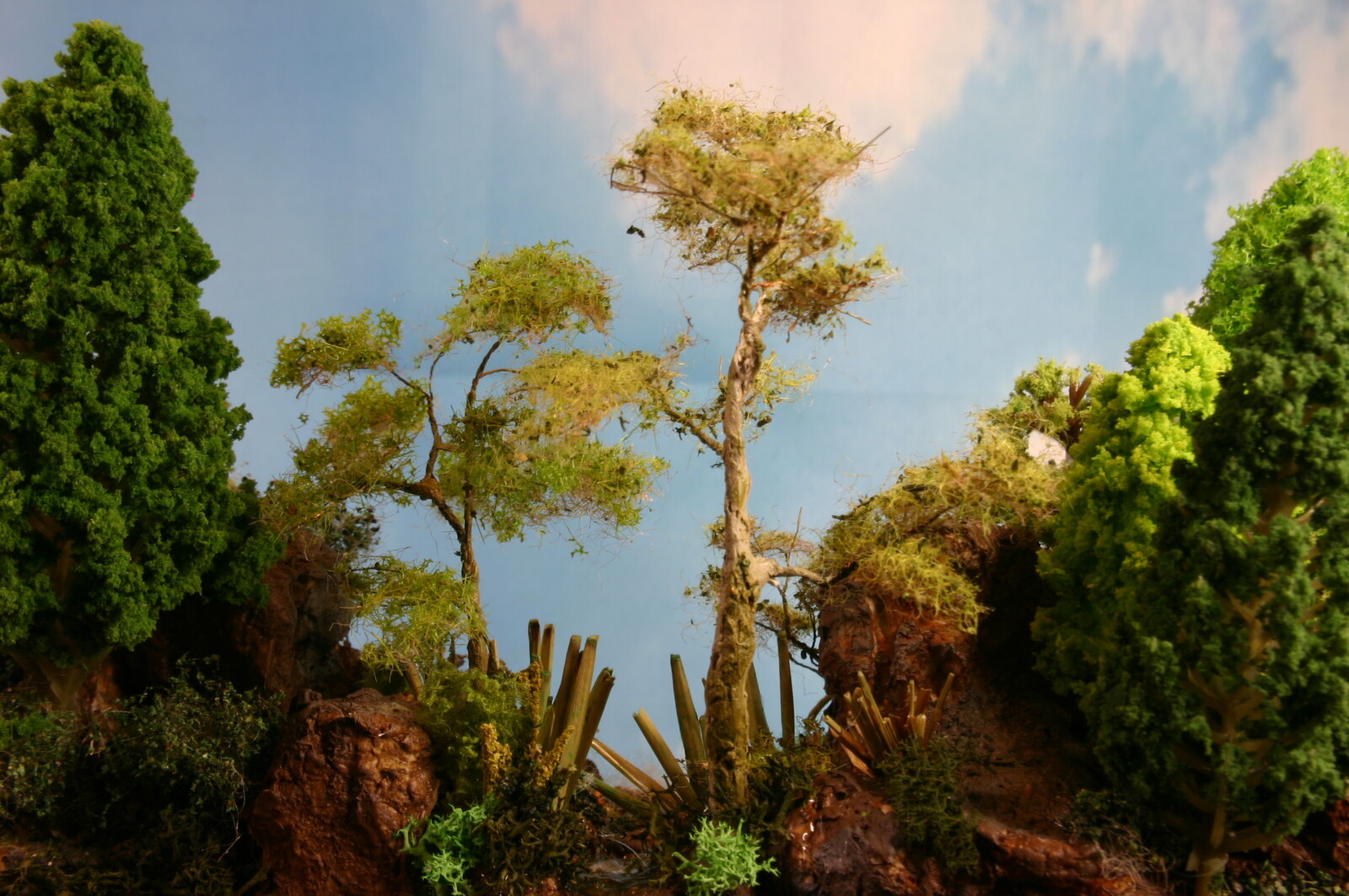
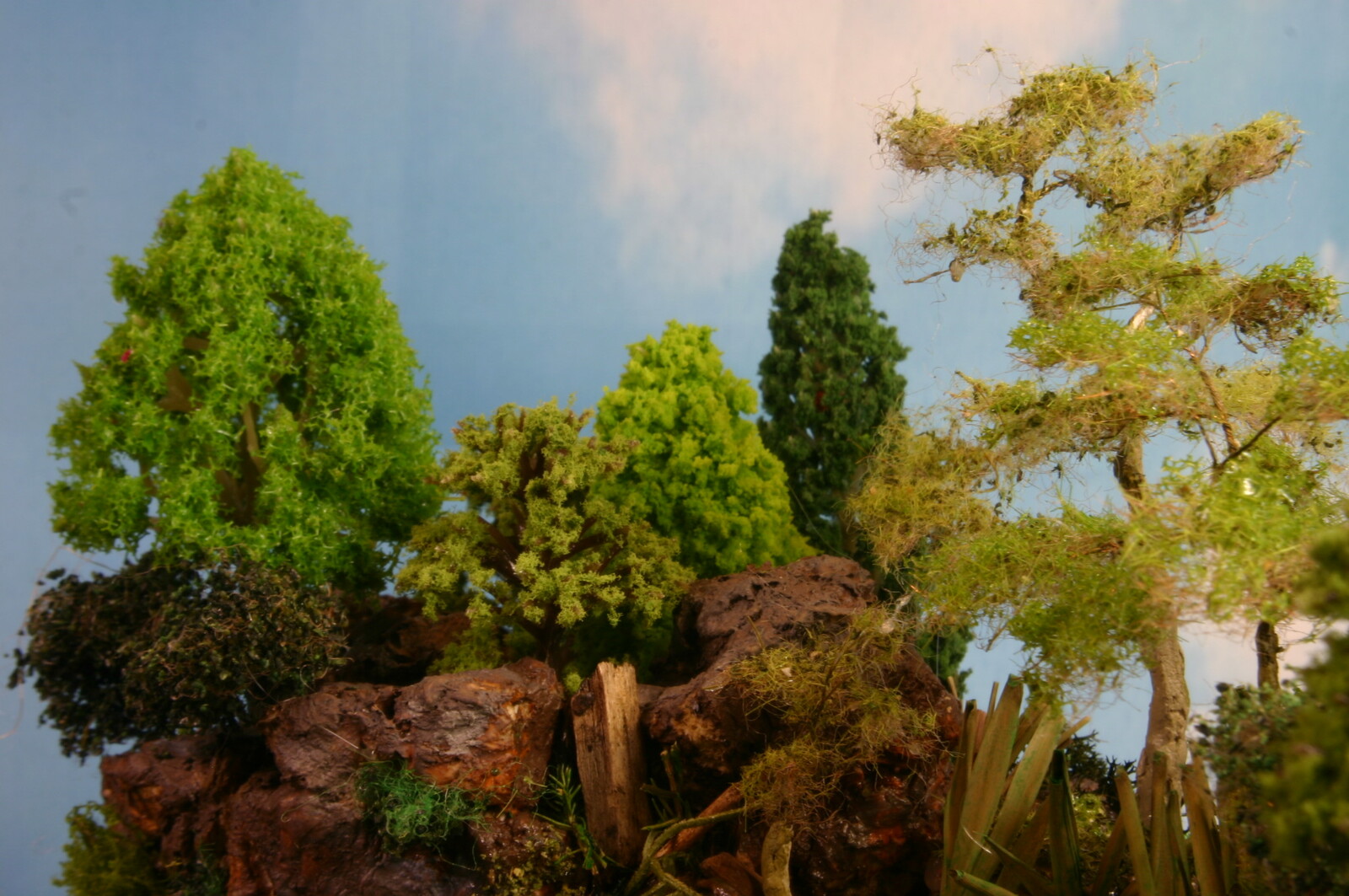
The vegetation phase transformed the rocky gorge into a living Welsh temperate rainforest. The tree collection combined two approaches: commercially available plastic trees for variety and efficiency, and handmade wire-frame trees with paste-thickened branches painted light grey, foliage created using hollowfibre mixed with colored sawdust. The final woodland comprises 9 trees representing 6 distinct forms - rather than precise species identification, the focus was on achieving diversity through varied heights (2.5cm to 10cm), foliage densities, color range (light to vibrant greens), and textures. Ground-level vegetation proved equally demanding: plastic ferns cut into smaller sections to scale down appropriately; dozens of small trees and bushes built with wire frames, foliage from colored sawdust in multiple grades and finely cut sphagnum moss in different colors; forest floor layered with dried leaves, twigs, grasses, and moss ground cover. The placement strategy followed a 60-70% coverage guideline maintaining waterfall visibility while creating lush atmosphere, with conscious foreground-midground-background layering to create depth.
Key Achievement: Created exceptional botanical diversity (15-20+ plant types rated 9-10/10 for realism); mastered hybrid commercial/handmade approach; captured authentic Welsh temperate rainforest character through moss emphasis and fern predominance
Build Log #006: Finalisation & Details
Timeline: 25 November 2025
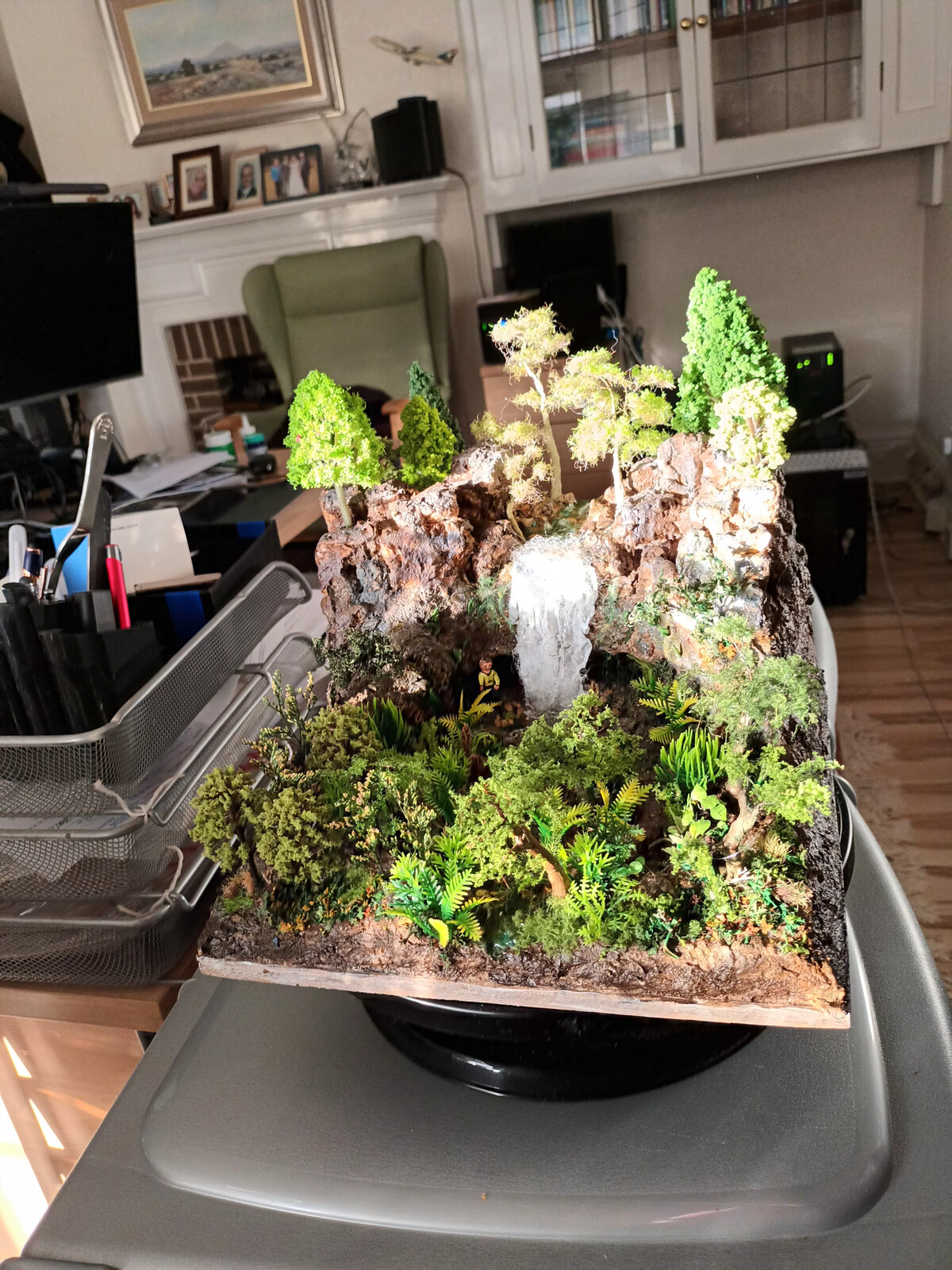
The final phase added critical human narrative elements. A 7mm scale figure was sculpted using wire armature for pose structure, air dry clay built up to create body form, and Dremel tool used after drying to refine clothing folds, define body separations, and create texture variations. Positioned to the viewer’s left of the waterfall, the figure immediately establishes the dramatic 27-meter scale and suggests accessibility. The hidden pathway was constructed following the stream on the right, winding through dense vegetation under trees toward the cave behind the falls - created with fine textured materials in earthier brown tones, approximately 4mm wide at 1:250 scale. This phase became a celebration of the completed work, exploring multiple viewing angles: the hero view showcasing waterfall drama, close-up details revealing vegetation-rock integration, figure perspective emphasizing scale, pathway views showing the journey through woodland, and varied angles discovering different focal points. The diorama successfully integrates all construction phases into a cohesive Welsh gorge atmosphere.
Key Achievement: Successfully sculpted convincing 7mm figure using wire/clay/Dremel technique; added human narrative through figure and pathway; celebrated completed diorama through multi-perspective documentation
Build Log #007: Completion Gallery
[TODO: Add narrative when Build Log 7 is completed]
Focus: Curated showcase of the finished diorama with best 19 images from multiple perspectives
Techniques & Materials
Key Construction Phases
- Planning & Research - 62 photographic references collected and analyzed with AI assistance
- Base Construction - 4mm plywood with cooked paper pulp terrain (shredded paper, flour, water, vinegar, PVA, filler)
- Rock Cliff Formation - Vertical terrain and geological layering
- Waterfall & Water Effects - Cascading water and pool creation
- Woodland Vegetation - Trees, ferns, moss application
- Final Detailing - Path, weathering, finishing touches
Build Logs
Detailed build progress documented in seven build log entries:
- Planning & Research
- Base Construction
- Rock Cliff Formation
- Waterfall Construction
- Woodland & Plants
- Finalisation & Details
- Completion & Gallery
Historical & Cultural Context
Henrhyd Falls is located on the Nant Llech river near Coelbren in the Brecon Beacons. The 27-meter drop makes it the highest waterfall in South Wales. The site is managed by the National Trust and is a popular destination for hikers exploring the Bannau Brycheiniog National Park.
The falls gained international recognition as a filming location for Christopher Nolan’s The Dark Knight Rises (2012), where the dramatic plunge and hidden ledge behind the waterfall served as the entrance to the Batcave.
The surrounding ancient woodland represents a precious temperate rainforest ecosystem - rare in the UK and supporting exceptional biodiversity due to the constant moisture from waterfall spray and the sheltered gorge environment.
Gallery
Have questions or feedback about this project? I'd love to hear from you.