 Modelling4Comfort
Architectural Research & Planning
The Spark of Inspiration
This project has an interesting and odd origination. After completing the caravaning project, thoughts were going around on what next. I did not want to tackle another commission and continued to be fascinated by scratch building. I eventually decided to trawl through all our photos to see if some inspiration would jump out.
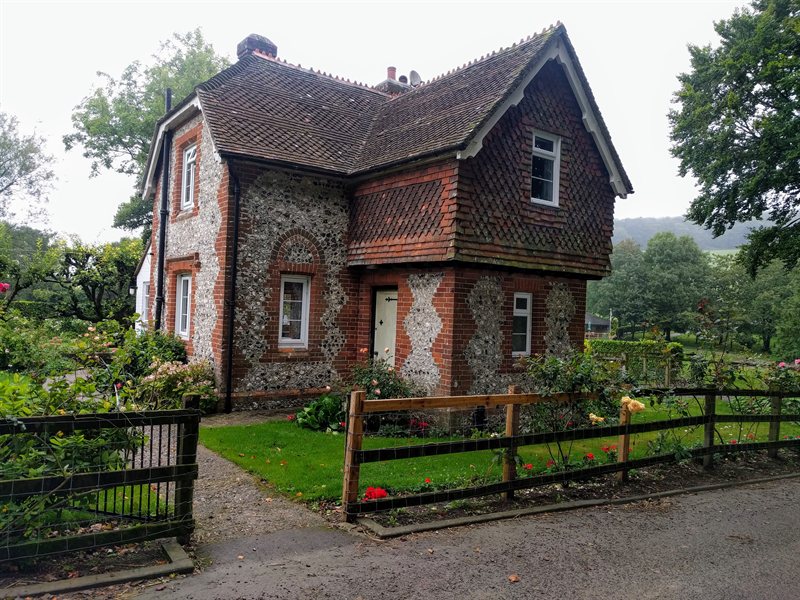
I came across this photo of a beautiful countryside house and noticed that the photo was taken by my wife when we had a countryside drive in the Meon valley, Hampshire, UK in 2017. The photo was ideal with great features.
Why This Cottage?
This cottage was an excellent representation of the building style in the region, especially the flintstone which is unique for this area. The use of flint and brick is particularly common in areas where flint is naturally abundant, creating that authentic southern English appearance.
The 2D to 3D Challenge
A key challenge was to visualise and structure a 3D model from a 2D image. I attempted to scan the 2D house into a Meshy AI to convert it. It came up with some interesting representations of the other side of the house that is not in the photo. Using the views from the different angles that Meshy came up with was very handy. However, I did not manage to go one step further to create full scaled drawings electronically, my skills just did not allow for it.
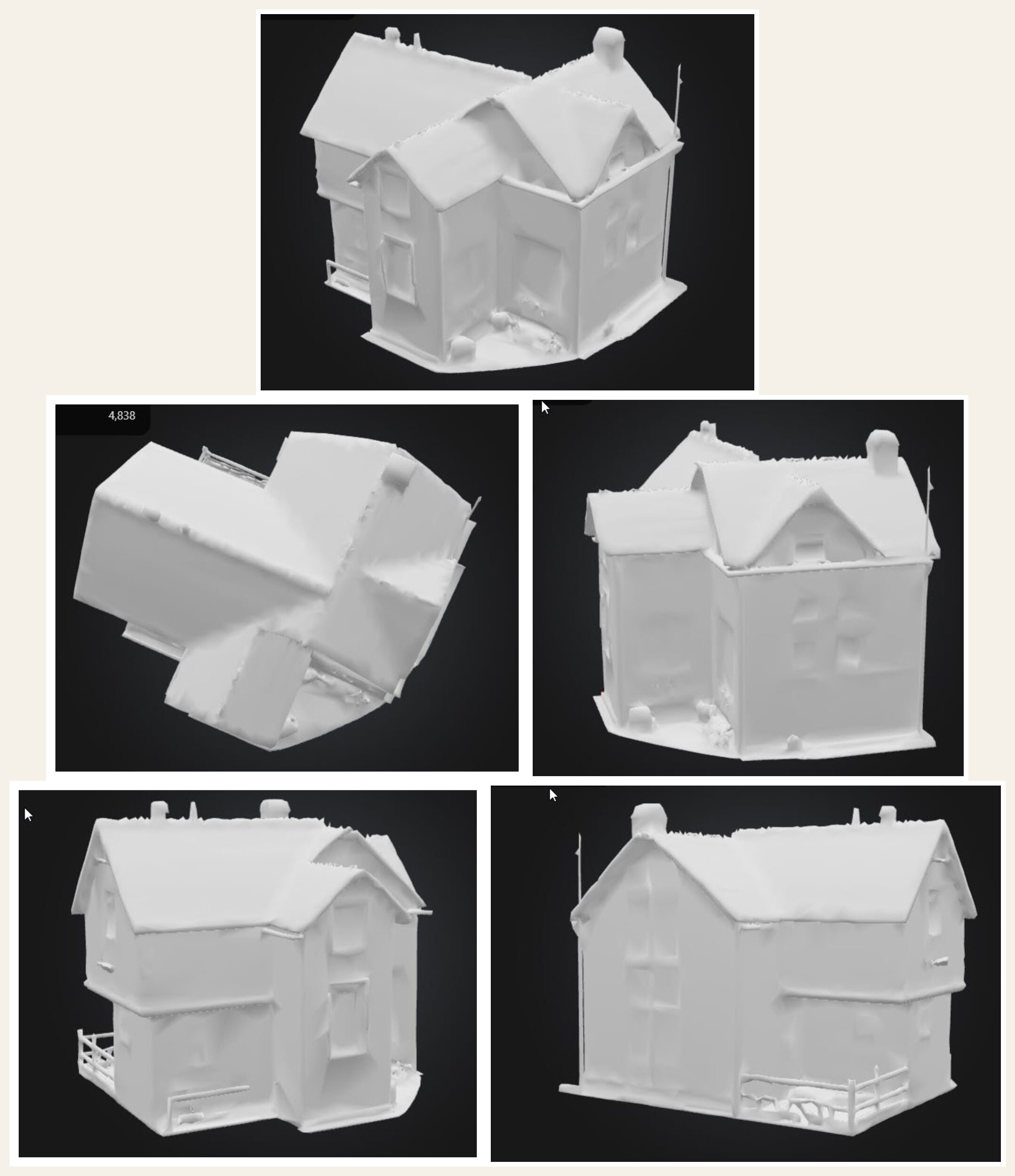
Failing to prepare drawings, I decided to make each wall and facade separately, with reference to the Meshy images, constantly fitting them together to confirm the measurements and design.
Architectural Research
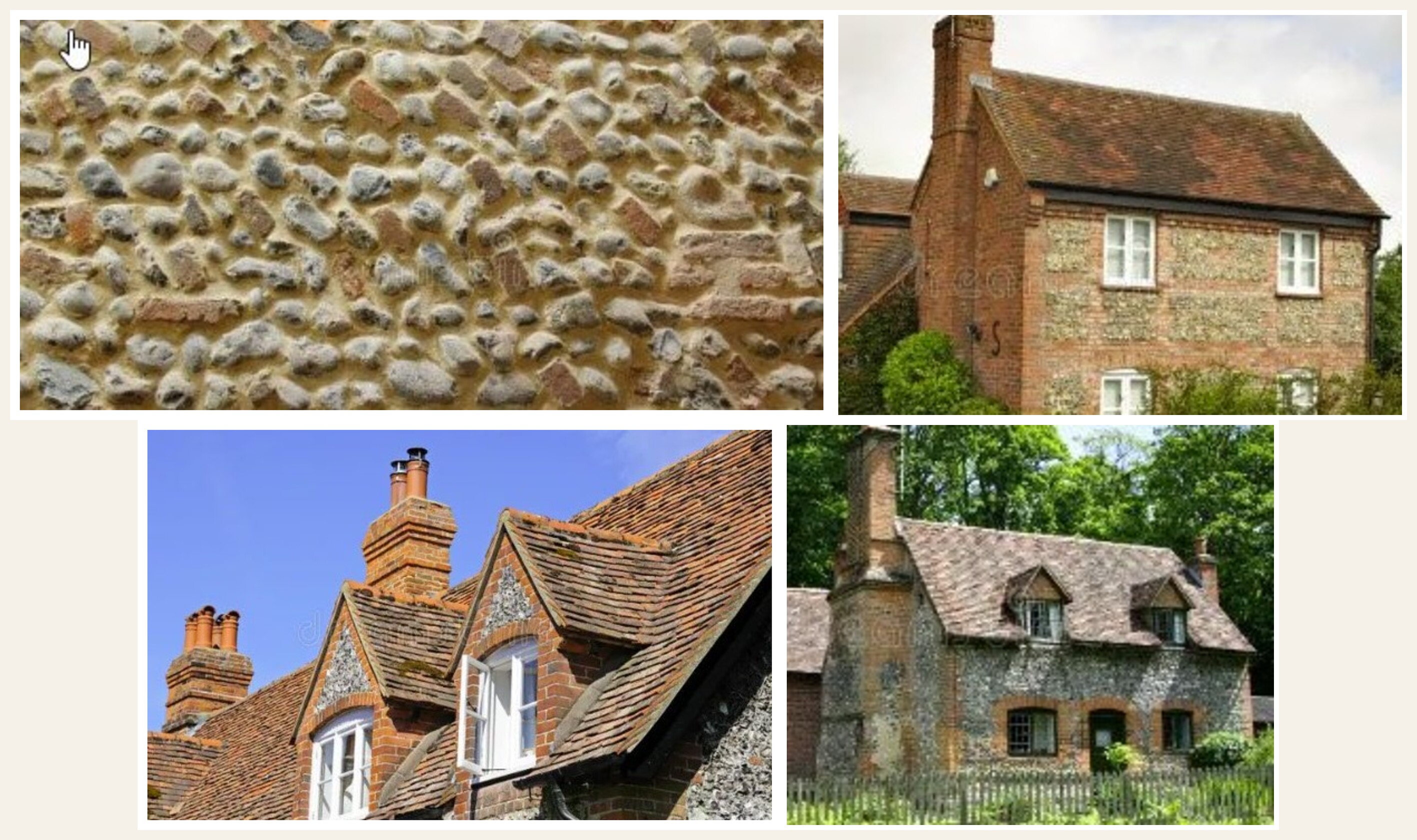
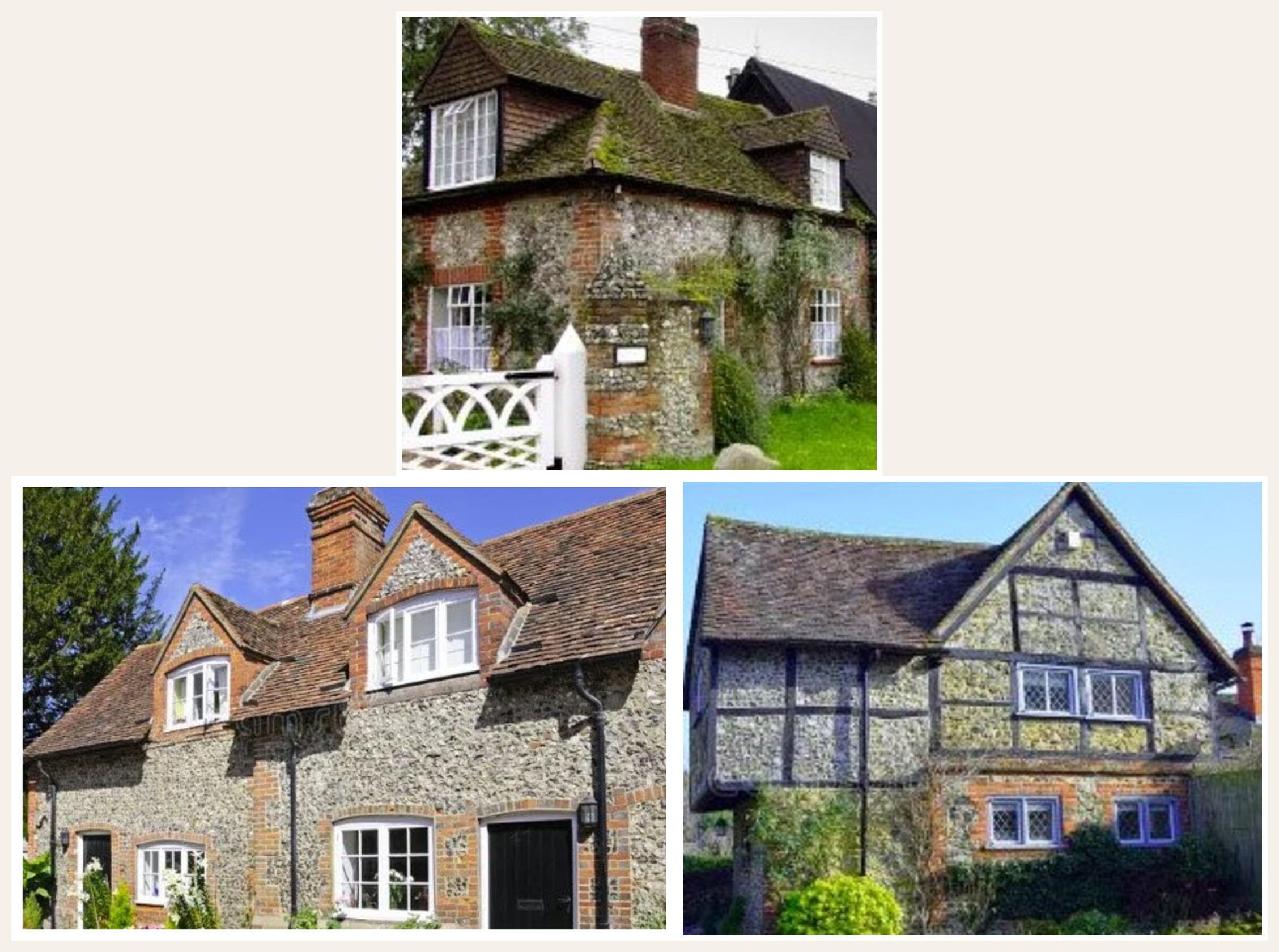
The house design is based on a traditional English cottage, characterized by distinctive architectural features typical of southern English countryside:
- Steeply pitched gable roof
- Brick and flint walls (characteristic of Hampshire, Sussex, and Kent)
- Decorative brickwork around windows and doors
- Cottage garden with flowers and wooden fencing
Reference sources:
Field Research
I did drive by of many houses as we live in the south of England. These drive by visits were done over time to get a better understanding of the colour and different styles of flint and brick.
Scale Selection
Selecting a scale was largely influenced by the original photo and the remaining of the scale was reduced from it. The actual base is 20cm × 25cm and the house is 13cm long and 12cm high and 10cm. Scale is approx 1:100 with 1cm approx 1m.
Looking back, the different parts on the board is more about allowing the size of items to visually fit together, rather than exact scaled items. The figures used in the model are plastic figures and in real terms they may not fit through the doors of the houses, but it is not distracting as such.
First-Time Challenges Ahead
Many elements of this particular task ahead would be firsts for me:
- Designing something in 3D from a 2D picture
- The asphalt road
- The fence with wired mesh
- Gravel garden paths
- Brick and flint stone walls
- Tile cladding against the walls
- Multi faceted roof structure
- Ornate gables on the roof and rounded tiled ridges
- Rose bush
- Lawn around the house
- Framed windows
I also wanted to achieve improvements in the accuracy of different types of plants and improve the main tree.
Finally, I wanted to change the angle of the piece on the base and use cutout (not using an entire fenced property).
Have questions or feedback about this project? I'd love to hear from you.