 Modelling4Comfort
Henrhyd Falls - Build Log #001: Concept, Research & Base Construction
Initial Inspiration
It lies somewhere between: next feature challenge, materials I want to put to use, inspirational images, something or somewhere crying out for a celebration. In this case of the Henrhyd falls I was looking forward to model something with water, a natural and realistic scene from places that is well known, a new challenge. What about a waterfall, and there are many of them in Wales. I have been to some of them and Wales has stunning natural environments. A quick search lead to the discovery of Henrhyd falls, not too far from where my son lives.
I asked AI to show me how these falls can be converted to a scratch build, and it came up with this illustration.
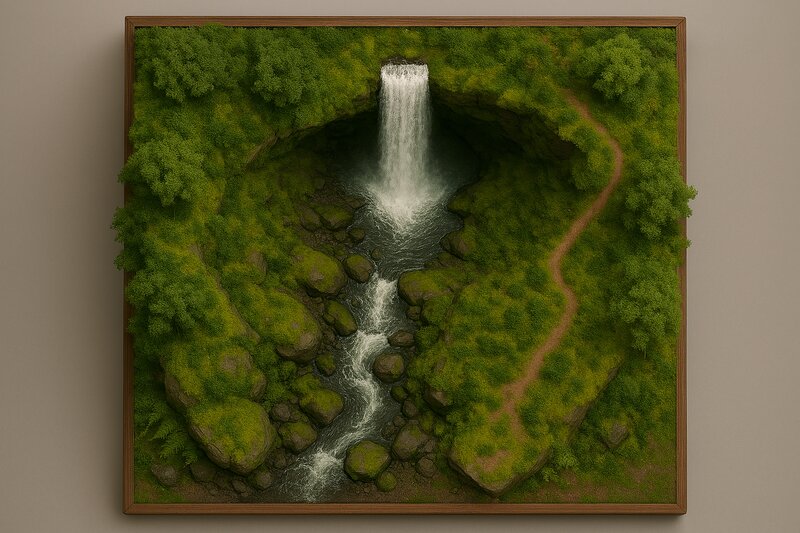 AI-generated concept illustration showing how Henrhyd Falls could be represented at 1:250 scale on a 25×25cm base. This tranquil waterfall oasis visualization helped me see the potential for a captivating miniature forest scene with cascading waterfall.
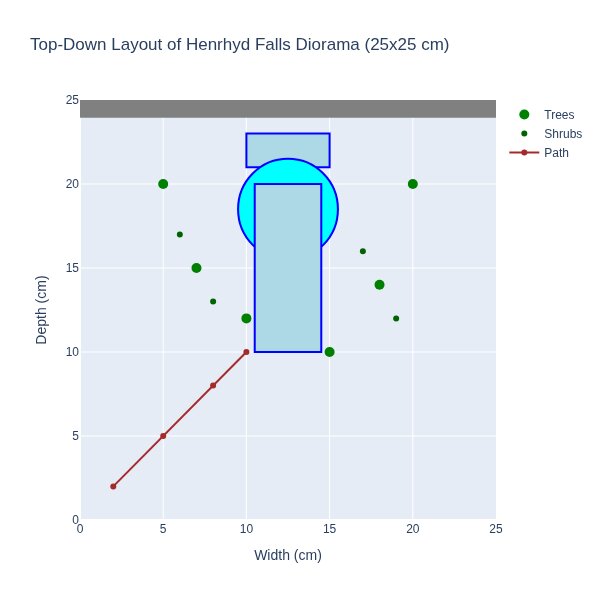 Top-down layout diagram of the 25×25cm base showing the spatial arrangement of the cliff, waterfall, pool, and surrounding terrain. This scale planning document was critical for validating that the vertical 27m drop could work on the compact base.
I left the idea to chew a bit on it. Maybe another inspiration comes my way.
Why Henrhyd Falls specifically?
- Waterfall and river combination
- Rich nature scene with lots of different plants
- Interesting rock formations
- Close to where my son lives in Wales
Personal Connection: I love nature, and waterfalls have a wonderful fascination and serenity.
Technical Challenges to Explore:
- First waterfall project - scratch building water is a key challenge
- Cliffs and rock formations remains ongoing challenge
- Lots of different color nuances in Welsh geology
Work Completed
Timeline: 23 October 2025 - 2 November 2025
- Initial Inspiration: AI concept validation and scale feasibility
- Location Research: Henrhyd Falls (27m drop, tallest in South Wales)
- Photographic References: Collected 62 reference images organized by category
- Scale Planning: Established 1:250 scale on 25cm × 25cm base (10cm waterfall height)
- Composition Planning: Top-down diagram with elevation calculations
- Base Construction: 4mm plywood with paper pulp terrain (18cm total vertical height)
- Critical Learning: Cooked paper pulp mixture technique, thin layer application
Photo Gallery
Research Phase
Reference Image Gathering:
Research started this time by asking AI for an illustrative picture. This was largely for assessing if the scale of the waterfalls will fit and work on the designated 25 × 25 cm board. Having confirmed that it is suitable, the research extended into collecting every image of the falls I could find. I did ask my son if they have been there, and if he has any pictures - unfortunately none came to light. I would have loved to visit the site, but the opportunity was not there during the build - I will visit it at some point.
In gathering the images it was necessary to get perspectives of the falls from a distance, as well as close up to see more detail. This was particularly difficult as most pictures focussed on something specific, but few were landscape related. The pictures of the rock formations were very varied in quality and focus, and this lead to a wider search of Welsh rock formations and river scenery. I wanted to have some focussed plants and trees, and had to do wider research of local plants and trees as the general pictures did not give any prominence to the general habitat around the falls.
Resources Used:
- Website for the falls
- YouTube for learning about making waterfalls and other waterfall builds
- Tourist and Welsh natural resources and tourist sites
- Social media for others that visited the falls
- Other diorama artists on their sites for general input
Total: 62 reference images collected and analyzed
Waterfall Reference Images
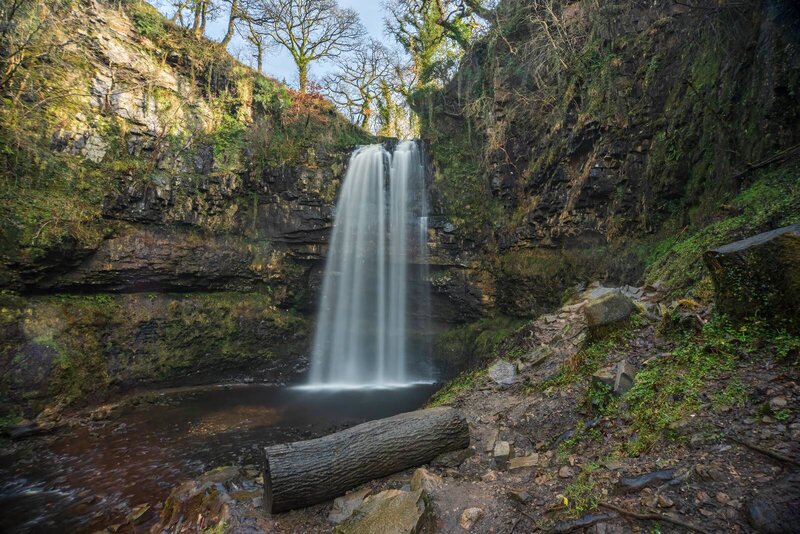 Reference waterfall in lush forest setting. The serene beauty of this cascading waterfall in a secluded forest helped me understand the water flow patterns and the intimate relationship between water and surrounding vegetation.
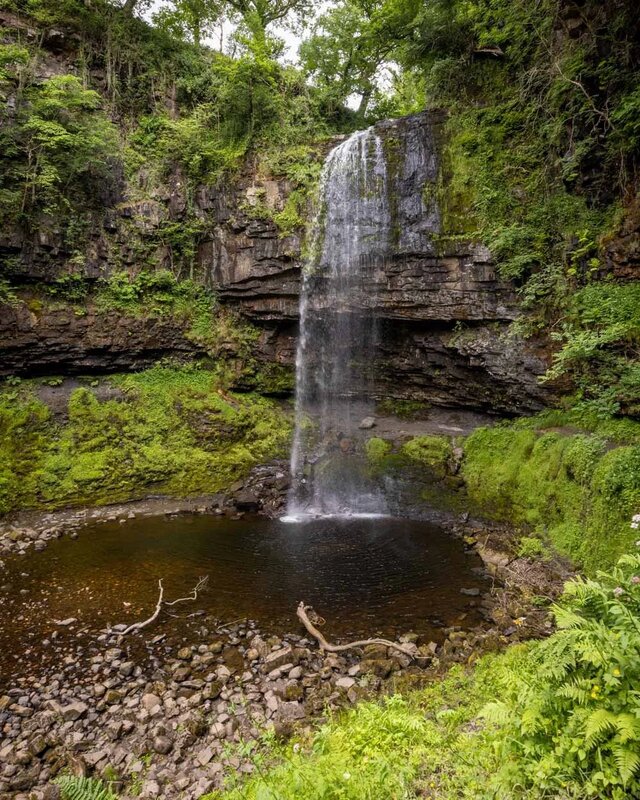 Waterfall oasis showing vertical drop through verdant forest. This reference image was particularly useful for understanding how the white water cascade contrasts against dark rock and green foliage.
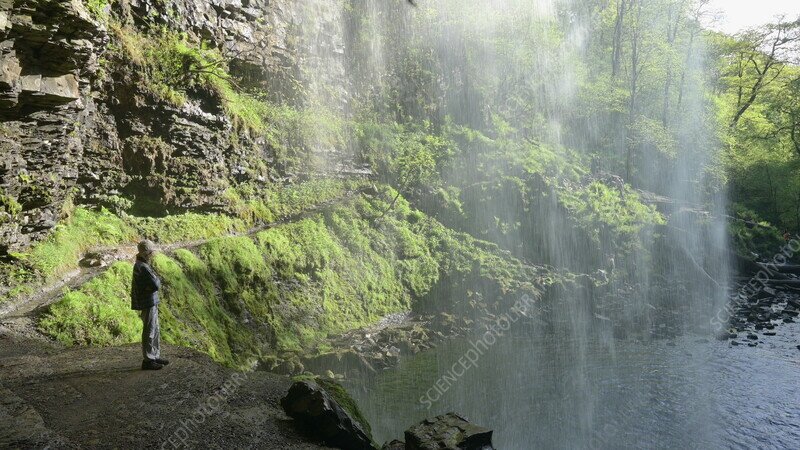 Tranquil waterfall showing mist and spray effects at the base. This image helped me plan the water impact zone and understand how to represent the atmospheric moisture that characterizes Welsh waterfalls.
Henrhyd Falls Site Photos
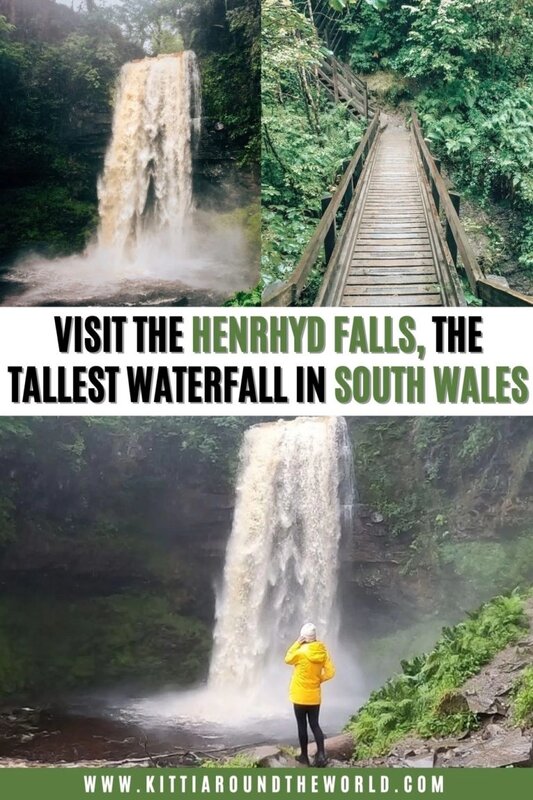 Henrhyd Falls with wooden bridge walkway. This photo shows the actual site with the famous wooden bridge structure and gives a sense of the scale and surrounding landscape.
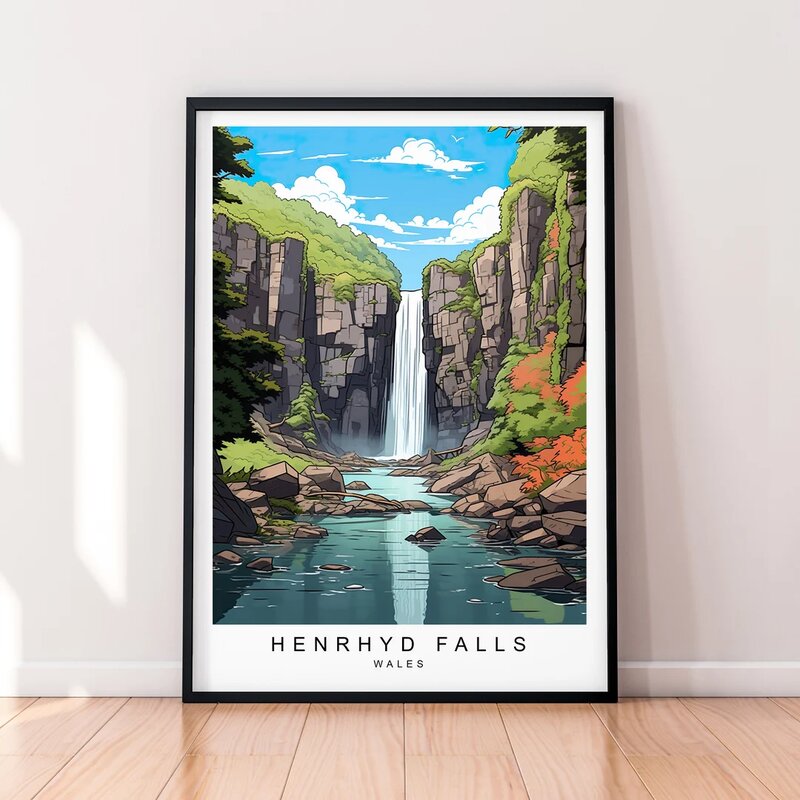 Henrhyd Falls, Wales - showing the full height of the waterfall. This captivating view helped me understand the overall proportions and the dramatic vertical drop that defines this location.
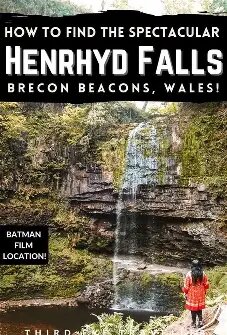 Henrhyd Falls Batman film location in Brecon Beacons. This reference was valuable for understanding the cave formation behind the falls - the feature that made it famous as a filming location for The Dark Knight Rises.
Rock Formation Studies
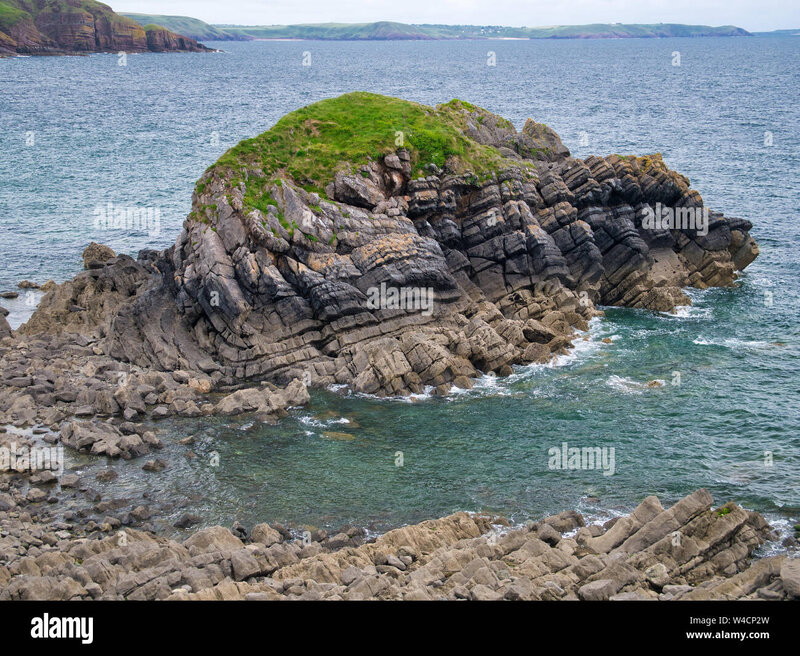 Coastal rock formation showing layered sedimentary structure. While not from Henrhyd Falls itself, this majestic coastal landscape provided excellent reference for understanding Welsh geological stratification and weathering patterns.
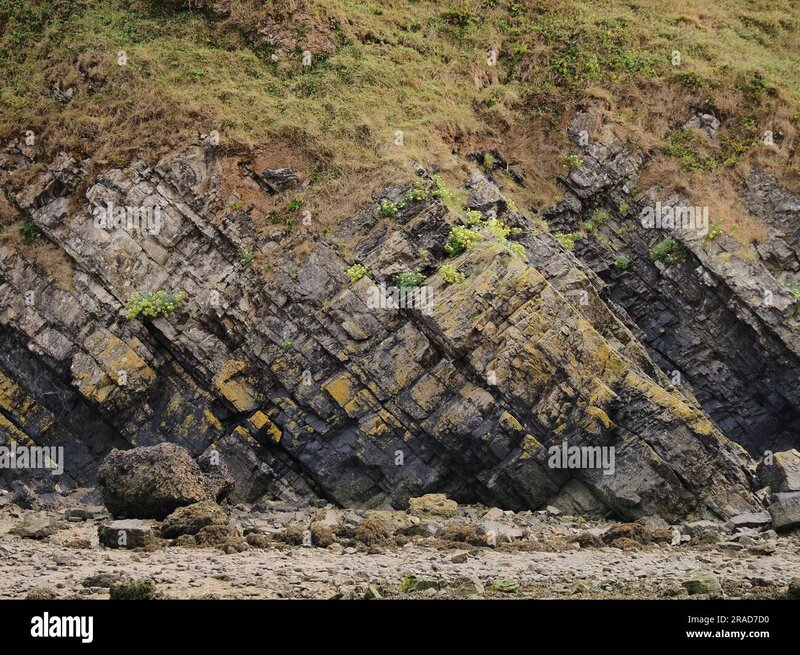 Detailed cliff face texture study. This meticulously detailed view captures the intricate patterns and textures of a rugged cliff face - invaluable for planning the rock carving and texturing techniques.
Welsh Woodland References
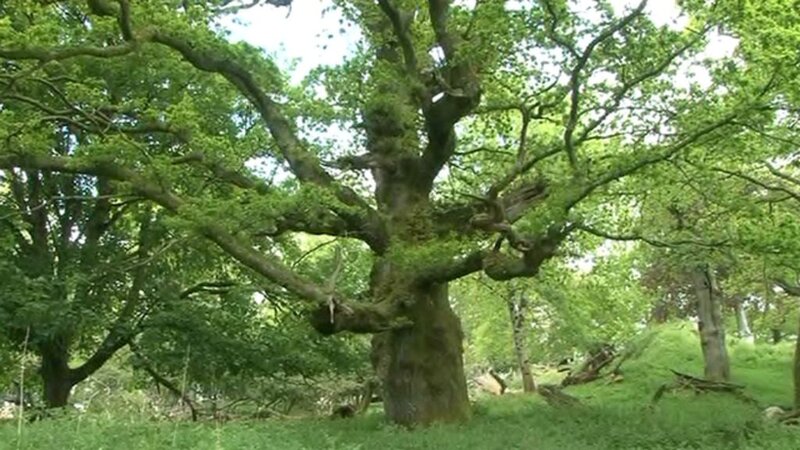 Ancient woodland tree in Welsh forest. This majestic arbor in enchanted woods shows the character of Welsh sessile oak and the moss-covered trunk texture that defines temperate rainforest environments.
 Verdant forest understory vegetation. Exploring the enchanting depths of Welsh woodland helped me understand the dense, layered vegetation and the rich green palette needed for authentic representation.
Most Helpful Approach:
The lack of a single definitive picture that provided everything I needed meant this diorama became an artistic representation of a range of different features, plants and scenarios. However the core recognisable imagery for a straight high fall, caves behind the falls, large trees on the top of the cliff made it unmistakably Henrhyd Falls.
Scale Planning & Design
Why 1:250 Scale?
Getting the right scale was important at an early stage as the whole landscape had to fit on a small board. AI was helpful in validating this and came up with the overall selection of the scale.
Composition Planning:
The composition was planned using the AI representation and several different photos, and then roughly sketched out on a piece of paper to get the cliff, and enough of the lower ground into the picture to make it representative.
Base Size:
The base size was 25 × 25 cm, and that was definitive. The selection of the model had to fit the base size.
Challenge of Representing a 27m Waterfall:
The waterfall height did represent a challenge. At the scale this would mean the falls had to be 10cm, there should be some lift in the landscape at the bottom of the falls, lets say about 3cm which really means a 7 meter drop for the pond and run off at the bottom, and the rocky mountain where the river cuts through of about 5cm which represents approx 12m above the cut through and therefore approx 45 meter cliff from bottom to the top of the rocks - about 18cm high model overall.
Although the AI calculations of the side profile for the falls were helpful, it was actually incorrect and did not include the elevation above the falls, and the slope at the bottom of the falls.
Vertical Cliff Structure Planning
It was important to maintain the cave behind the waterfall as it is unique to these falls. From the images it was evident that the cliff is concave with clear rock faces almost forming a theatre.
Base Construction Process
Timeline: Work started on the base on 2 November 2025
Base Materials
The base was cut out of 4mm plywood sheet at 25 × 25 cm. Using the diagram of the layout as a general guide, the base had two first levels on either side, and an inset in the middle where the river would be formed. The cliff range was situated at 2/3 to the back of the board.
Foundation Structure - First Attempt
I made a mixture of shredded paper, flour, water, vinegar, PVA glue and general purpose filler and used it for the first layer. This was left to dry thoroughly. I noticed a lot of cracking, and then decided to next time use the mixture, but thoroughly cook it to allow the flour to bond and to improve the mulching of the shredded paper. This became a really successful mixture.
Critical Lesson Learned
It was really important to lay down the base in thin layers (2-3 cm at most) and let it dry before adding another layer. I used the oven to aid in the drying and it took some time. One time I got impatient and increased the layers. This lead to drying not taking place right through, and ultimately I had to take it apart and start over again.
Cliff Structure Approach
The entire cliff was built up with the flour and shredded paper mix. This made the model quite heavy, but it is sturdy and easy to work with to drill for inserting the plants and trees. No foam was used. Next time I am likely to use foam or lighter material as the core, covering it with the mix to support the texturing.
The structure was built at a slight inward angle, partially as a result of shrinkage, and partly to keep it firm. Next time it may be better to make clean straight cuts, although the textured rocky look and feel is quite nice.
Materials Used in Base Construction
- 4mm plywood sheet (25 × 25 cm base)
- Shredded paper
- Flour (thoroughly cooked for better bonding)
- Water
- Vinegar
- PVA glue
- General purpose filler
- Oven assistance for drying layers
Key Learnings
Successful Techniques
- Cooked Paper Pulp Success: Thoroughly cooking the shredded paper, flour, water, vinegar, PVA, and filler mixture dramatically improved bonding and eliminated cracking
- Thin Layer Technique: Building base in 2-3cm layers with thorough drying between applications prevents internal moisture problems
- Patience in Drying: Using oven assistance but not rushing - impatience leads to having to restart
For Next Time
- Use Foam Core: Lightweight foam armature with paper pulp coating rather than solid paper pulp throughout
- Straight Vertical Cuts: More precise cliff edges, though the organic shrinkage created interesting texture
- Scale Planning Critical: AI helped validate 1:250 scale but actual elevation calculations revealed initial AI side profile was incorrect (missed slope at bottom and elevation above falls)
- Research Breadth Required: No single definitive reference image - required amalgamation of multiple sources for authentic representation
Next Steps
Moving from planning and base construction to detailed rock work:
- Rock Cliff Formation - Carve and texture the vertical terrain with geological layers
- Waterfall Structure - Build the 10cm drop with pool at base
- Welsh Woodland - Add sessile oak, ash, and temperate rainforest character
- Final Details - Pathway behind falls, weathering, and atmospheric effects
Time Investment
This Phase: 23 October - 2 November 2025 (approximately 10 days)
Breakdown:
- Initial inspiration and AI concept: 1 day
- Location research and reference collection: 3 days
- Scale calculations and composition planning: 2 days
- Base construction (including restart): 4 days
Next: Build Log #002 - Rock Cliff Formation & Geological Layers
- Material research: 2 hours
Total Project Time So Far: 15-20 hours
Status: Planning complete, ready for construction
Next Log: Base construction and cliff structure foundation
Estimated Next Update: October 2025
Have questions or feedback about this project? I'd love to hear from you.