 Modelling4Comfort
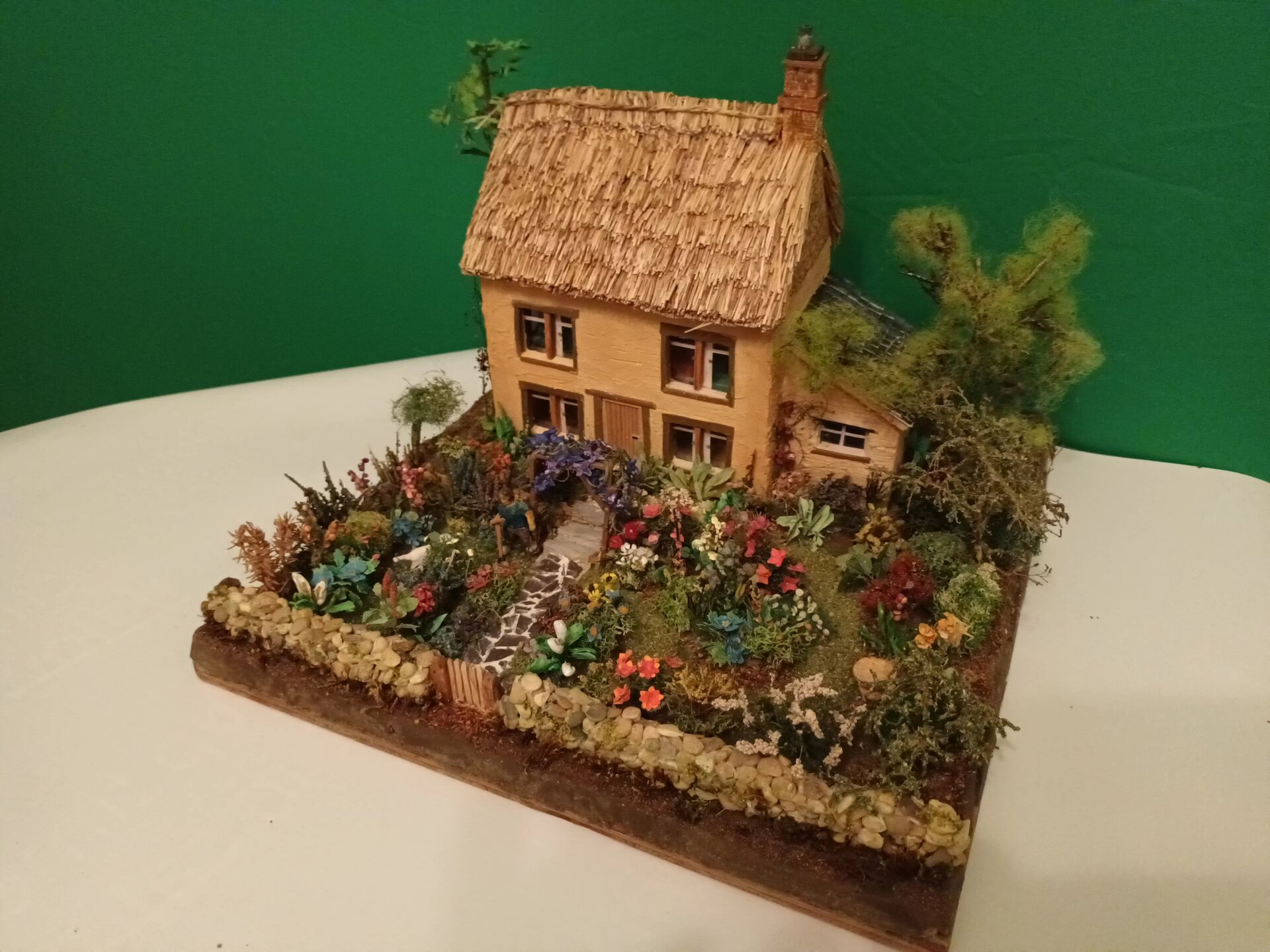
English Country Garden
Project Inspiration
Coming out of my experience with the Log Cabin and Cathy’s Flower House, I really wanted to practice more to make realistic miniature flowers. The first attempts in the Log Cabin were a bit of an eye opener that it would take much more practice, improved techniques and better materials. As a keen gardener, with my own beautiful garden and a huge admiration for English Country gardens, I could not select a better topic to experiment with flower making than to scratch build my own miniature garden.
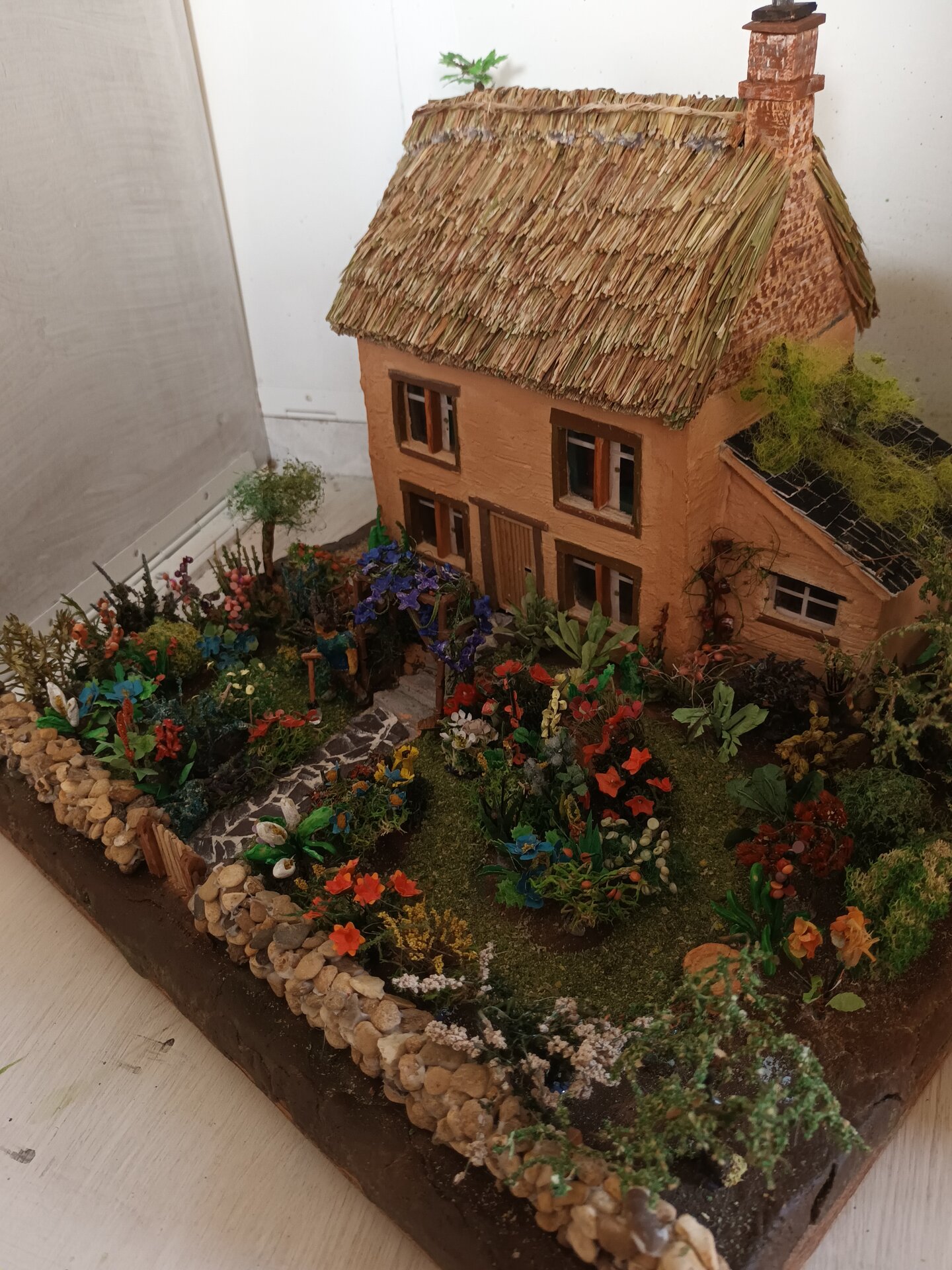
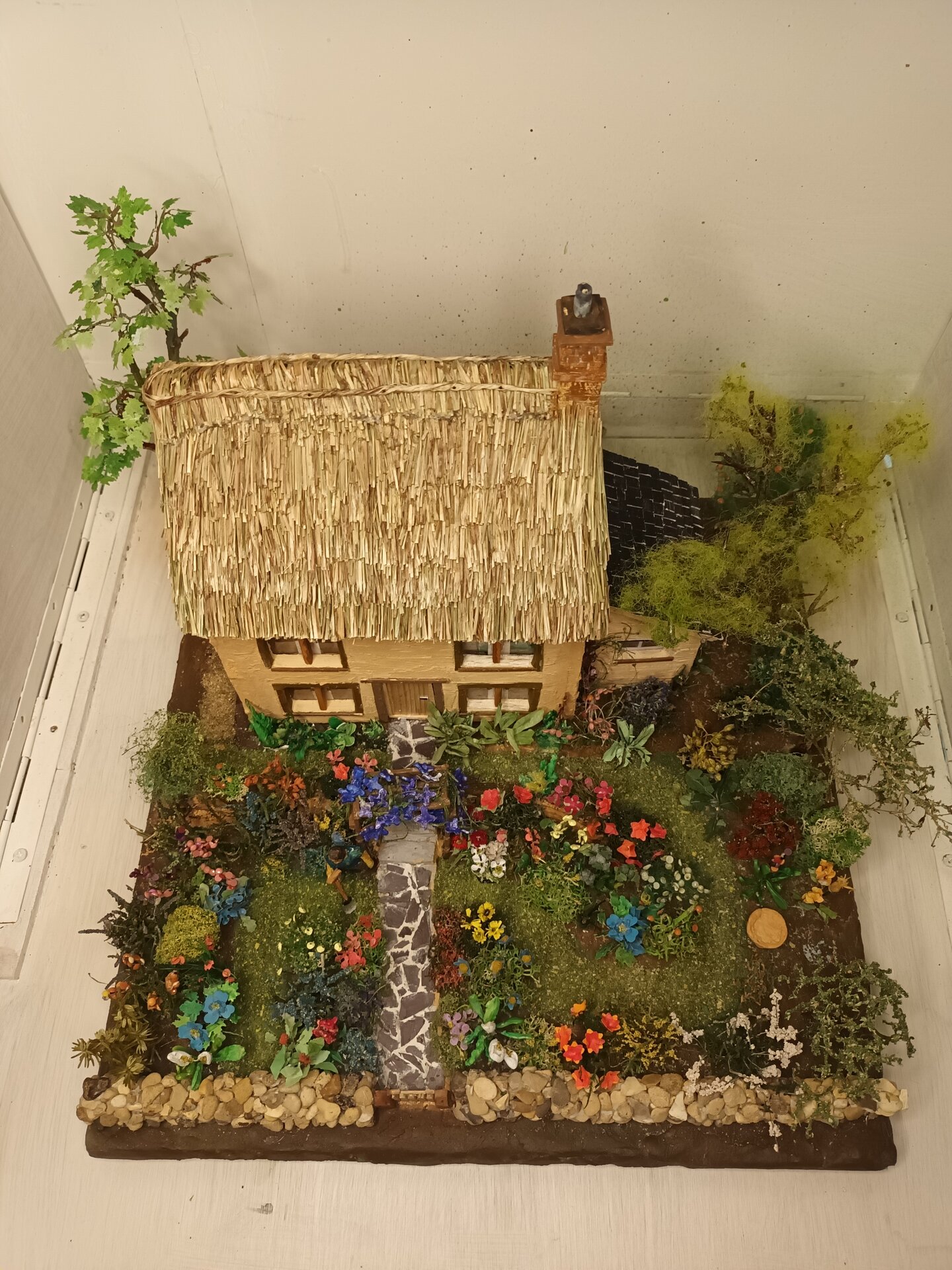
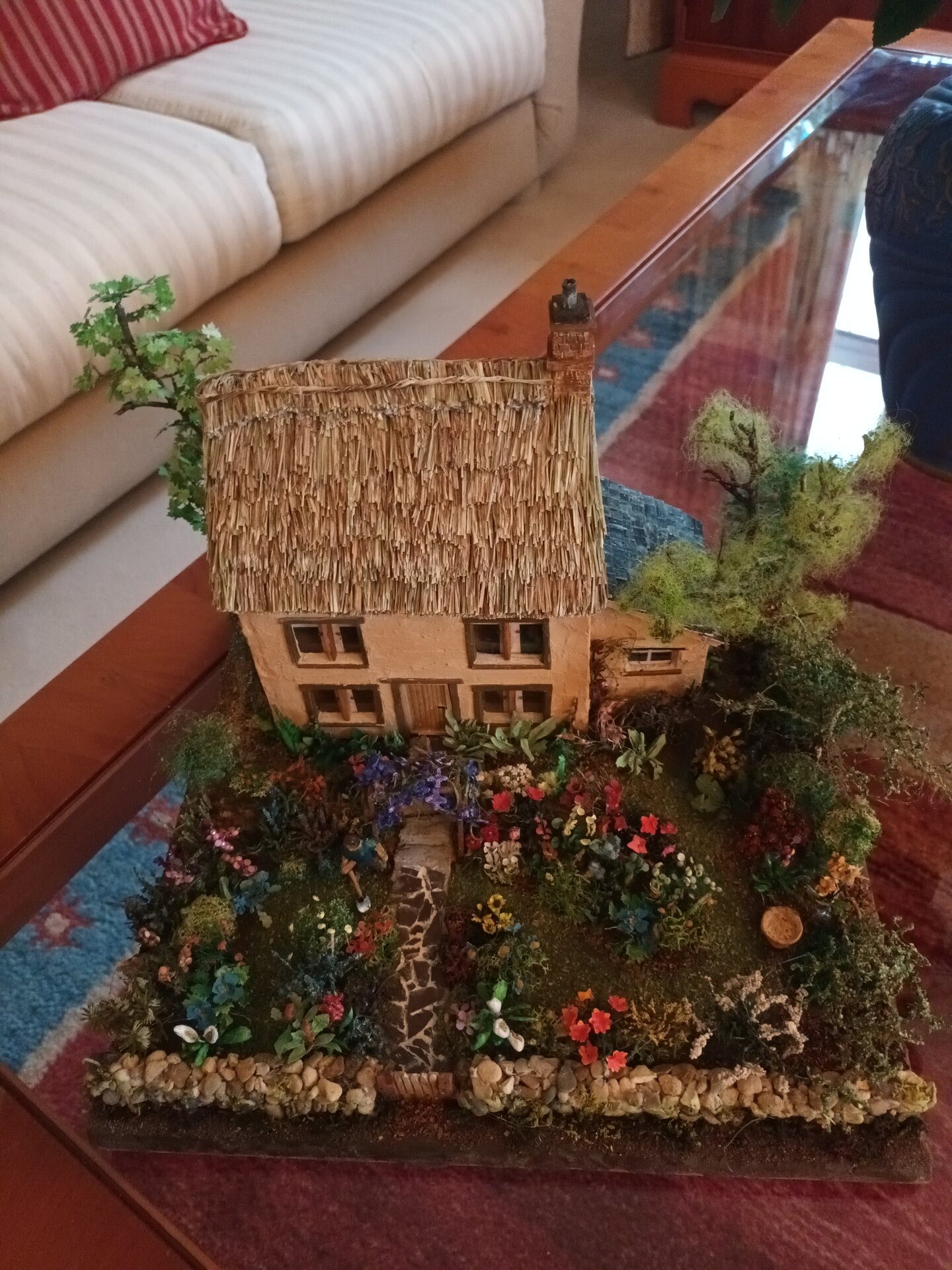
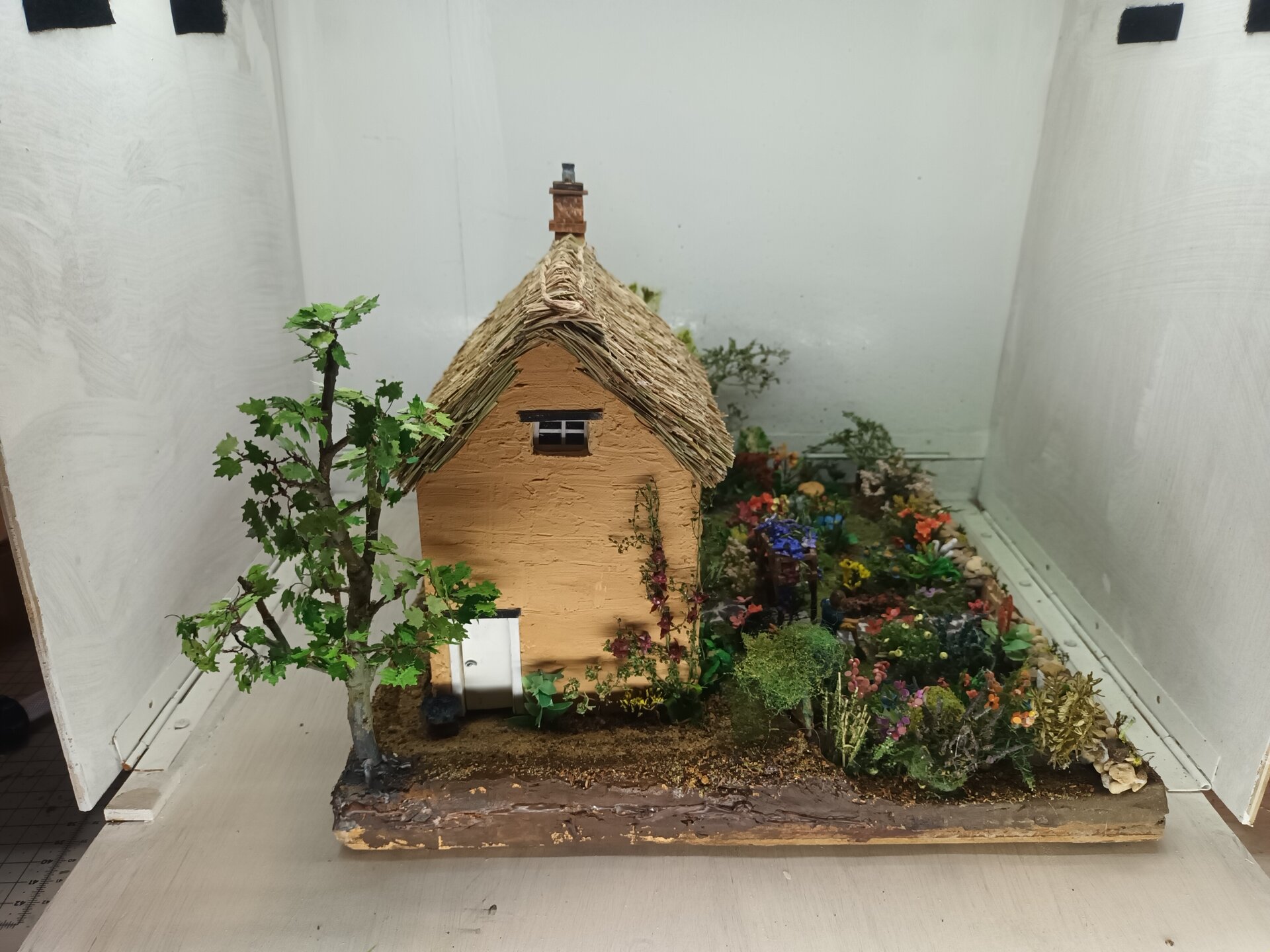
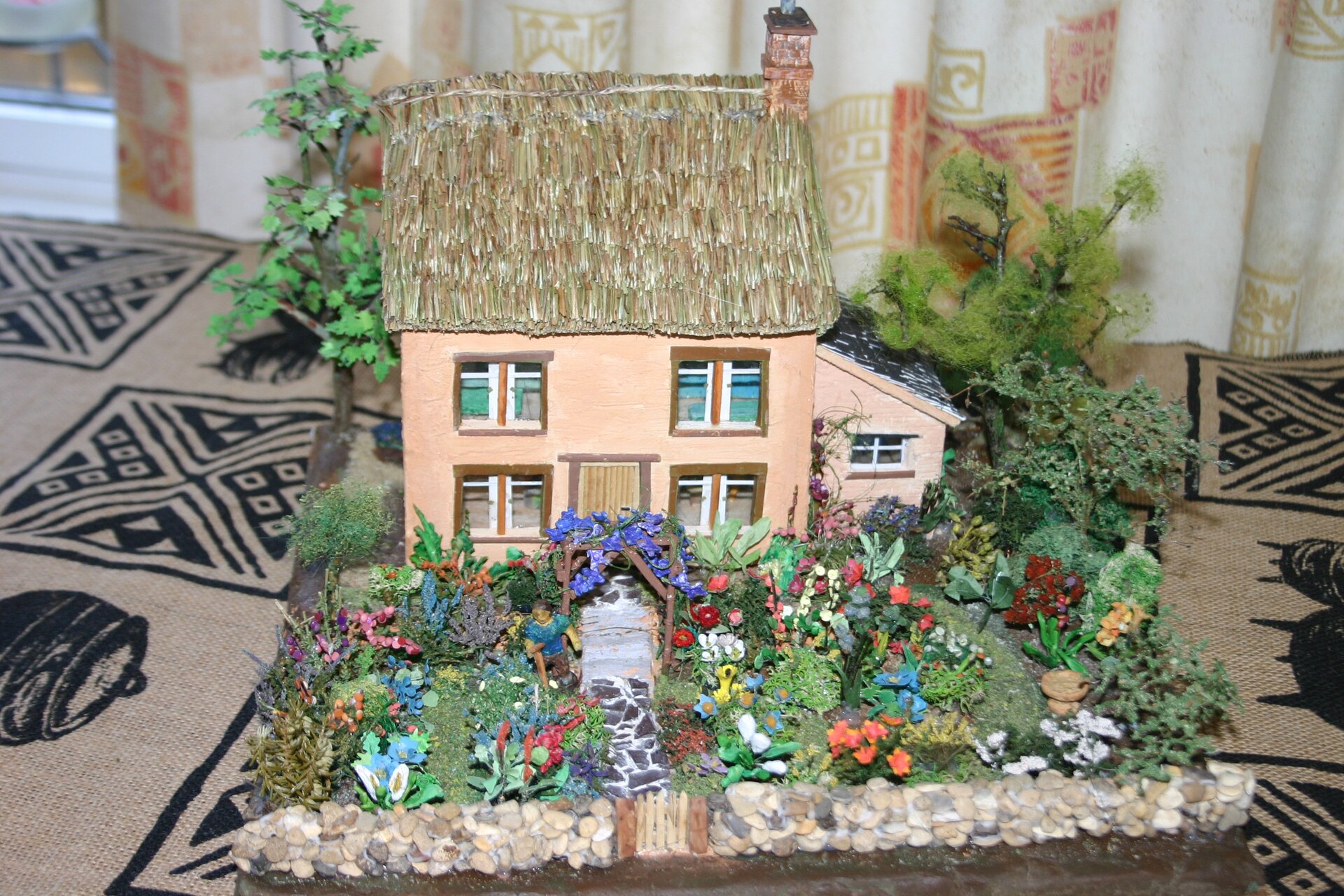
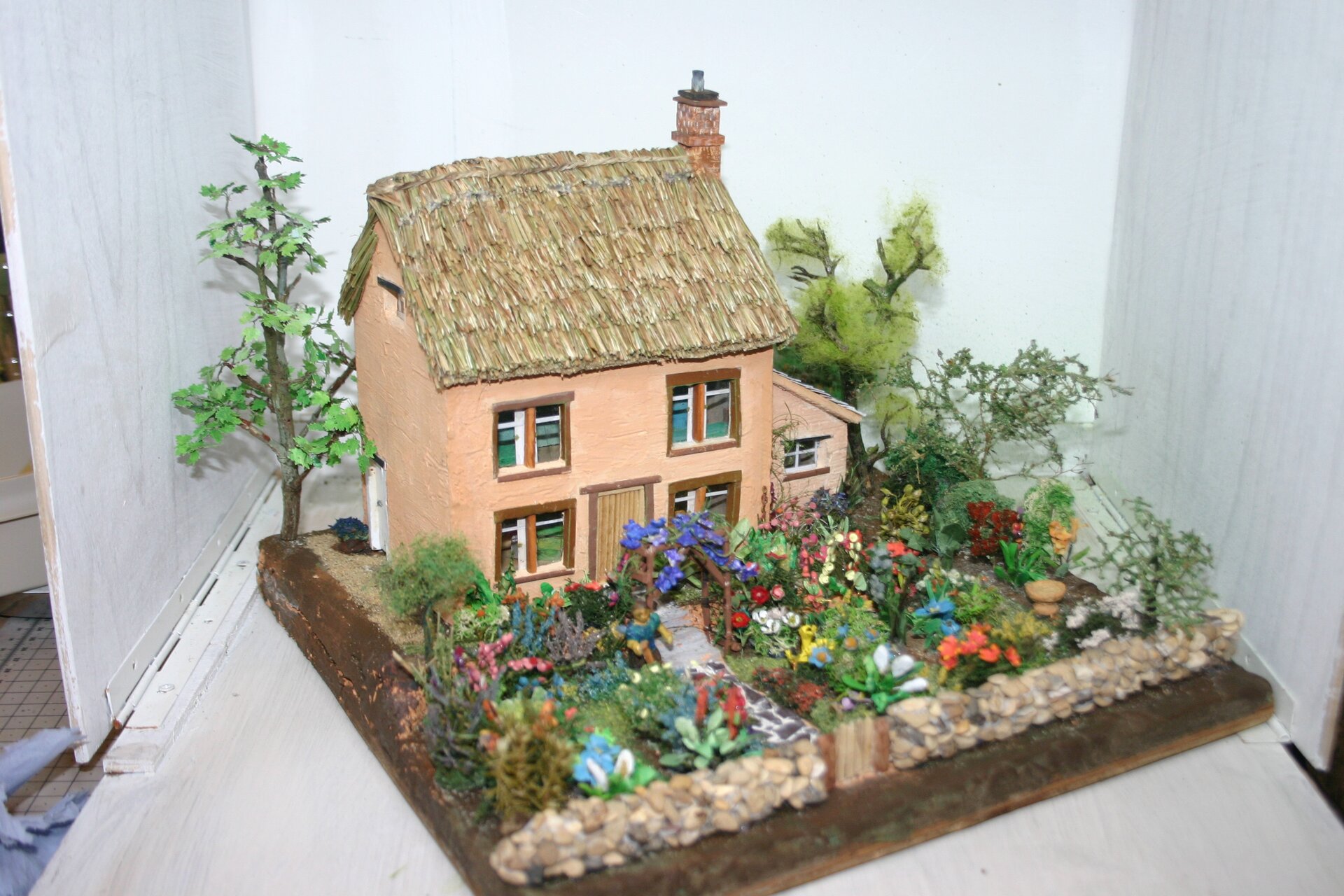
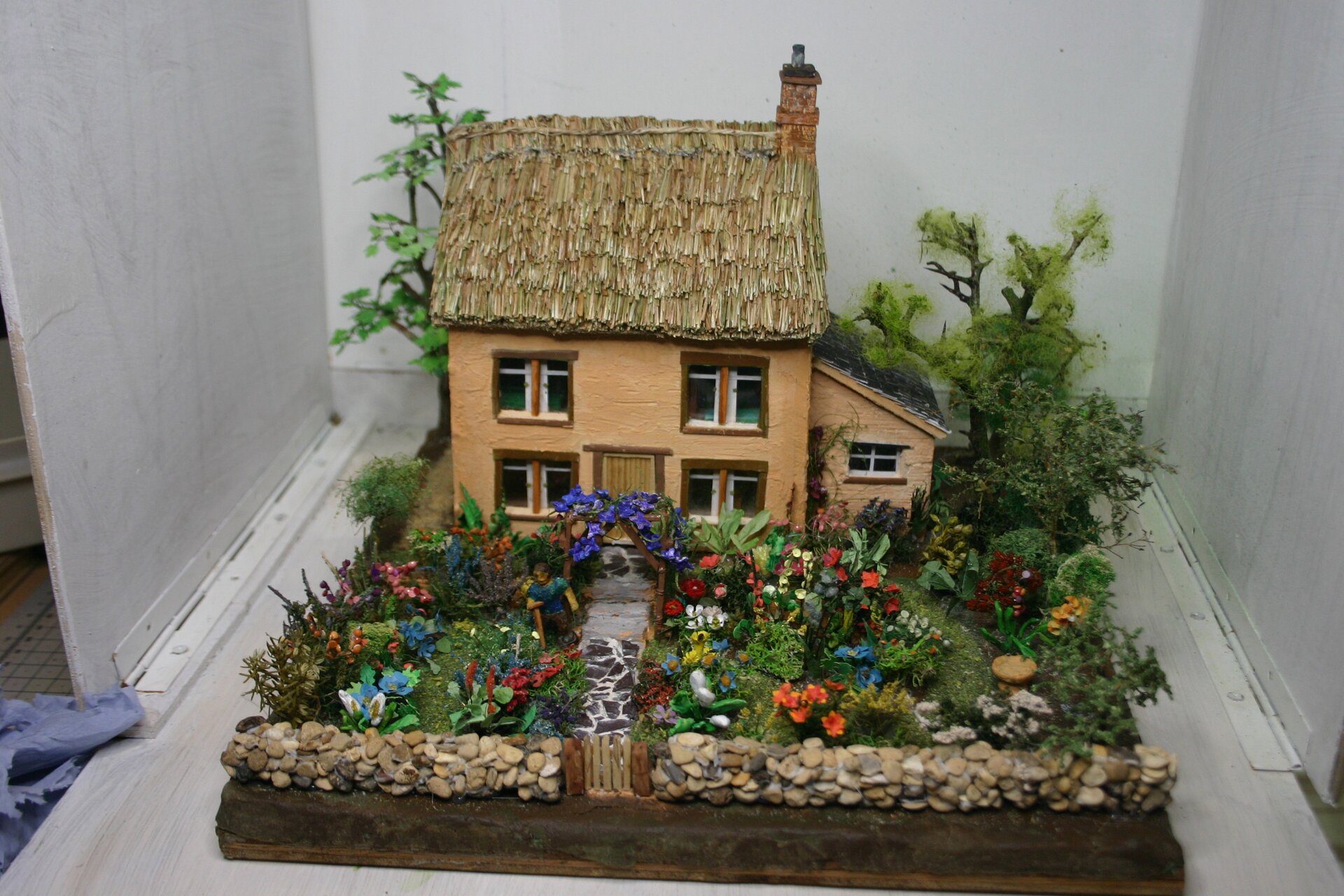
This project captures the beauty and horticultural richness of a traditional English cottage garden. The centerpiece is a historic Victorian cottage with a thatched roof, surrounded by a 15m × 15m garden at 1:50 scale. The thatched roof was specifically included to practice and experiment with something different than the slate/tiled roof of the Log Cabin.
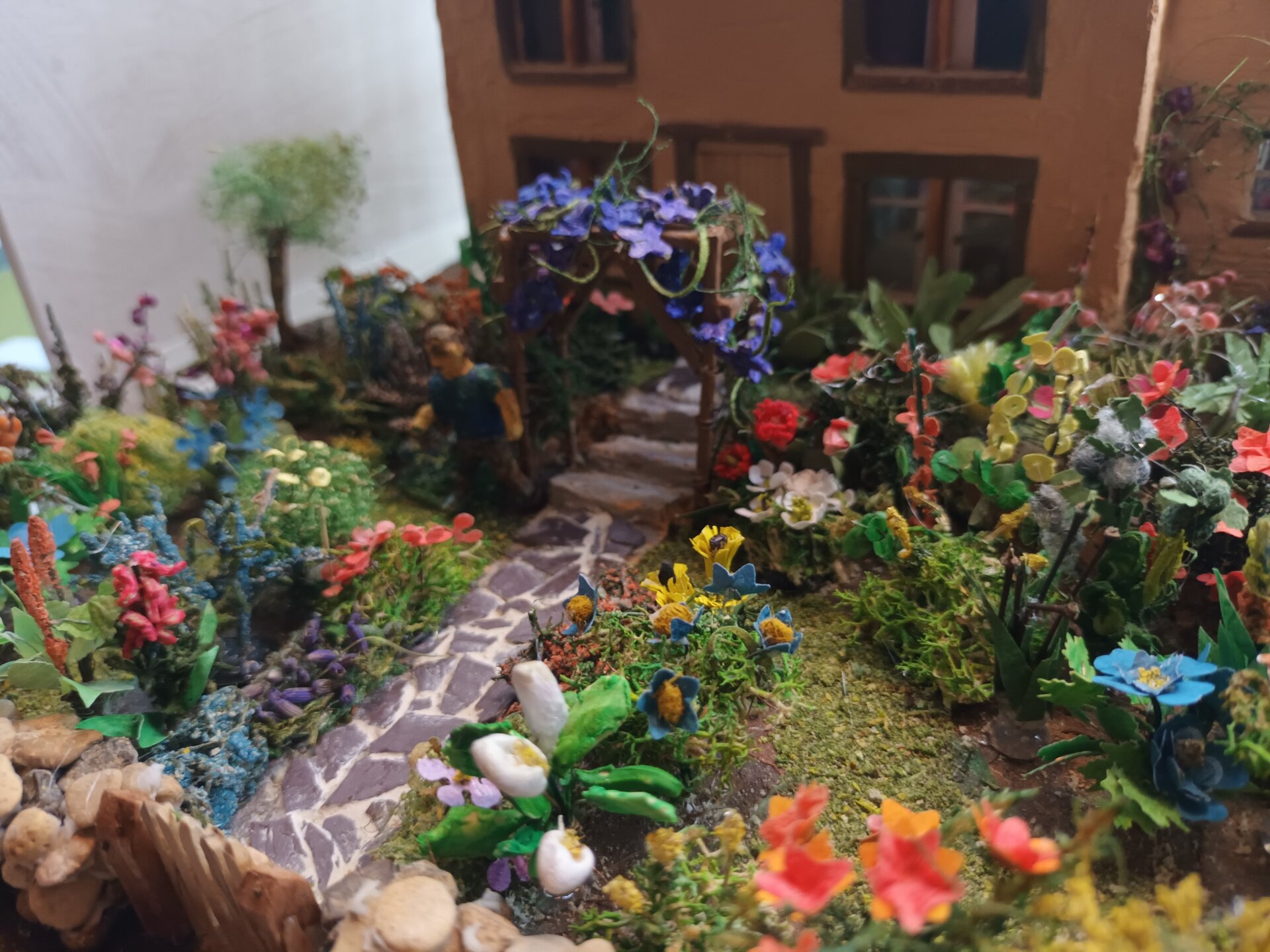
The main focus of this build was learning techniques for creating realistic miniature flowers and plants. The garden features over 100 different flowering plants and shrubs and a good selection of trees, each crafted to capture the characteristics of English cottage garden favorites.
Project Overview
Build Type: Scratch build from research and photos
Scale: 1:50 (1m in reality = 2cm in model)
Base Dimensions: 30cm × 30cm plywood base
Garden Size (at scale): 15m × 15m
Cottage Dimensions: Approximately 16cm height, 11cm width, 19cm length (roof height 9.5m at scale)
Status: Completed
Start Date: April 13, 2024
Completion: November 30, 2024
Build Duration: 7.5 months (working in spare time alongside full-time work)
Primary Focus: Realistic miniature flower and plant creation
Why This Project?
Given that this model brought together my love for plants and gardens with my newly discovered focus on scratch building and miniaturization, it turned out well - something I’m genuinely pleased with. It definitely laid the foundation for building more and different models. The enjoyment and satisfaction of doing it was remarkable. I’ll be selecting more models to explore different materials and skills, build out specialist tools and discover new methods.
Project Goals
- Learn techniques for creating realistic miniature flowers of many varieties
- Practice thatched roof construction (different from previous slate/tile work)
- Capture the informal, densely-planted aesthetic of English cottage gardens
- Create a fully scratch-built Victorian cottage with period details
- Develop skills in miniature plant morphology and realistic coloring
- Repurpose and reuse available materials rather than purchasing specialty items
Featured Plants and Elements
The garden showcases an extensive variety of plants, each individually crafted:
Flowering Plants:
- Delphiniums and Foxgloves (tall spike flowers, approx. 3cm tall)
- Roses (6mm blooms with climbing varieties)
- Hollyhocks (tall border plants)
- Lavender and Box hedging
- Geraniums, Lobelia, Phlox, and Daisies
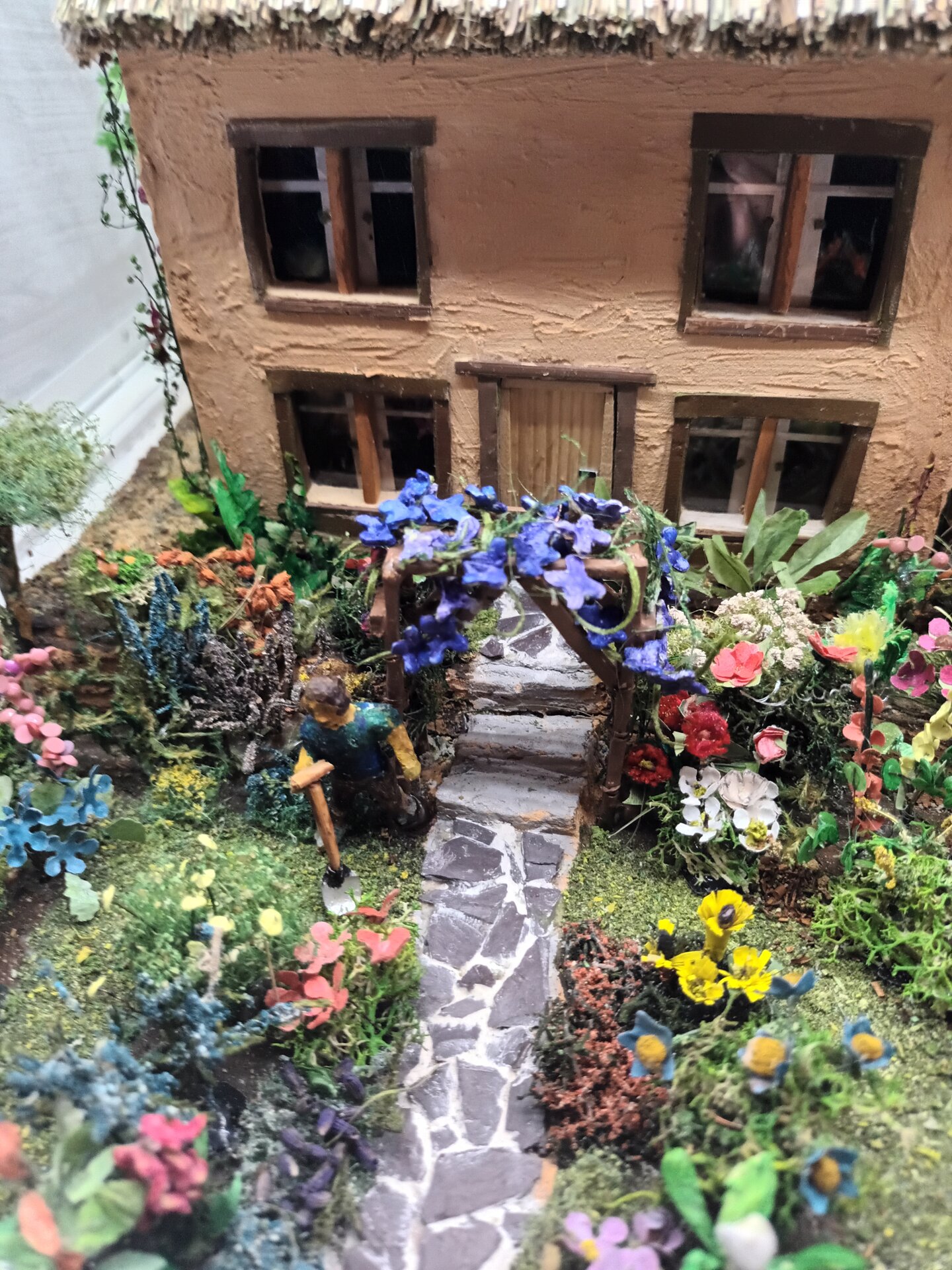
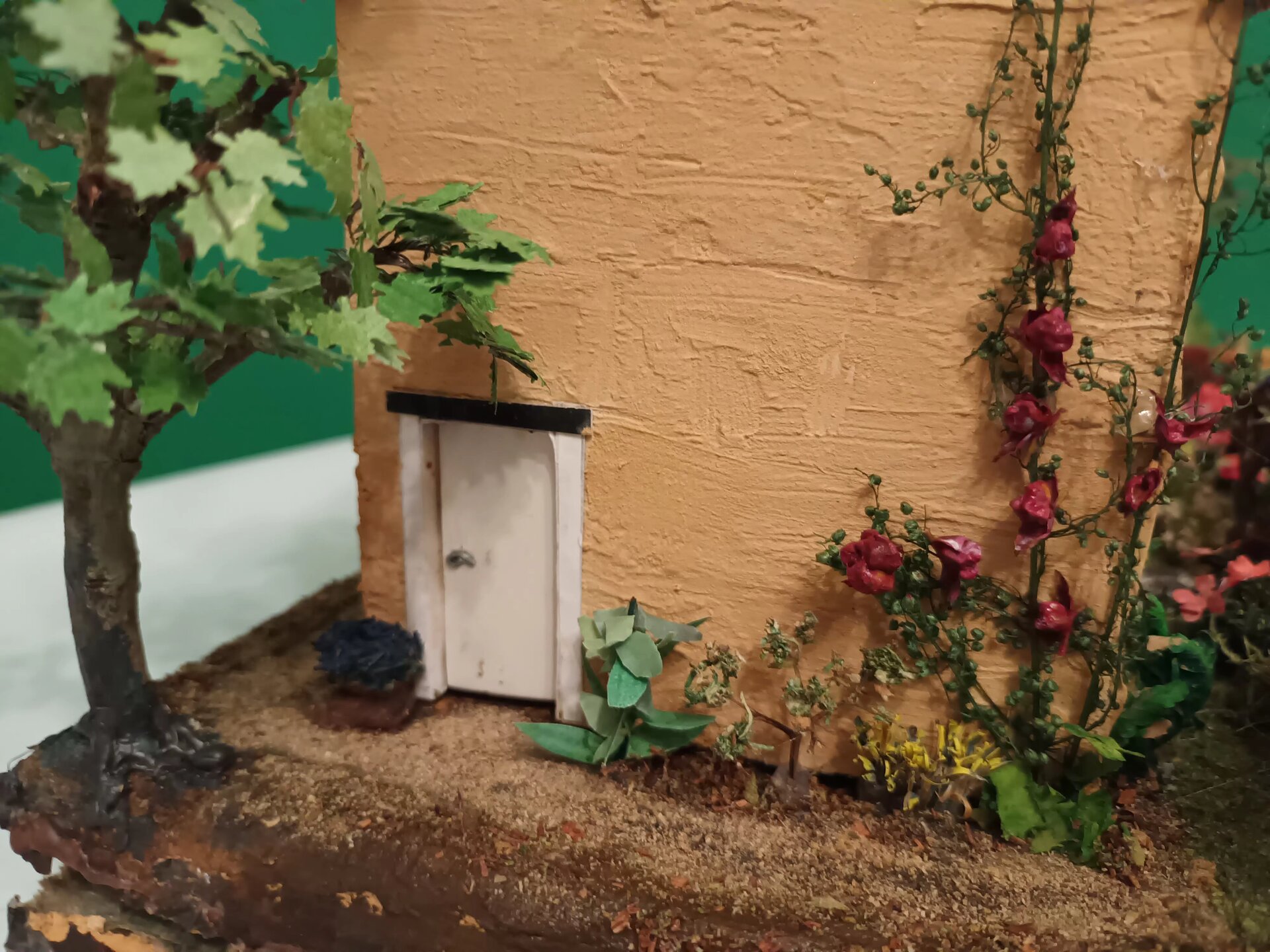
- Wisteria and Clematis (trailing/climbing plants on walls and arch)
- Cosmos, Poppies, and Marigolds
- Geum, Dahlias, and Lilies
Foliage and Structural Plants:
- Hostas with large distinctive leaves
- Ferns (challenging at this scale)
- Ornamental Grasses (Carex varieties)
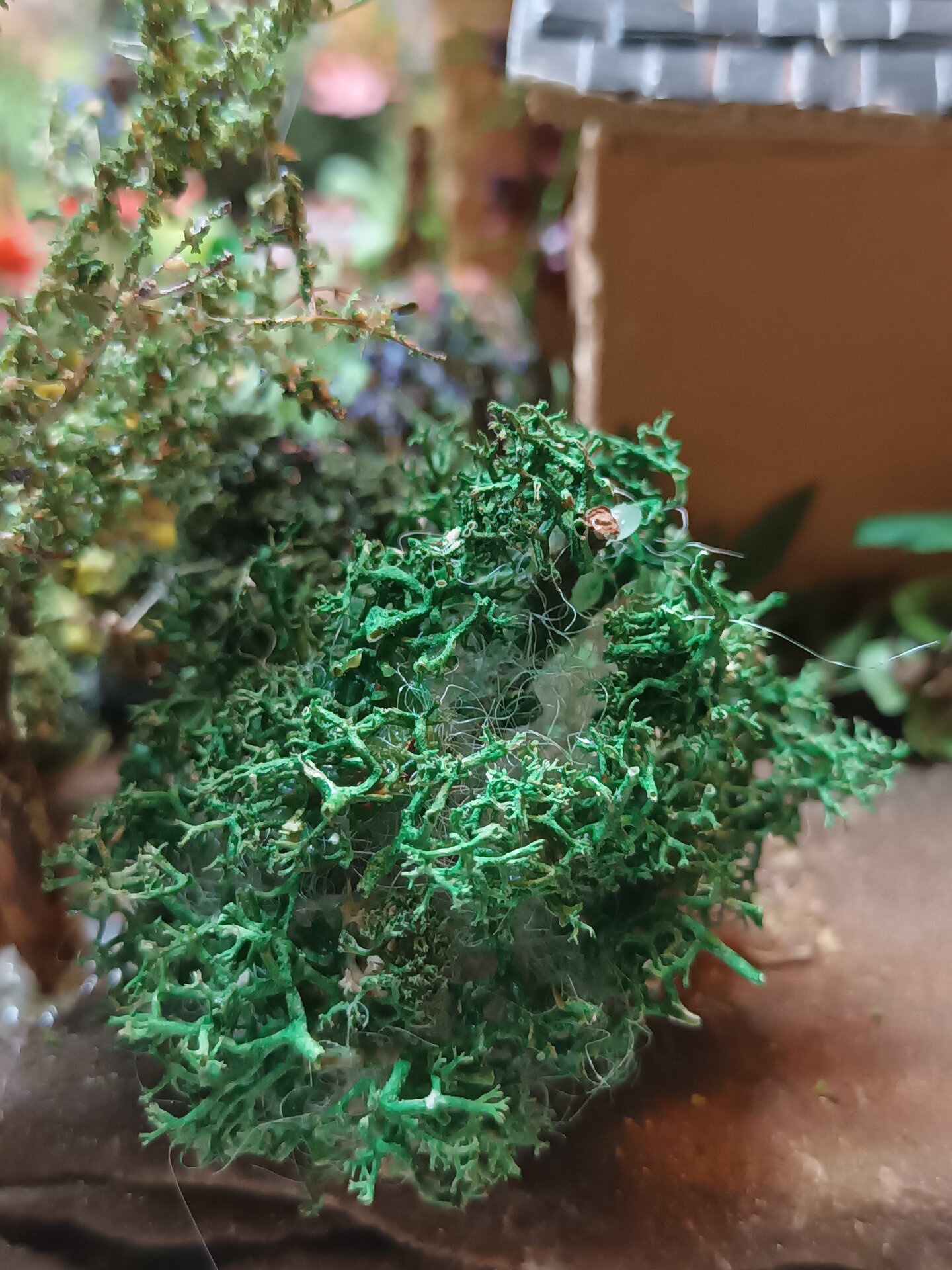
- Box hedging and various shrubs
Trees:
- Wire-frame trees with sawdust foliage
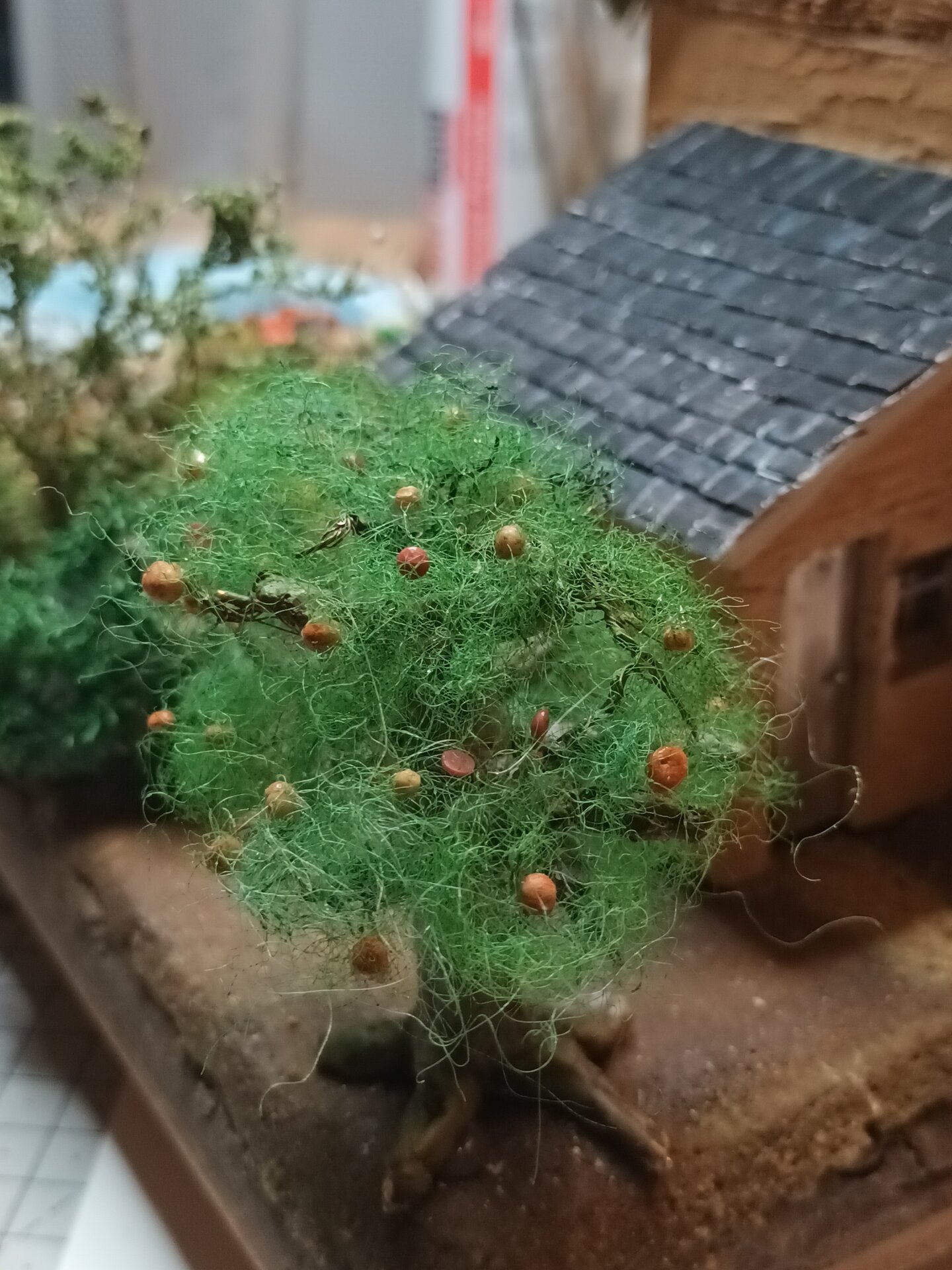
- Apple tree with tiny clay apples
- Tall birch-style tree with individually wired leaves
- Narrow upright conifer for back door area
- Various smaller ornamental trees throughout
Garden Structures:
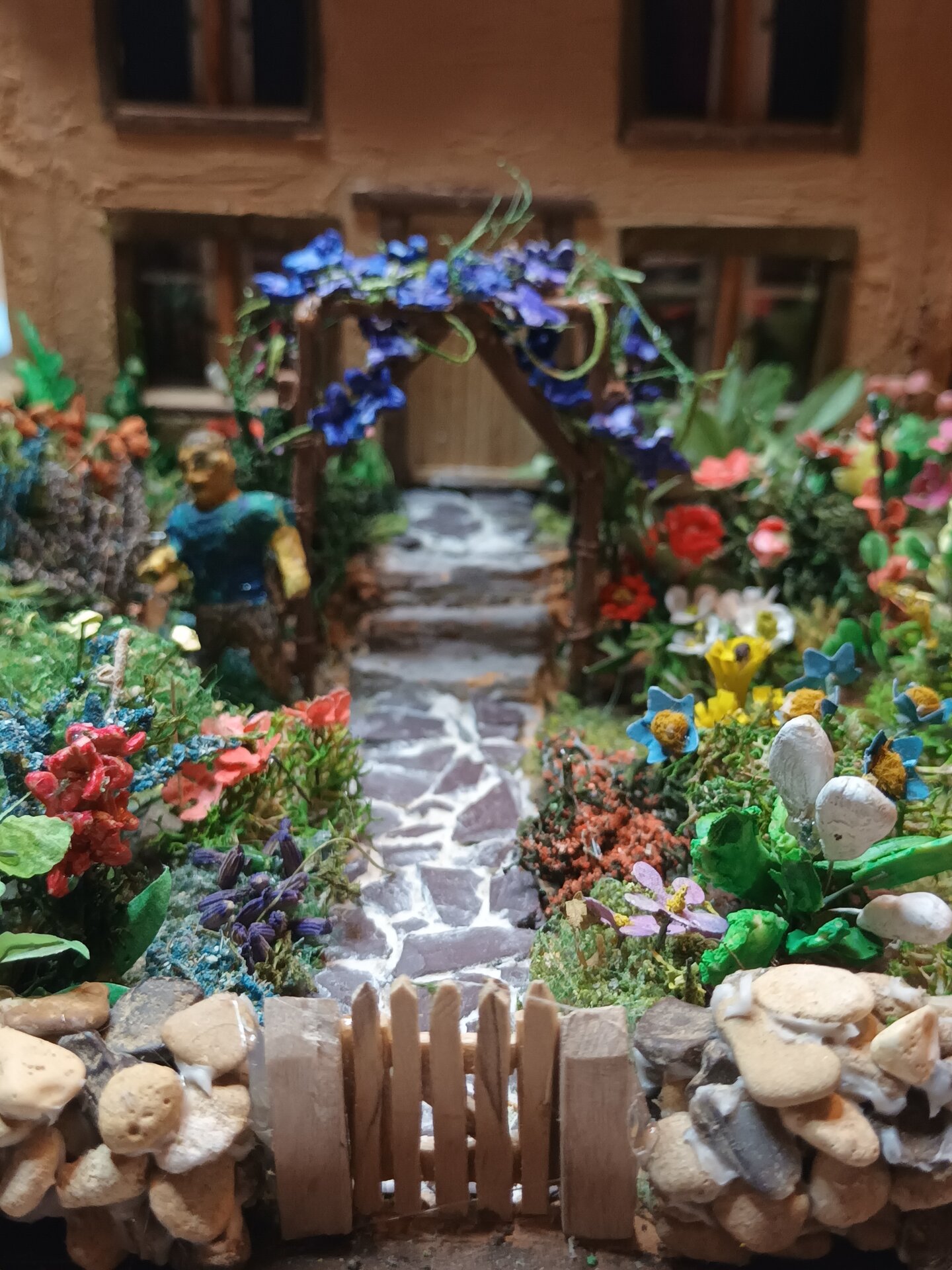
- Clematis-covered garden arch
- Low stone wall made from horticultural grit
- Wooden gate with period detailing
- Slate pathways with cement steps
- Bird bath
Build Achievements
- 100+ Individual Plants: Each flower, shrub, and tree handcrafted using various techniques
- Material Innovation: Repurposed copper wire, paper, sawdust, natural materials, tea leaves, seed heads, dried twigs
- Authentic Thatched Roof: Constructed from real grass using custom-engineered sorting caddy
- Scratch-Built Victorian Cottage: Balsa wood construction with brick chimney and period windows
- Layered Garden Design: Multiple planting zones, varied elevations, upper and lower levels
- Scale Consistency: Maintained 1:50 proportion while balancing “art of the possible” with realism
- Minimal Material Cost: Nearly all materials sourced from garden, tool room, or around the house
Research and Learning
This project involved extensive research into both gardening and miniature techniques:
English Garden Design:
- Studied hundreds of photos of formal and cottage gardens
- Researched cottage architecture, especially thatched roof cottages with country gardens
- Analyzed plant arrangements and the informal cottage garden aesthetic
Plant Morphology and Characteristics:
- Documented detailed characteristics of potential flowers: spike arrangements, flower bases, leaf types and forms, flower shapes, color varieties
- Created long lists from gardening books and gardens4comfort.uk
- Studied specific plants including foxgloves, delphiniums, roses, hollyhocks, lavender, ferns, hostas, daisies, grasses, poppies, cosmos, clematis, lilies
Miniature Flower Techniques:
- Researched flower shapes: strap (daisy), bell/funnel (bluebell), cluster (lavender), spike (foxgloves), flat top, distinct petals (rose, dahlia), star (clematis), saucer (cosmos), pompom (poppy), trailing
- YouTube tutorials on flower-making demonstrations
- Experimented with multiple methods for each flower type
Thatched Roofing:
- YouTube tutorials:
- Adapted techniques using real grass from garden
- Engineered custom V-shaped caddy for sorting and bundling grass
Resources:
- Botanical books and magazines
- Personal garden book from gardens4comfort.uk
- Paper cut stencils and paint/drawing stencils
- Catalogs of flower shapes and types
Materials and Techniques
Materials Used (Repurposed and Found)
Wire (Recovered Copper):
- Ultra-fine wire: ~0.1mm diameter (delicate stems)
- Fine wire: 0.3-0.5mm (flower stems, small details)
- Medium wire: 0.8-1.2mm (structural stems)
- Heavy wire: up to 2mm (frameworks, tree trunks)
- Pre-coated with acrylic paint in various dark colors to hide copper gloss
Paper:
- Standard 80 gsm printer paper (petals, templates)
- Packing tissue 17-35 gsm (soft, delicate layers)
- Cardstock 160-220 gsm (stems, leaves, structural parts)
- All pre-colored with acrylics in various shades, dried and filed for easy access
Natural Materials:
- Sawdust: sifted into different grades, colored in greens, whites, pinks, reds
- Seed heads: strengthened with watery clear varnish, then painted
- Sphagnum moss
- Dried twigs with leaves
- Tea leaves for foliage
- Real grass for thatching (collected from garden, sorted, bundled)
- Horticultural grit for stone wall
- Crushed slate for pathways
Other Materials:
- Clay (flower making, cottage chimney)
- Diamond painting dots (spiky plants)
- Leather hole cutting tool (micro cups)
- Small ball sculpting tool (forming cups)
- Modified stencils and paper punches (flower petals and leaves)
- Balsa wood (cottage construction)
- Filler (wall texture, path edges)
- Pillow filling (tree foliage base)
Techniques Developed
Miniature Flower Creation:
- Micro cups: leather punch + ball tool, glued to wire stems
- Clay molding: funnel shapes for lilies, punch-cut clematis
- Paper cutting: stencil-cut petals, layered and stacked
- Daisy technique: fine-cut paper strips rolled onto sawdust-dipped wire
- Spike flowers: individual small flowers attached sequentially to wire
- Cluster flowers: fine sawdust application
- Trailing plants: flowers added to prepared vine stems
Foliage and Leaves:
- Large leaves: individually cut paper, wired, bundled by twisting wires or setting in hot glue
- Ferns: extremely challenging at miniature scale - various experiments
- Shrubs and bushes: different techniques for varied textures and forms
- Hostas: distinctive large leaf shapes cut and wired
Tree Construction:
- Wire frame branches with clay-built thick sections
- Branches covered in pillow filling, then colored sawdust
- Tiny clay apples for fruit tree
- Combination twig and wire for realistic structure
- Tall trees: garden twigs as main stem, drilled holes for branch insertion using hard wire core
- Leaves: stamp-cut from paper, individually wired, bundled and glued to branches
Cottage Construction:
- Balsa wood walls with filler layer for texture
- Brick effect chimney (filler on balsa core)
- Windows and doors: thin wood-colored and white paper strips, plastic for panes
- Sash window detailing
- Thatched roof: grass bundles starting from bottom, working up
- Custom V-shaped caddy engineered to sort grass (all pointing same direction)
Structures and Landscape:
- Stone wall: horticultural grit stones individually glued
- Wooden gate: scratch-built with period detailing
- Garden arch: scratch-built frame, clay clematis flowers
- Slate path: crushed real slate, filler for edges
- Steps: filler formed and weathered to imitate cement
- Terrain: homemade clay mixture (flour, water, white glue, vinegar)
- Multi-level layout: elevated area at back for cottage
Integrated Weathering:
- Weathering woven into construction and coloring (not separate phase)
- Paint application includes aging and wear during construction
- Natural material variations create realistic effects
Garden Layout and Composition
The garden was carefully planned into “rooms” or zones:
- Main Feature: Walkway straight from gate to front door
- Upper and Lower Levels: Steps and arch create elevation change, access to both sides
- Height Layering: Taller plants against center dividing wall, smaller plants in front
- Right Side: Bird bath and small trees at garden edge
- Cottage Walls: Ferns and hostas, climbing roses and clematis
- Framing: Larger trees at rear of cottage and garden edges
- Focal Point: Bright blue clematis on arch draws the eye to center
- Planting Method: Plants prepared as loose units for flexible arrangement, glued with glue gun, trees and shrubs pinned for stability
The cottage garden look and feel only came together through trial and error of layout and positioning. Some flowers were only created at the very end to solidify the final effect.
Build Process
Work on this project was done concurrently across multiple components throughout the 7.5 months, rather than in distinct sequential phases. This was necessary to:
- Balance making something for the first time vs. determining how many items would be needed
- Test techniques and refine methods
- Consider overall layout and size while building components
- Work around full-time job schedule in spare time
- Allow for preparation, trying different options, research, and sourcing materials
The project included many first-time activities with extensive preparation, experimentation, and material sourcing all woven into the lengthy process.
Challenges and Solutions
Scale Consistency: Balancing technical scale (1:50) with the “art of the possible” - what could actually be achieved at miniature size. Some compromise between strict scale and visual effect.
Realistic Flower Appearance: Many forms were experimented with. While miniaturization meant some flowers weren’t perfect, the result is representative with “artistic freedom” applied.
Thatched Roof Construction: Getting grass smooth and cut exactly as a life-size roof would be was challenging. Engineering the V-shaped sorting caddy helped significantly.
Creating Cottage Garden Aesthetic: The informal, lush look only came together through extensive trial and error with layout and positioning.
Time Management: Approached with patience: don’t rush, review regularly, redo if needed, pause and restart as necessary.
Material Sourcing: Most materials from garden, tool room, or around house. Apart from glue and paint, material cost was minimal, but material selection, collection, and preparation was much more involved.
Learning Through Trial and Error: Built through research, trying things out, lots of patience and determination.
Ferns at Miniature Scale: Particularly challenging - required multiple experiments with different approaches.
Skills Developed
- Miniature flower creation using multiple methods
- Paper manipulation and cutting techniques
- Wire working and structural support
- Clay molding for flowers and architectural elements
- Natural material preparation and preservation
- Custom tool engineering (grass sorting caddy)
- Thatched roofing techniques adapted for miniature scale
- Balsa wood construction
- Texture creation with filler
- Stone wall construction with grit
- Terrain building and elevation changes
- Garden composition and spatial arrangement
- Color mixing for natural plant tones
- Integrated weathering during construction
- Patience and iterative refinement
Personal Reflections
This project demonstrated that extensive research, experimentation, and determination can overcome the challenges of learning new techniques. The combination of my love for plants and gardens with newly discovered abilities in scratch building and miniaturization resulted in a satisfying success.
Most importantly, it laid the foundation for building more and different models, exploring more materials and skills, building specialist tools, and discovering new methods. The journey itself brought remarkable enjoyment and satisfaction.
[NOTE: Consider adding: Any specific moments of breakthrough or discovery? Plants or techniques you’re most proud of? Would you approach anything differently with current knowledge?]
Related Build Logs:
Gallery
Have questions or feedback about this project? I'd love to hear from you.