 Modelling4Comfort
Sea Rescue - Planning & Research
Project Inception
The Sea Rescue project represents an exciting new direction - combining maritime modeling skills with the challenge of creating a dynamic action scene. This build will explore vessel construction, realistic water effects, and the drama of rescue operations at sea.
This is also the first model I am actively using GoPilot to give input in the design and build and also using these build logs to document the process while it is unfolding.
Initial Concept
The vision is to create a compelling maritime rescue scene that captures:
- Action and Movement: A vessel in operation, not static at dock
- Realistic Environment: Dynamic seascape with waves and spray
- Authentic Details: Proper scale rescue equipment and features
- Story and Drama: A moment frozen in time that tells a story
Inspiration & Goals
The goal is to create a piece that:
- Honors the bravery of rescue service personnel
- Demonstrates maritime modeling skills
- Explores new techniques in water and weathering effects
- Tells a compelling visual story
- Provides satisfaction in the building process
Following a request to Gopilot, “can you prepare an example of a UK sea rescue diorama scene that can be built from scratch” - it came back with : plans to scratch-build a complete 1:72 RNLI sea rescue diorama, featuring:
A B-class RNLI Atlantic 85 open sea rescue boat A small coastal fishing boat in distress A cliff edge with rocks backdrop All figures (RNLI crew + fishing crew) A compact base ideal for 25 × 25 cm
Illustrated by AI: assets\images\projects\sea-rescue\planning\sr-pln-001.jpg. This illustration is directionally suitable. The planning phase will build on this.
Planning Phase
RNLI History
The Royal National Lifeboat Institution (RNLI) has saved over 146,000 lives at sea since its founding in 1824, celebrating its 200th anniversary in 2024. This volunteer-run charity operates across the UK and Ireland with a fleet of lifeboats ranging from small inshore craft to large all-weather vessels. The unique designs of RNLI rescue boats have evolved through multiple iterations, with each generation incorporating lessons learned from countless rescues. The Shannon class represents the latest advancement in lifeboat design, featuring self-righting capabilities, advanced navigation systems, and impressive sea-keeping abilities.
For an overview of RNLI’s history and modern operations, watch RNLI: 200 Years of Saving Lives at Sea.
Vessels Type Options
Considerations for both vessels:
- Available reference materials
- Build complexity vs. skill level
- Visual interest and character
- Scale feasibility at 1:72
Rescue vessel
Deciding on the type of rescue vessel to model:
Historic Options:
- Traditional lifeboat (RNLI heritage vessels)
- Early motor lifeboats (1920s-1950s)
- Sailing rescue boats
Modern Options:
- Current RNLI lifeboats (Severn, Tamar, Shannon class)
- Rigid inflatable boats (RIB)
- Search and Rescue vessels
RNLI Vessel Options:
- B-class Atlantic 85 (8.5m real): 11.8cm model length
- D-class IB1 (7.3m real): 10.1cm model length
- Tamar class all-weather (16m real): 22.2cm model length
- Shannon class all-weather (13m real): 18.1cm model length
Rescue subject
Deciding on the type of vessel for rescue to model:
- Coastal fishing trawler
- Leisure craft such as sailing dingy or local fisherman boat
- small leisure craft such as padding board, kayak
** Related considerations:**
- Rescue mission near coast and not deep sea
- Rescue type in keeping with RNLI boat type selected
- Type of rescue - tugging, man overboard, ship wreck, injury etc
- Sea conditions: - storm, wind, currents, night time
Fishing Boat Options:
- Small coastal fishing boat (7m real): 9.7cm model length
- Medium fishing vessel (10m real): 13.9cm model length
- Larger trawler (15m real): 20.8cm model length
Reference Materials Needed
Planning to gather:
- Technical drawings and plans (if available)
- Photographs from multiple angles
- Construction details and specifications
- Equipment and rigging details
- Color schemes and livery
- Operational context images
Diorama Base:
Scale Calculations
Working at 1:72 scale (1m real life = 1.39cm at scale):
- Planned base size: 25cm × 25cm
- Represents real area (at 1:72): 18m × 18m
- Split between coast and sea: 1:3
Considering both build size and display practicality, the B-class Atlantic 85 at 11.8cm and a small fishing boat at 9-10cm will fit comfortably on a 25cm × 25cm base with room for waves, cliff backdrop, and composition. The coastal trawler fishing boat rescue offers more challenge, visual impact, stormy sea conditions to master.
Baseline for vessels
Construction options:
The selection of one of the following options for each of the two vessels will be determined by availability and cost.
- Source a kit, either to the correct scale, or build the kit and then scale it down as a scratch build
- Source either kit or real life plans for specific vessels and scratch build the vessel with adapted plans to scale
- Research images, vessel construction, plans, and general vessel building help to build representative vessels that is near but not necessarily exact replicas of actual vessels.
Vessel construction considerations
The selecting of the appropriate method may vary between the two vessels and be determined by chosen option.
Exploring options:
- Planked hull: Traditional boat-building in miniature
- Balsawood: Above deck cabins, boxes
- Wire masts, cranes, railings
- Cotton ropes, nets
- Styrene construction: Engineered approach with sheet plastic
- Hybrid: Combining methods for best results
Water Effects Technique
Researching methods:
- Clear resin pours with painted base
- Acrylic gel medium sculpted into waves
- Layered effects for depth and foam
- Wave crests and spray techniques
Base and Presentation
- three ply wood: base
- Carved foam: Shaped and sealed, then detailed
- paper mache: Rocky coast
- landscaping materials coastline, vegetation
Figures
- Rescuers in the RNLI vessel
- Fishing boat workers
- Rescuers on the mountain at the light
All the figures will have to be scratch built using wire frames and clay
Planning considerations:
- Base size to complement vessel scale
- Frame or natural edge presentation
- Integration of sea and vessel
- Mounting and stability
Research results
Research Resources to Explore
- RNLI website and historical archive
-
National Maritime Museum Visit Royal Museums Greenwich - Fishing Vessel Design Database (FVDD)
- FreeShipPlans.com
- Otter Trawler Lines Plan - Halvorsen 1949
- FAO Fishing Boat Designs
- Technical Paper No. 188 – Small Trawlers
- Other maritime museum collections online
- Model boat building forums and communities
- YouTube channels on maritime modeling
- Books on rescue vessel history and operation
RNLI boat search result
The research into RNLI boat highlighted that a RNLI Severn Class Lifeboat Model in scale 1:173 is available at a reasonable price from their website. The length of the model is suitable for my base, but the scale of this model is however not in keeping with my initial thoughts on scaling and will impact on the selection of the scenery and fishing vessel. It is unlikely that the Severn will operate near the coast. Using this model will impact on the macro rescue scene planning.
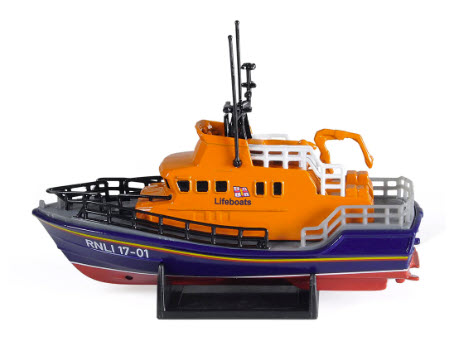 RNLI Severn Class Lifeboat Model in scale 1:173
Another model kit option is RNLI Shannon Class Lifeboat as a plastic model kit from airfix.com. The scaled version of this kit is 19 cm, which is too long for my model and will have to be scaled down and scratch built.
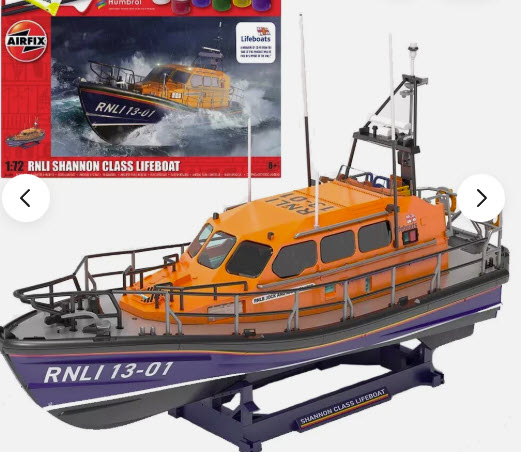 RNLI Shannon Class Lifeboat kit from Airfix in scale 1:72
The Corgi RNLI Atlantic B Class Lifeboat scale 1:84 is 10cm long. It is a cast model and available through the NRLI site. The scale and length of the model is in keeping with my overall design, and it is likely that this vessel will be used for coastal rescues.
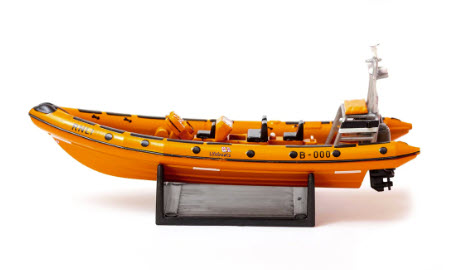 Corgi RNLI Atlantic B Class Lifeboat in scale 1:84
Fishing boat search result
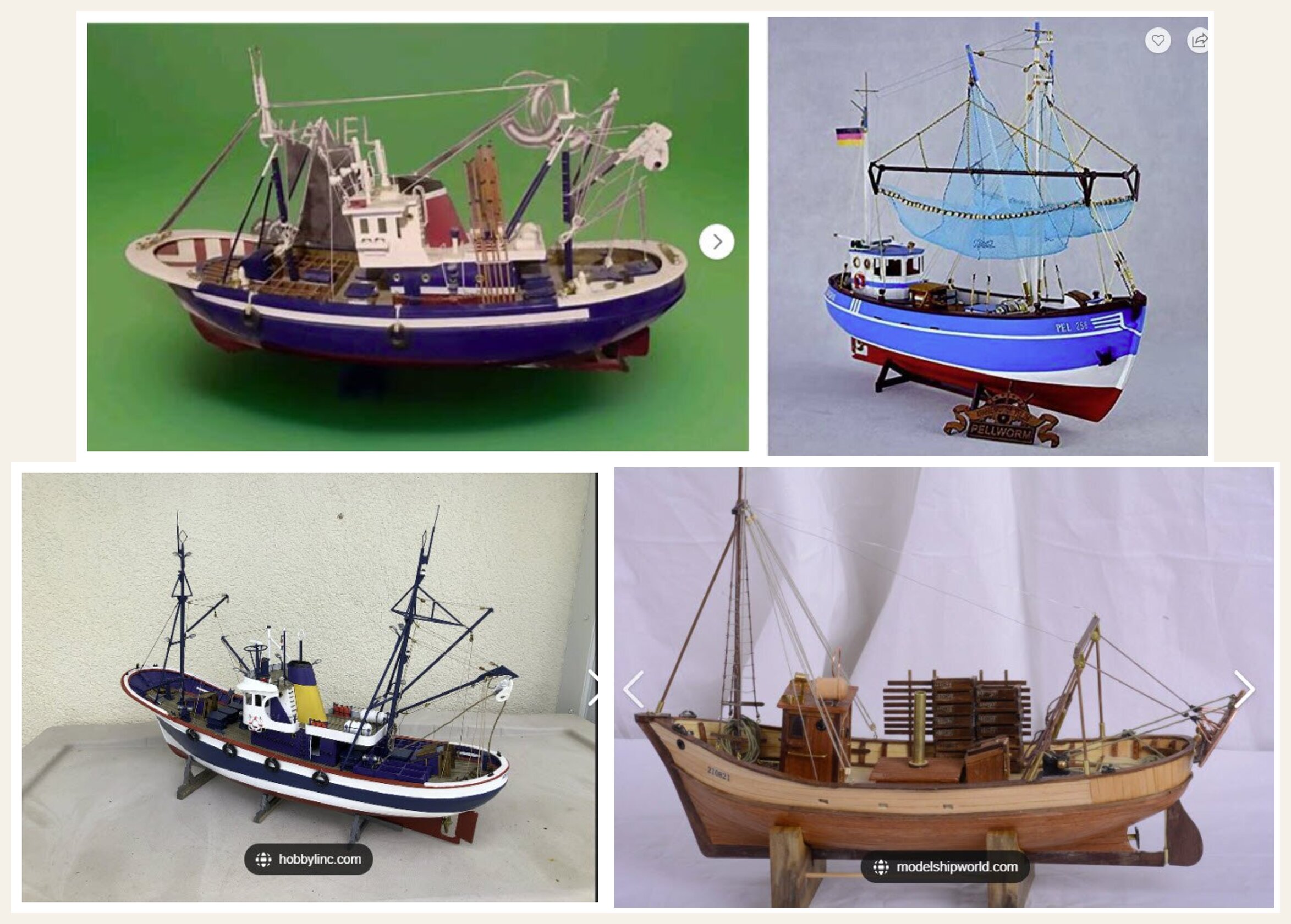 Smaller fishing boats - compact coastal vessels suitable for inshore fishing operations
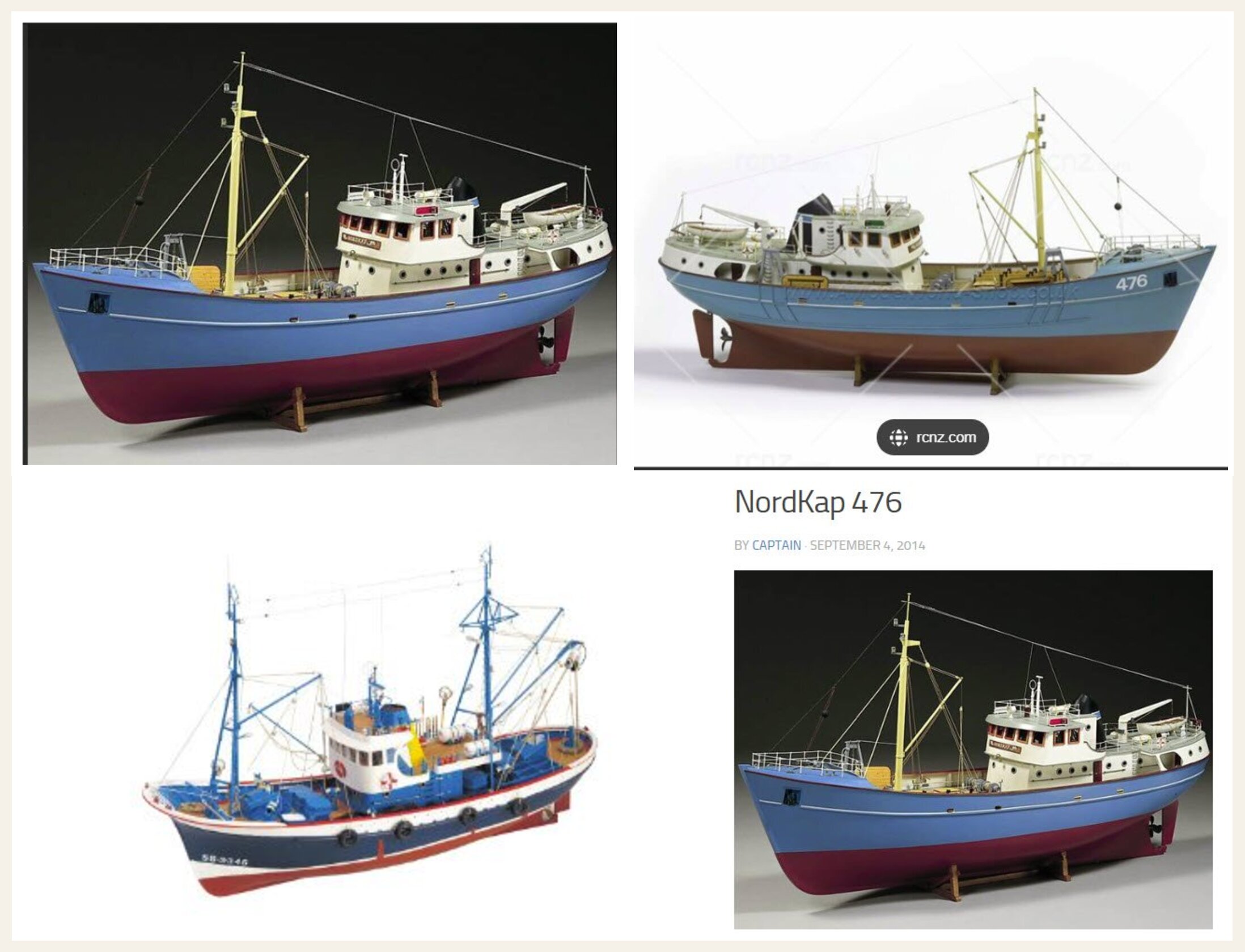 Coastal trawlers - medium-sized vessels for near-shore fishing with more substantial construction
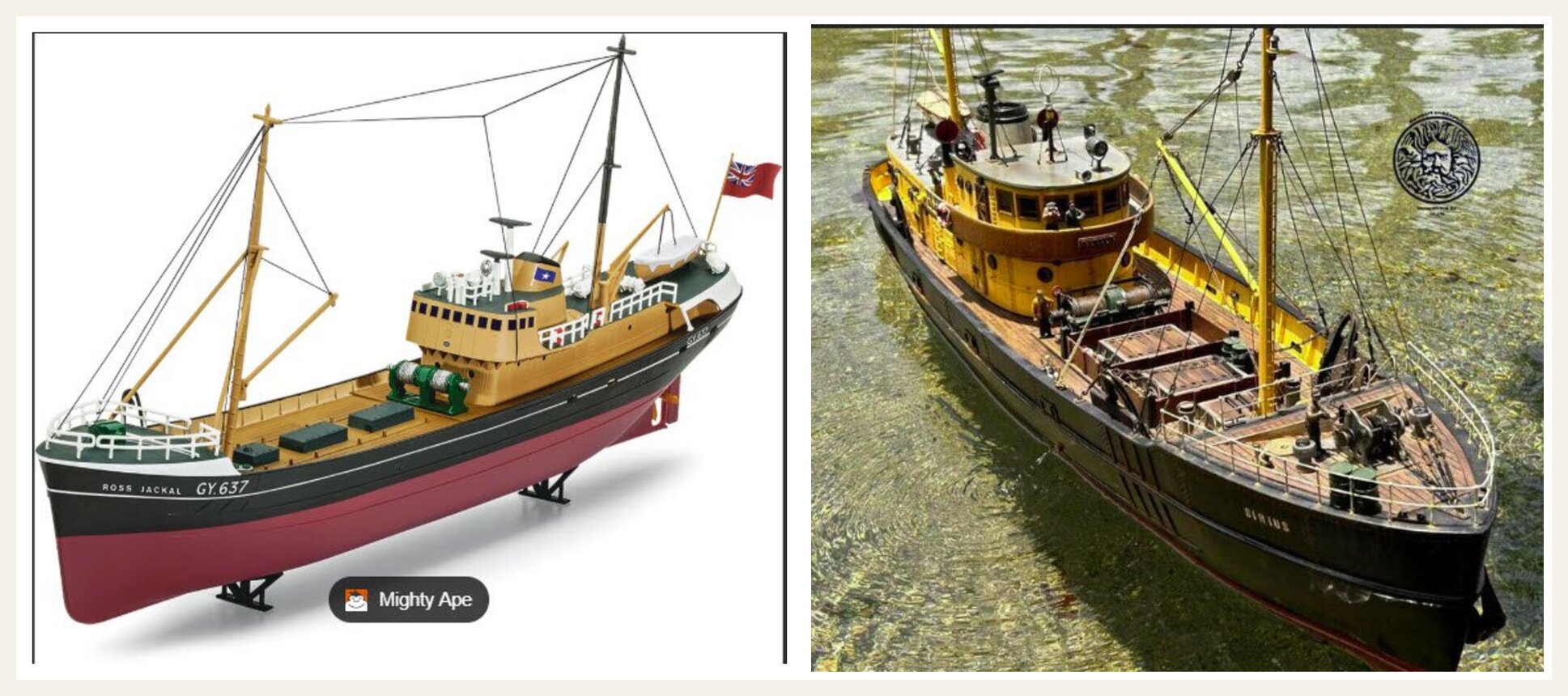 Deep sea trawlers - larger vessels designed for extended offshore fishing operations
Fishing boat plans
The search discovered several plans and sources of plans, of which Fishing Vessel Design Database (FVDD) provided the most useful plans. These are plans for actual vessels, not modelling plans but the MLM-4 images of a 11.4 m trawler designed in Rome in 1970 caught my eye and provide reasonably readable plans that can be adapted to design the fishing trawler from it.
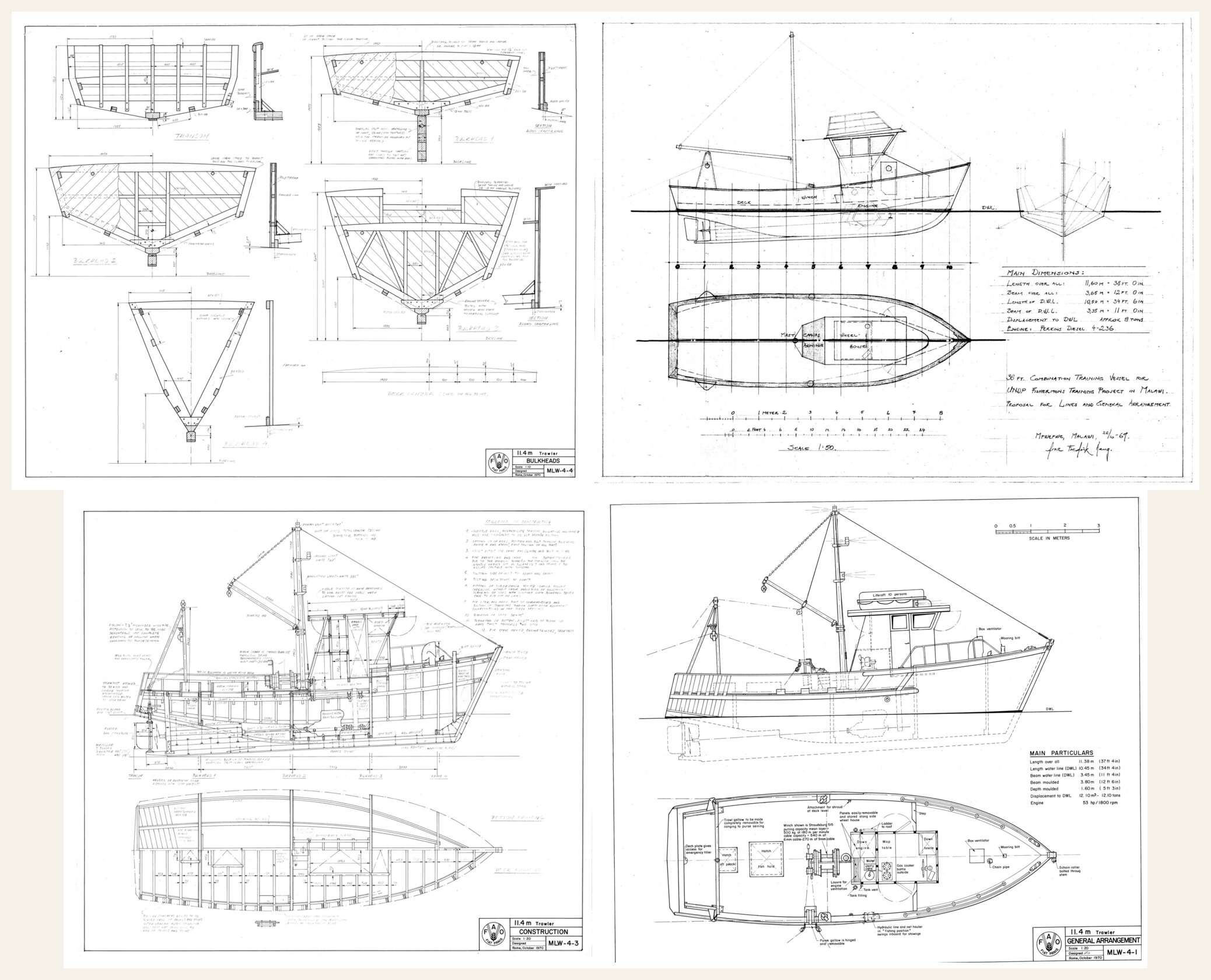 MLM-4 11.4m trawler plans (1970) - hull lines, deck layout and side elevations
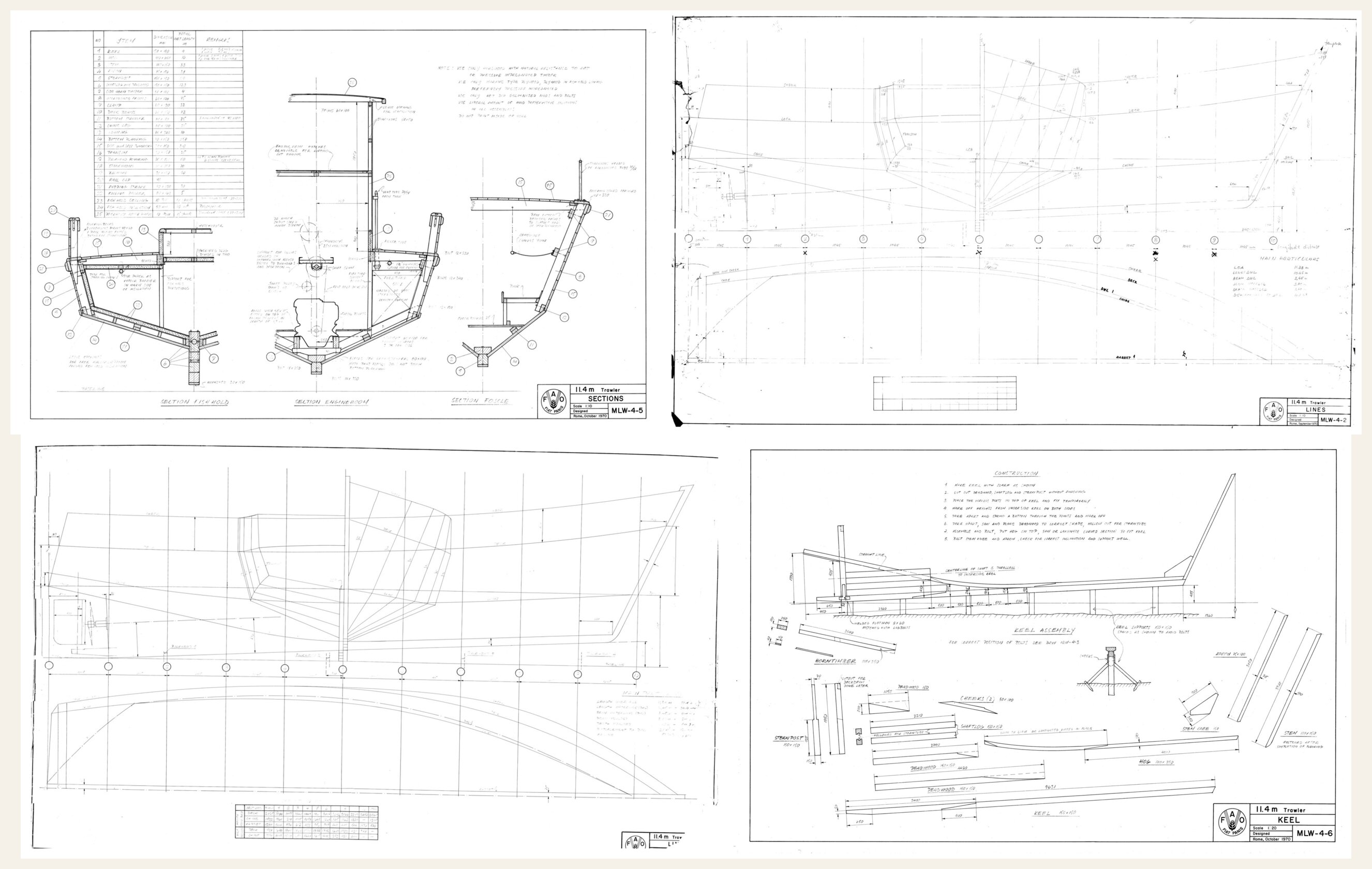 MLM-4 trawler plans continued - construction details, cross-sections and specifications
Vessel selection
There are several options to select the approach to follow for constructing the vessels, taking into account that one of my main deficiencies to overcome is the ability to make engineering drawings:
- buy and build a kit, then use this build to scale down the trawler to the diorama scale and rebuild it from scratch
- get balsawood building plans or other suitable plans for a trawler, scale the drawings and build from the plan
- design and build the trawler using images and youtube videos, prototyping as I go.
The deciding factor would be the availability of suitable plans or the cost of a suitable kit against this weird inner voice calling for constructing from pictures.
Following the research finding, the RNLI Atlantic B Class Lifeboat will be purchased from RNLI, partly to contribute to the good work they are all doing, and this model fit the scale for the model. The MLM-4 trawler plans will be used the scale down and hand draft plans for building this 11.4 meter trawler to scale.
Technical Challenges to Solve
- Realistic water movement: Capturing wave dynamics at small scale
- Weathering effects: Salt spray, rust, worn paint authentically
- Fine details: Railings, equipment, rigging at 1:50
- Action pose: Vessel attitude in rough sea - angle and position
- Structural integrity: Ensuring durability despite dynamic pose
- Converting the plans: The 1970 hand drawn plans are quite unreadable, and need to be converted to modelling plans at the right scale.
Material Requirements - Preliminary List
Vessel Construction
- Basswood or balsa sheet (various thicknesses)
- Styrene sheet and rod
- Brass rod and wire (railings, equipment)
- Dowel for masts/supports
Seascape
- Clear casting resin or acrylic gel medium
- Foam board or MDF base
- Acrylic paints (blues, greens, whites)
- Modeling paste for texture
Details & Finishing
- Miniature figures (crew, 1:50 scale)
- Thread or fine wire (rigging)
- Weathering pigments
- Clear gloss and matte varnish
Next Steps
- Finalize vessel choice - Research and decide on specific rescue vessel type
- Gather references - Collect photos, plans, specifications
- Create detailed plan - Scale drawings and construction sequence
- Source materials - Acquire specific materials based on chosen approach
- Test techniques - Small-scale tests of water effects and weathering
- Begin construction - Start with hull and base structure
Timeline Considerations
This project runs alongside completing documentation for finished projects on the site. Build progress will be steady but measured, allowing time for:
- Thorough research and planning
- Technique experimentation and testing
- Quality construction without rushing
- Comprehensive photography and documentation
Current Status: Planning and research phase
Next Build Log: Document vessel selection and initial construction approach
This project is at the beginning of its journey. Follow along as planning develops into construction and the rescue scene comes to life.
Have questions or feedback about this project? I'd love to hear from you.