 Modelling4Comfort
Final Touches and Scene Assembly

Session Overview
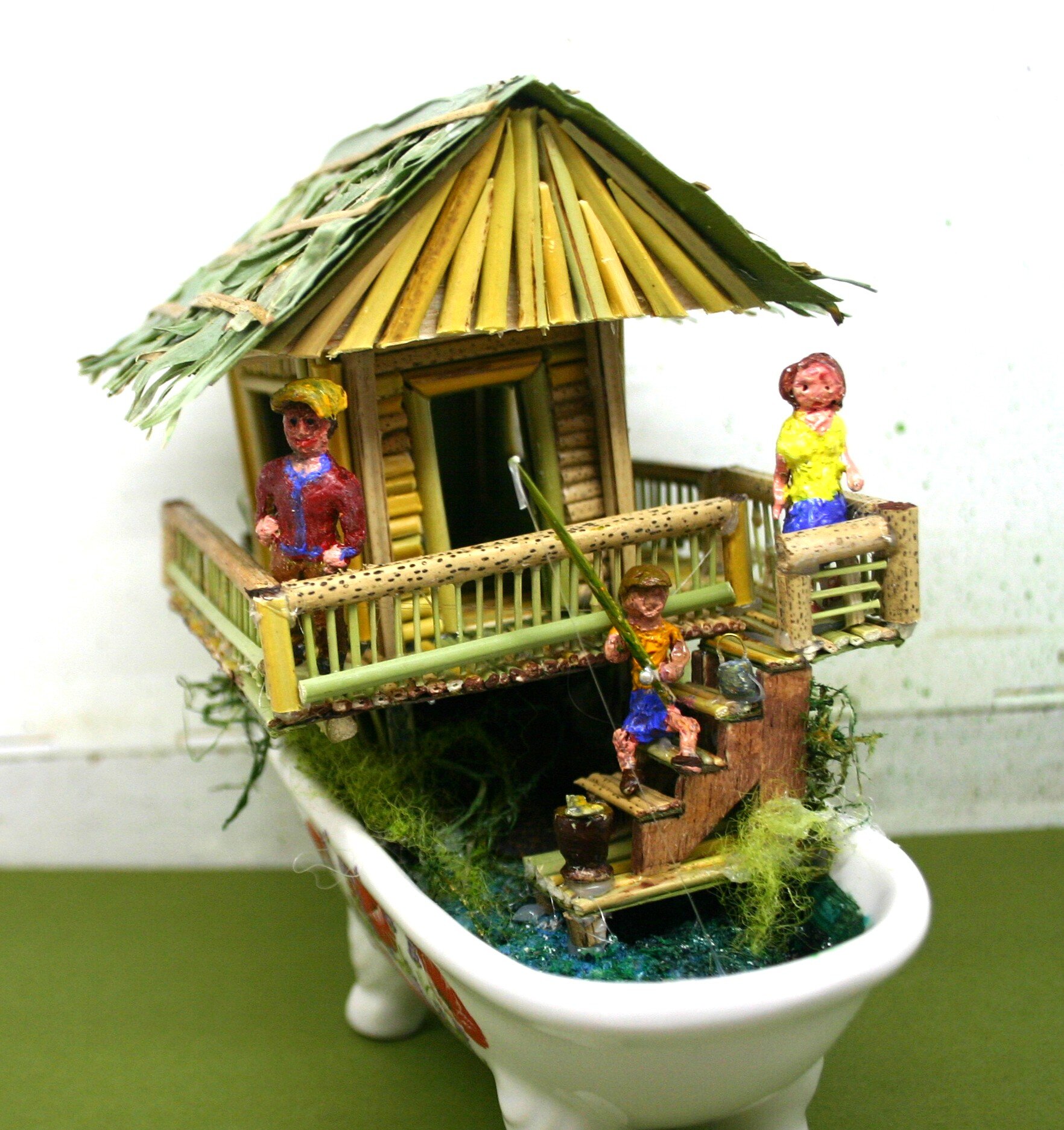
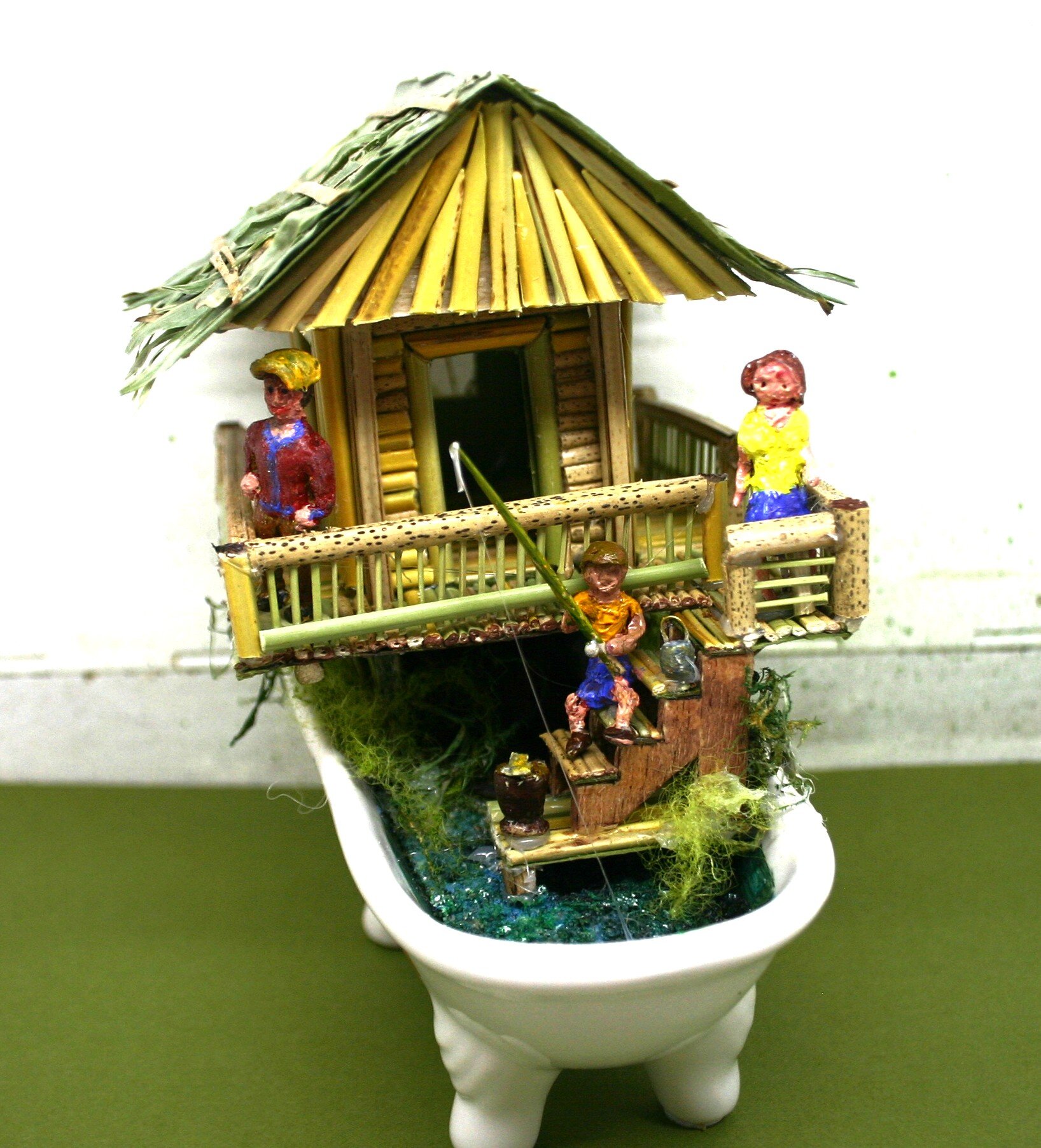
With the lookout structure complete and figures finished, this final session brought all the elements together into a cohesive scene. The goal was to transform separate components—building, figures, base—into a diorama that tells a story: a peaceful moment fishing by the river below a bamboo lookout.
This session focused on the details that bring a scene to life: water effects, landscaping, and the tiny accessories that add believability and narrative.
The Soap Container Base
The foundation of this entire project was a small soap container that had been “staring me in the face and begging to be used.” Its dimensions were perfect for creating a compact river scene, and its depth allowed for creating the illusion of water with painted effects.
This unconventional base choice demonstrates an important principle: potential project materials are everywhere if you look with a modeler’s eye. Household items, packaging, found objects—all can become the foundation for creative builds.
Stairs to the River
The first finishing element was adding stairs from the lookout down to the river level. This seemingly small detail serves multiple purposes:
- Functional narrative: Shows how someone would access the fishing spot
- Visual connection: Links the elevated lookout to the river scene below
- Scale reference: Helps viewers understand the relative heights in the scene
- Compositional element: Draws the eye through the diorama vertically
The stairs were constructed to match the bamboo aesthetic of the lookout, maintaining visual consistency across the scene.
Painting the Water Effect
Creating convincing water at miniature scale is always challenging. Water is transparent, reflective, and in motion—all difficult properties to simulate with paint and static materials.
For this river scene, I filled the soap container base and painted it to resemble water. The technique involved:
- Base color: Blues and greens suggesting river water
- Depth variation: Darker tones in deeper areas, lighter where shallow
- Surface effects: Subtle variations suggesting gentle current
- Integration with shores: Blending water color with the riverbank
The key to effective miniature water is suggestion rather than literal representation. At this scale, simple color variations can effectively convey the character of water without complex techniques.
Vegetation and Landscaping
Plants and vegetation transform a bare scene into a living environment. For this river setting, I added plants around the water’s edge and near the lookout, creating the sense of a natural, overgrown fishing spot.
The vegetation choices were guided by:
- Scale appropriateness: Plants that look convincing at 1:56 scale
- Natural placement: Random, organic positioning rather than rigid patterns
- Color and texture variation: Different types of plants for visual interest
- Story support: Plants that suggest a peaceful, slightly wild riverside location
These small touches of greenery made an enormous difference in the scene’s overall feel, transforming it from a constructed model into a believable miniature environment.
The Fishing Rod and Line
One of the most delightful details was creating the fishing rod with its line. The rod itself was straightforward, but the fishing line presented an interesting challenge.
The solution was ingenious: a bead of hot glue served as the fishing line. When drawn out thin, hot glue creates a fine, translucent strand that looks remarkably like fishing line at this scale. It has natural transparency, appropriate thickness, and enough stiffness to hold position without sagging unrealistically.
This represents creative problem-solving at its best—using readily available materials in unexpected ways to achieve specific effects.
A Bucket and a Fish
The final storytelling details were a bucket (presumably for holding the day’s catch) and even a small fish. These tiny accessories might seem insignificant, but they transform the scene from generic to specific:
- The bucket suggests preparation and expectation
- The fish shows success and provides a narrative moment
- Together they complete the story of a fishing expedition
At miniature scale, these small accessories are what separate a collection of elements from a scene that tells a story. They answer the viewer’s implicit questions: “What’s happening here? What’s the story?”
Scene Composition
With all elements complete, the final task was composition—positioning everything to create a cohesive, visually appealing diorama:
- The lookout dominates as the focal point, elevated and prominent
- The stairs provide visual flow from high to low
- The figures are positioned to show the fishing activity
- The river surrounds and grounds the scene
- Vegetation frames and softens the edges
- Accessories (rod, bucket, fish) tell the story
The composition guides the viewer’s eye through the scene, creating a narrative flow that makes sense spatially and temporally.
Bringing It All Together
This final session demonstrated how important finishing touches are to a successful diorama. The individual elements—lookout, figures, base—were well-executed, but it was these final details that transformed them into a complete, story-telling scene.
Key successes in this session:
- Water effects created with simple paint techniques
- Stairs provided functional and visual connection
- Vegetation brought natural life to the scene
- Hot glue fishing line solved a tricky detail challenge
- Small accessories completed the narrative
- Overall composition created a cohesive, believable miniature moment
The Completed Scene
The finished Bamboo River Lookout diorama captures a peaceful moment: a figure fishing by the river, beneath a rustic bamboo lookout, surrounded by natural vegetation. It’s a small scene—compact enough to fit on a granddaughter’s dollhouse table—but complete in its storytelling.
The project achieved its goals:
- ✅ Experimented with bamboo construction
- ✅ Practiced figure-making techniques
- ✅ Tried a different base approach (soap container)
- ✅ Created something special for my granddaughter’s miniature world
Reflections on the Complete Build
Looking at the finished project, several insights stand out:
What worked really well:
- Natural materials (bamboo, dried leaves) gave good texture and appearance
- Paper-backing technique solved bamboo construction challenges
- Wire armature approach showed promise for future figures
- Custom tools (figure holder) solved specific challenges
- Improvisation and creative problem-solving throughout
- Small details (fishing line, bucket, fish) elevated the final result
What needs continued improvement:
- Figure sculpting, particularly facial features
- Paint application techniques
- Patience and not giving up too early on refinement
- Tool selection and material knowledge
The bigger picture: This project proved that miniature modelling isn’t just about getting everything perfect—it’s about:
- Creative problem-solving
- Working with materials at hand
- Telling a story through small details
- Continuous learning and experimentation
- Creating something meaningful (a gift for family)
The Bamboo River Lookout found its home in my granddaughter’s miniature world, where it continues to spark imaginative play and storytelling—perhaps the best measure of a successful miniature project.
| *Time: 6-8 hours | Materials: Stairs construction materials, acrylic paints, vegetation materials, hot glue, miniature accessories | Completion: December 5, 2024 | Destination: Granddaughter’s dollhouse collection* |
Have questions or feedback about this project? I'd love to hear from you.