 Modelling4Comfort
Constructing the Bamboo Lookout
Session Overview
This build session focused on constructing the bamboo lookout cabin from scratch using natural materials. The challenge was working with bamboo—a beautiful but unpredictable material that required careful selection, preparation, and a construction technique that could accommodate its organic nature.
The session took me from initial material preparation through to a completed structure with authentic details like dried bamboo leaf roofing and delicate railings.
Finding Inspiration
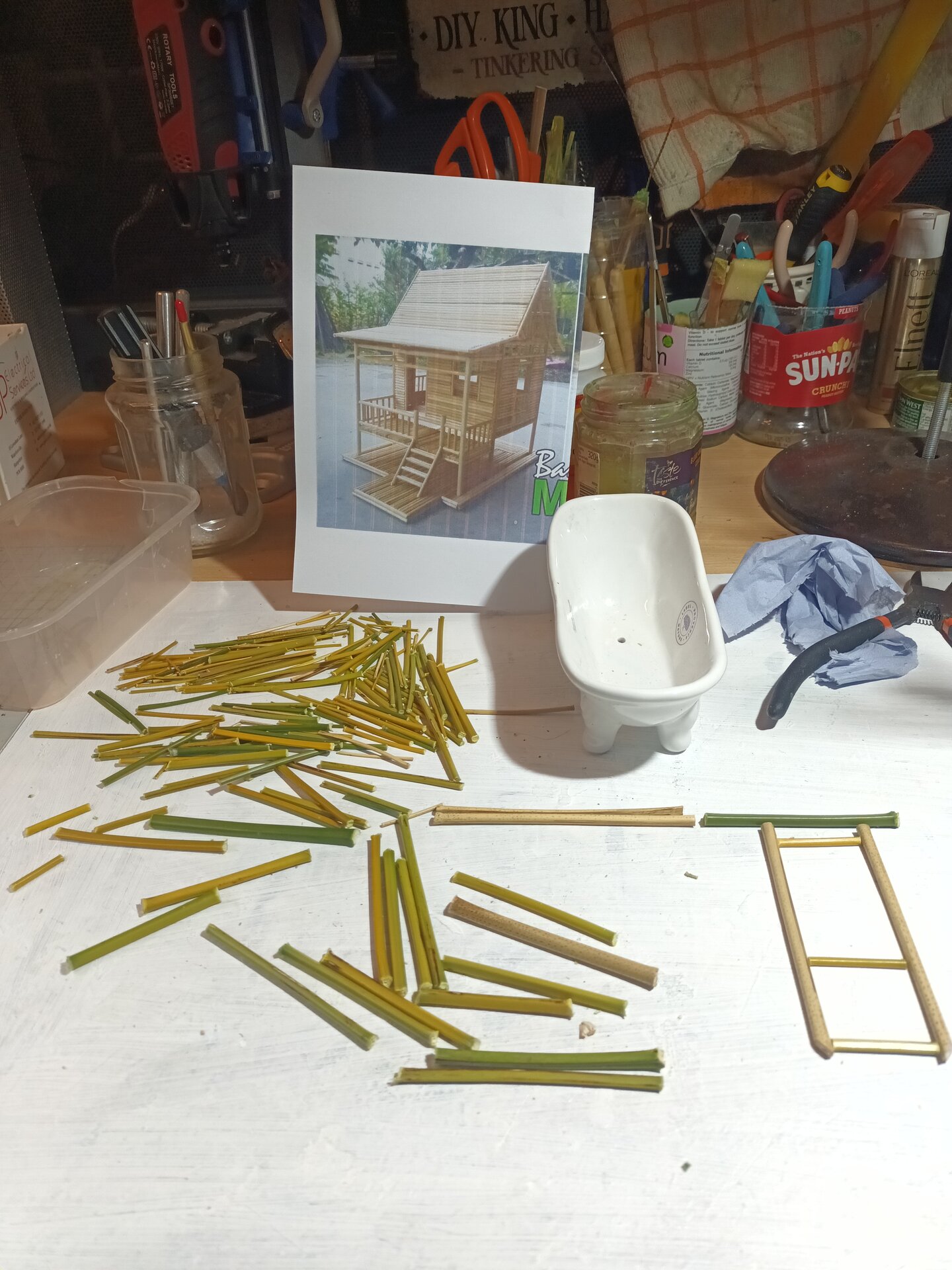
After searching for reference photos of lookout cabins, I found the perfect inspiration image that captured the rustic, natural aesthetic I was aiming for. The photo showed a simple bamboo structure elevated slightly, with an open design that would work perfectly at 1:56 scale.
With the reference established, I could begin planning the construction approach.
Material Preparation: Sorting the Bamboo
The first critical step was sorting bamboo sections by diameter. This might seem like a minor detail, but it’s essential for maintaining consistent proportions throughout a small-scale build. Bamboo varies naturally in thickness, and using mixed diameters randomly would create visual chaos at this scale.
I separated the bamboo into groups:
- Thick pieces (for structural uprights and framing)
- Medium pieces (for walls and floor)
- Thin pieces (for railings and fine details)
This organization made the construction process much smoother and helped maintain visual harmony in the finished structure.
The Paper-Backing Technique
Working with bamboo presents unique challenges—it’s round, naturally varied, and difficult to join in precise configurations. The solution was a paper-backing technique that I’d been wanting to try.
I cut sheets of heavy paper to serve as the structural basis for:
- Floor panel
- Four wall panels
- Roof panels
- Patio surround
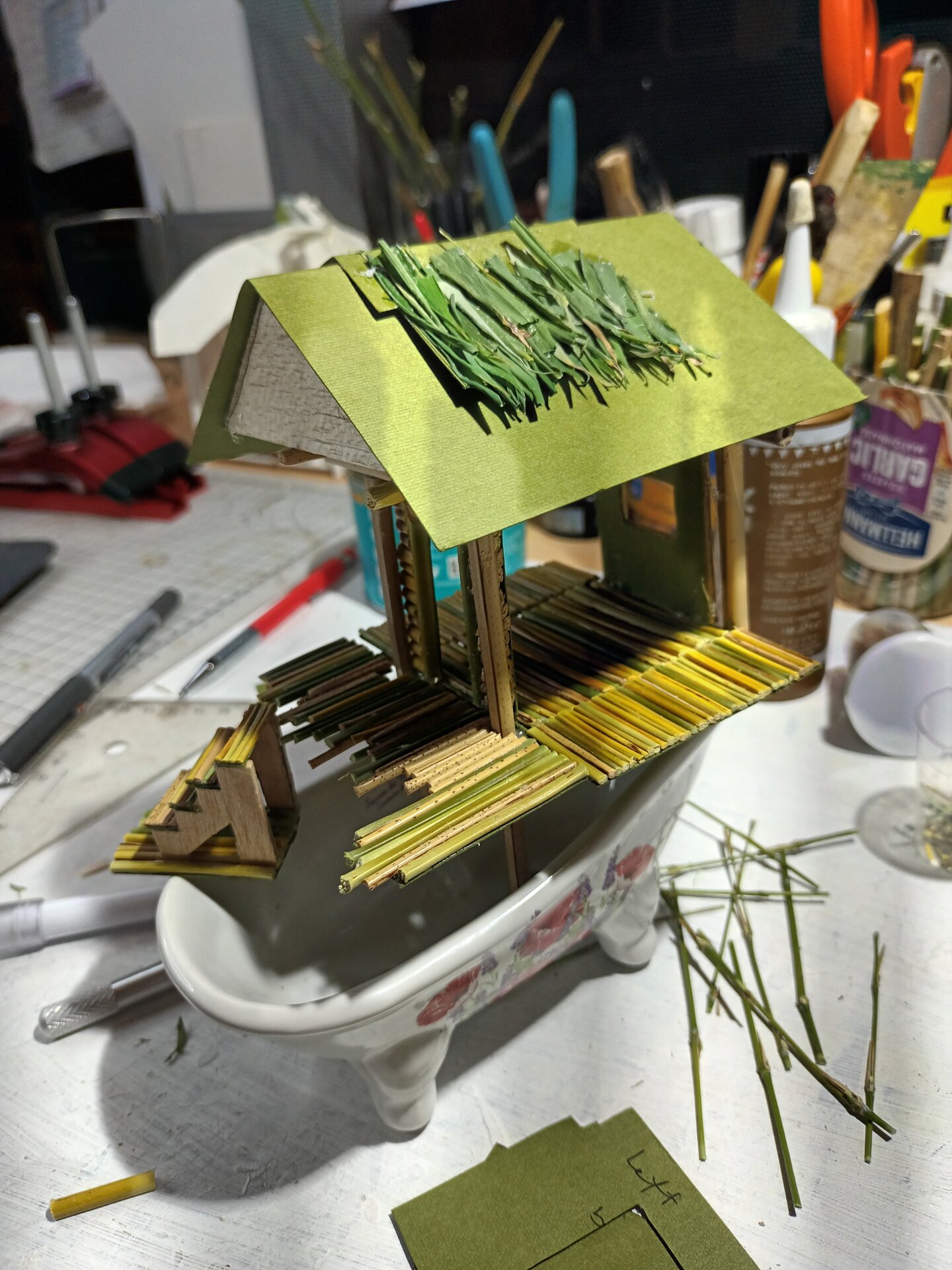
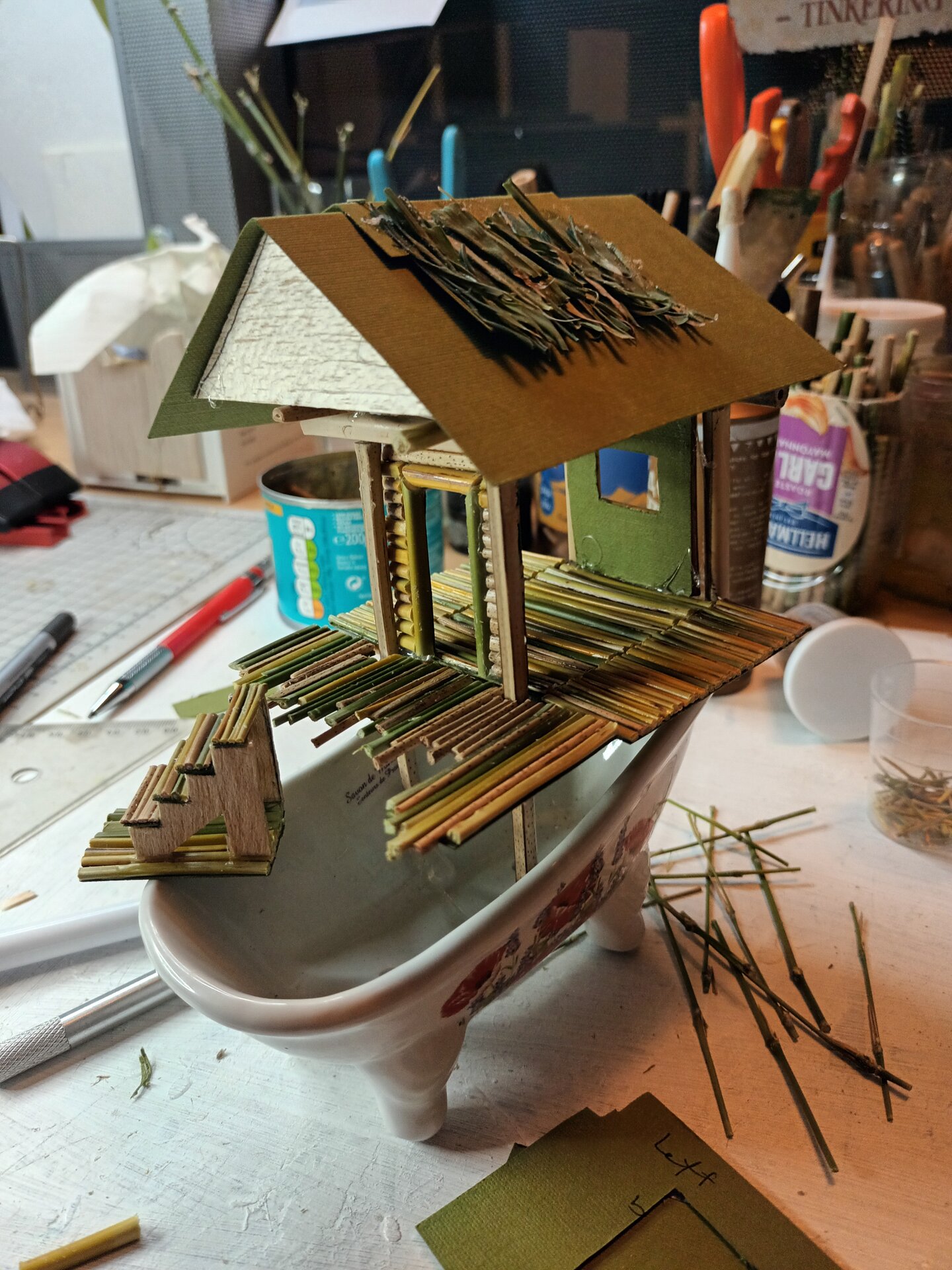
The bamboo sticks were then glued to these paper bases, creating flat, stable panels that could be assembled into a structure. This approach provided several advantages:
- Dimensional stability despite bamboo’s natural variations
- Easier assembly of wall sections
- Hidden structural support that disappears in the finished model
- Flexibility to create doors and windows by cutting the paper
The technique worked beautifully, allowing me to shape the floor, walls, door, window, and patio surround while maintaining structural integrity.
Structural Assembly: Framing the Walls
With the bamboo-covered panels complete, the next challenge was assembling them into a three-dimensional structure. Simply gluing thin bamboo panels together wouldn’t provide adequate strength or realistic appearance.
The solution was internal framing using thicker bamboo pieces as uprights. These served dual purposes:
- Structural support, holding the walls together at corners
- Authentic appearance, as real bamboo structures use corner posts
The framing pieces were carefully sized and positioned, then glued to create a rigid frame that held the wall panels securely. This internal skeleton gave the lookout the strength it needed while maintaining the delicate appearance of bamboo construction.
Roofing with Natural Materials
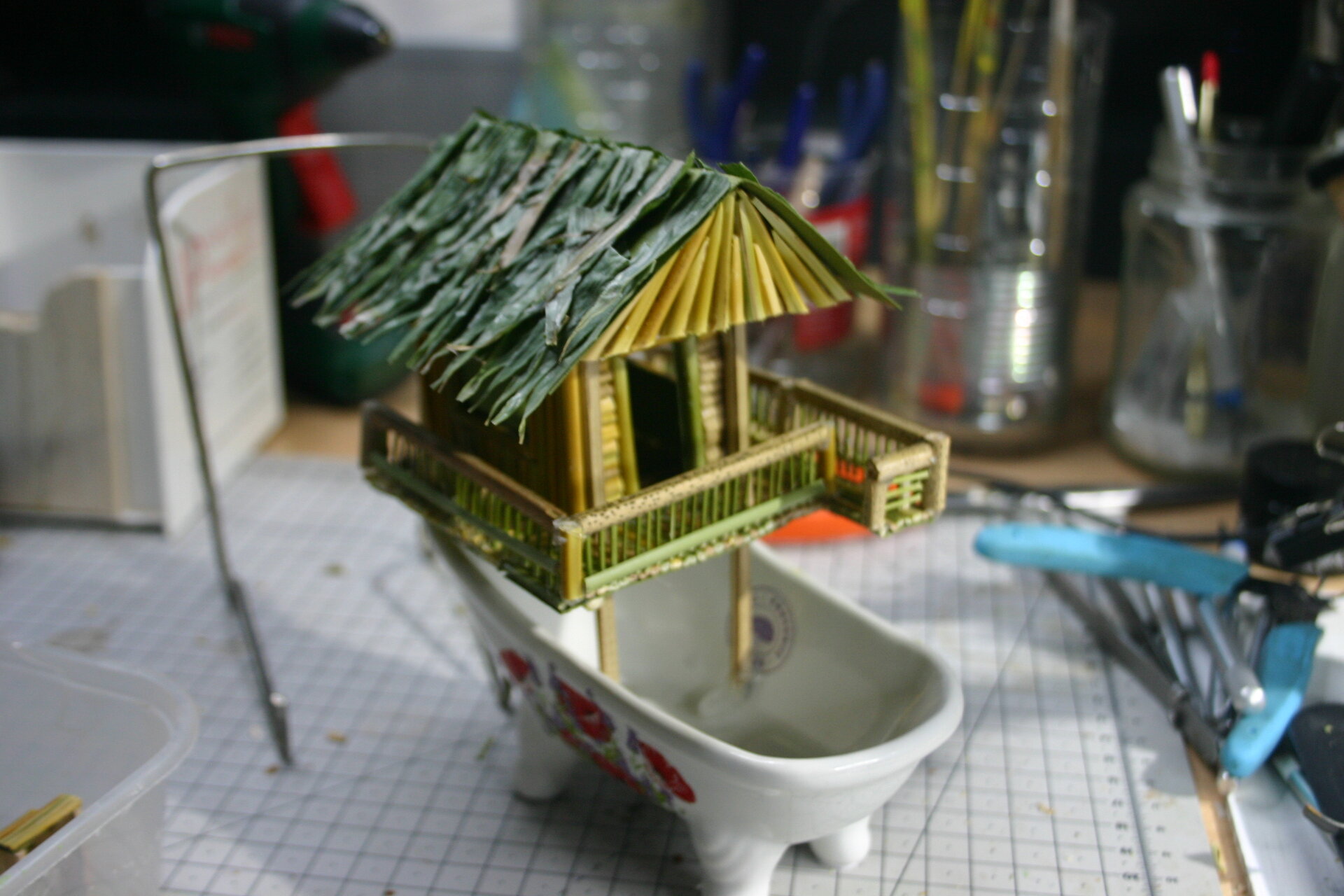
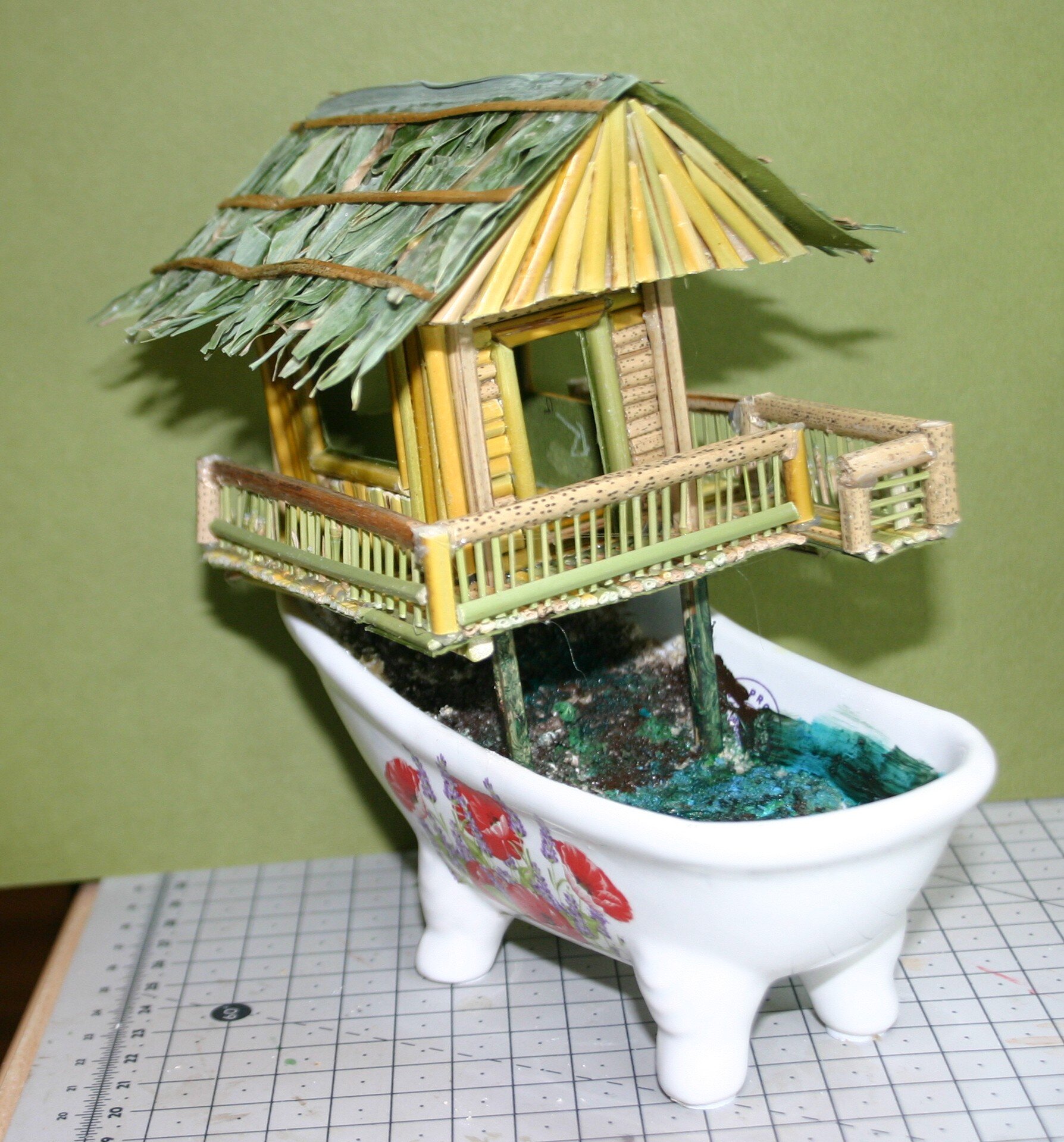
The roof was where natural materials really came into their own. Instead of simulating thatch or tiles, I used actual dried bamboo leaves—the perfect scale and texture for this 1:56 model.
The process was straightforward but required care:
- Applied glue to the paper roof base
- Positioned dried bamboo leaves, overlapping them naturally
- Sealed everything with clear matt varnish
The varnish served multiple purposes:
- Preserved the dried leaves
- Kept them securely in place
- Added a subtle sheen that suggested weather resistance
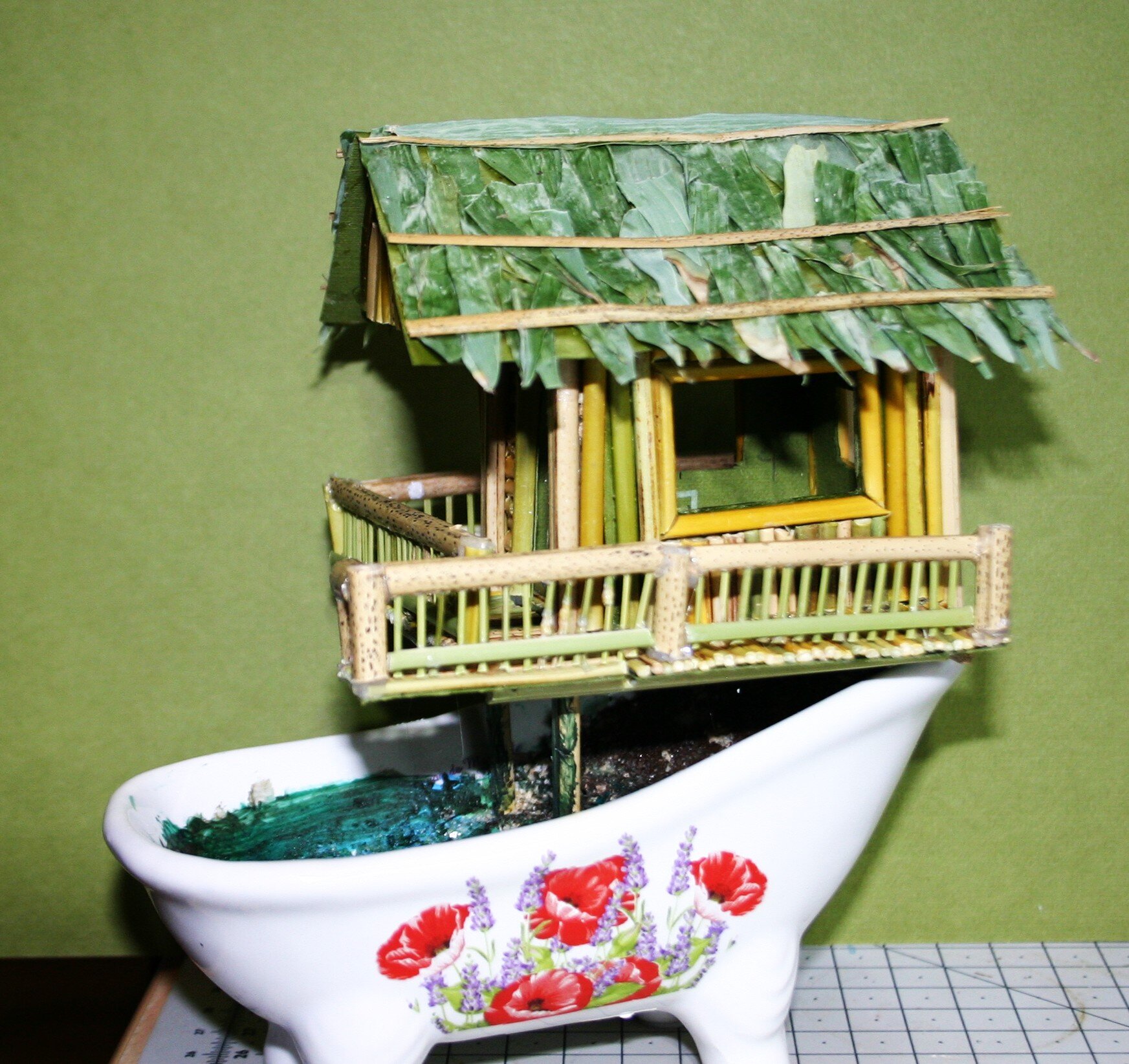
For the final authentic touch, I added small pieces of hessian rope glued on top, representing the tie-downs that would secure a bamboo leaf roof in reality. These tiny details make a significant difference in the model’s believability.
The Railing Challenge
The railings presented one of the most delicate challenges of the build. At 1:56 scale, railing posts need to be thin, evenly spaced, and perfectly vertical—a difficult combination to achieve.
My approach was methodical:
- Created top and bottom railing pieces from medium bamboo
- Carefully drilled holes at exact intervals in both pieces
- Cut thin bamboo pieces to serve as vertical posts
- Glued the posts into the bottom railing first
- Carefully positioned and glued the top railing onto the post tops
- Allowed everything to cure before handling
This drill-and-insert technique created precise, evenly-spaced railings that looked delicate but were actually quite strong. Once cured, the completed railing sections were fixed to the patio.
Reflections on the Lookout Build
The completed lookout exceeded my expectations. The paper-backing technique proved highly effective for working with bamboo, and the natural materials gave the structure an authenticity that would be difficult to achieve with synthetic materials.
Key successes:
- Material preparation paid off—sorted bamboo made construction more consistent
- Paper backing solved the challenge of working with round, varied bamboo
- Internal framing provided necessary strength without sacrificing appearance
- Natural roofing with dried leaves created perfect scale texture
- Drilled railings achieved the delicate appearance this scale demands
With the lookout structure complete, I could turn attention to the river setting and the figures that would bring the scene to life.
| *Time: 8-10 hours | Materials: Bamboo (various diameters), heavy paper, dried bamboo leaves, hessian rope, clear matt varnish* |
Have questions or feedback about this project? I'd love to hear from you.