 Modelling4Comfort
Ss Great Britain - Build Log: Sails And Rigging
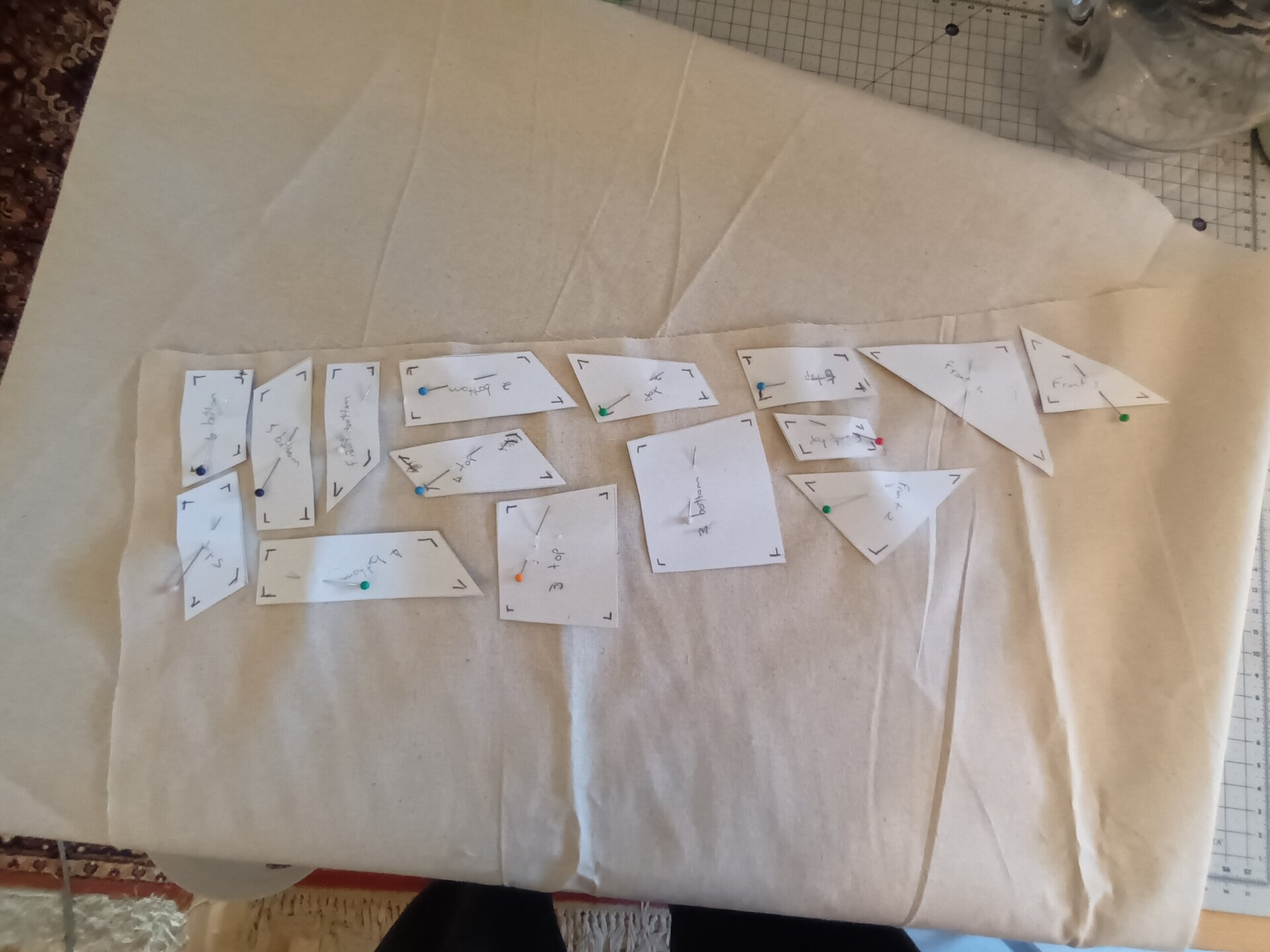
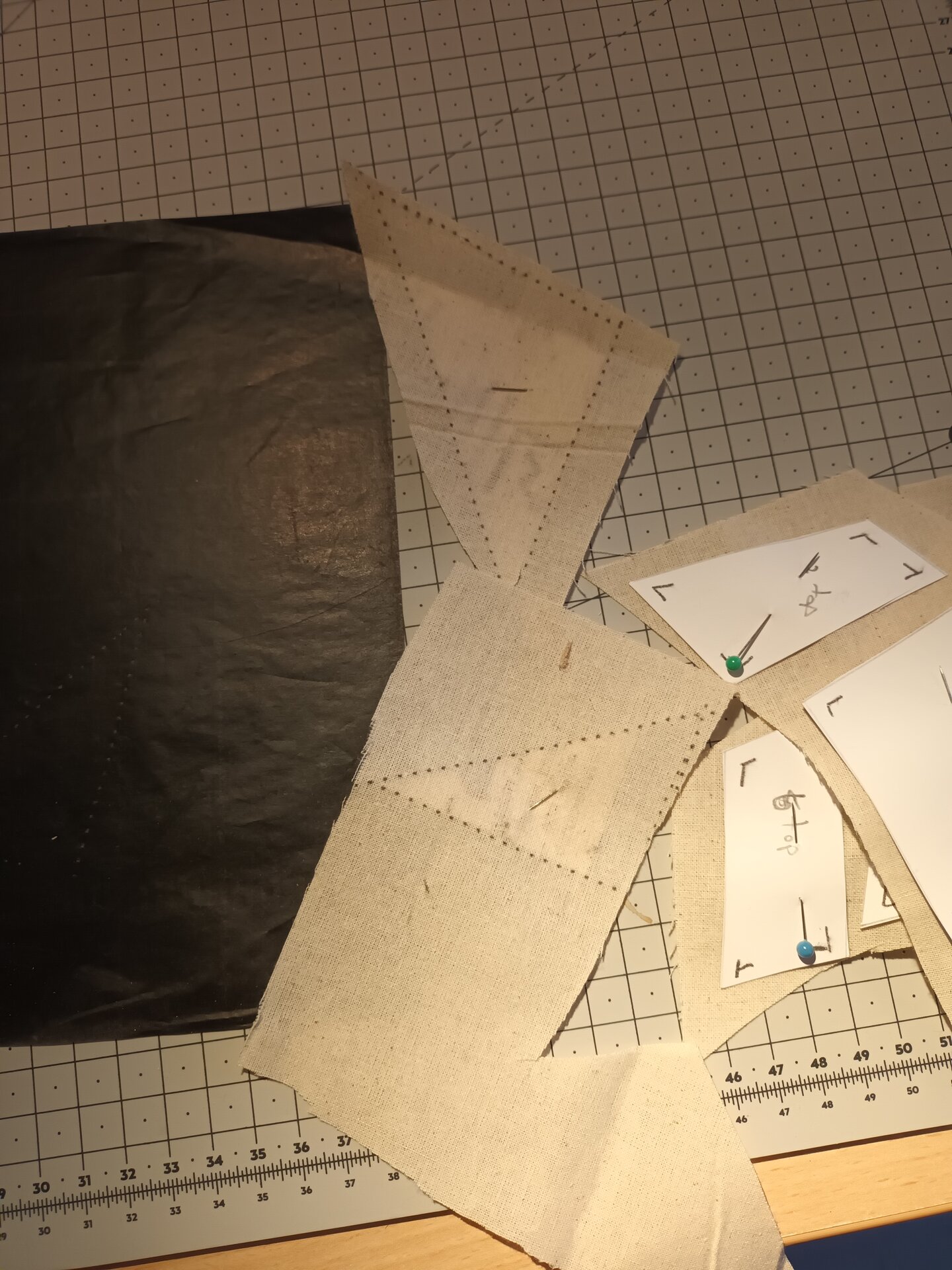
With the masts up, and the and all the rope eyelits on the deck and the masts, the sails and rigging had to be figured out. Without the example of the Gorch Fock around I would have not figured it out. Sail cloth is sourced and the layout and measurements of all the sails cut out of paper, 15 in total. Without a sowing machine, the seams of the sails were all glued in with cloth material glue.
Sails and rigging
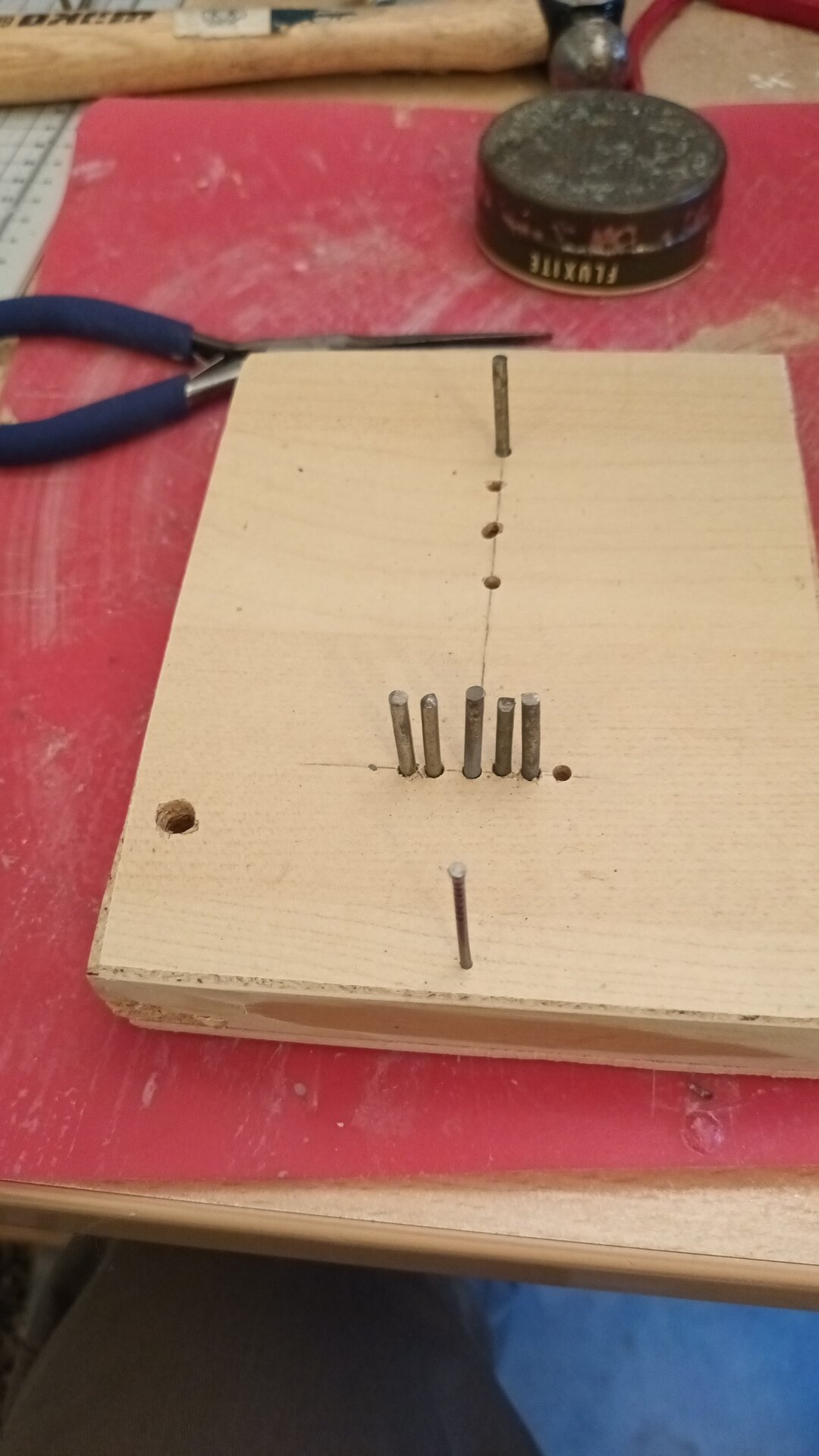
The rope ladders were knotted individually. Research helped to uncover the design of a handy tool to keep the rope tight and allow for tying all the knots.
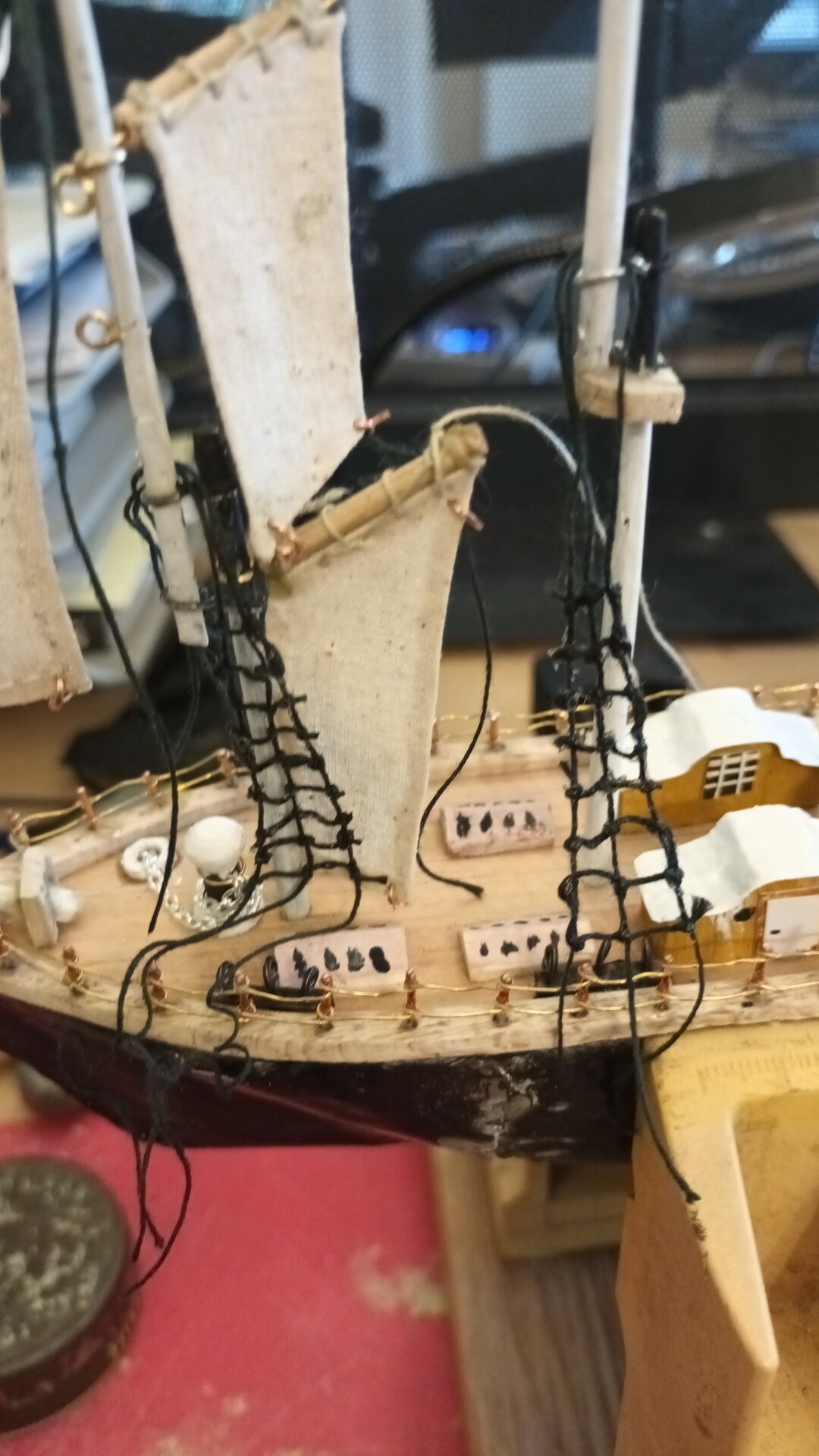
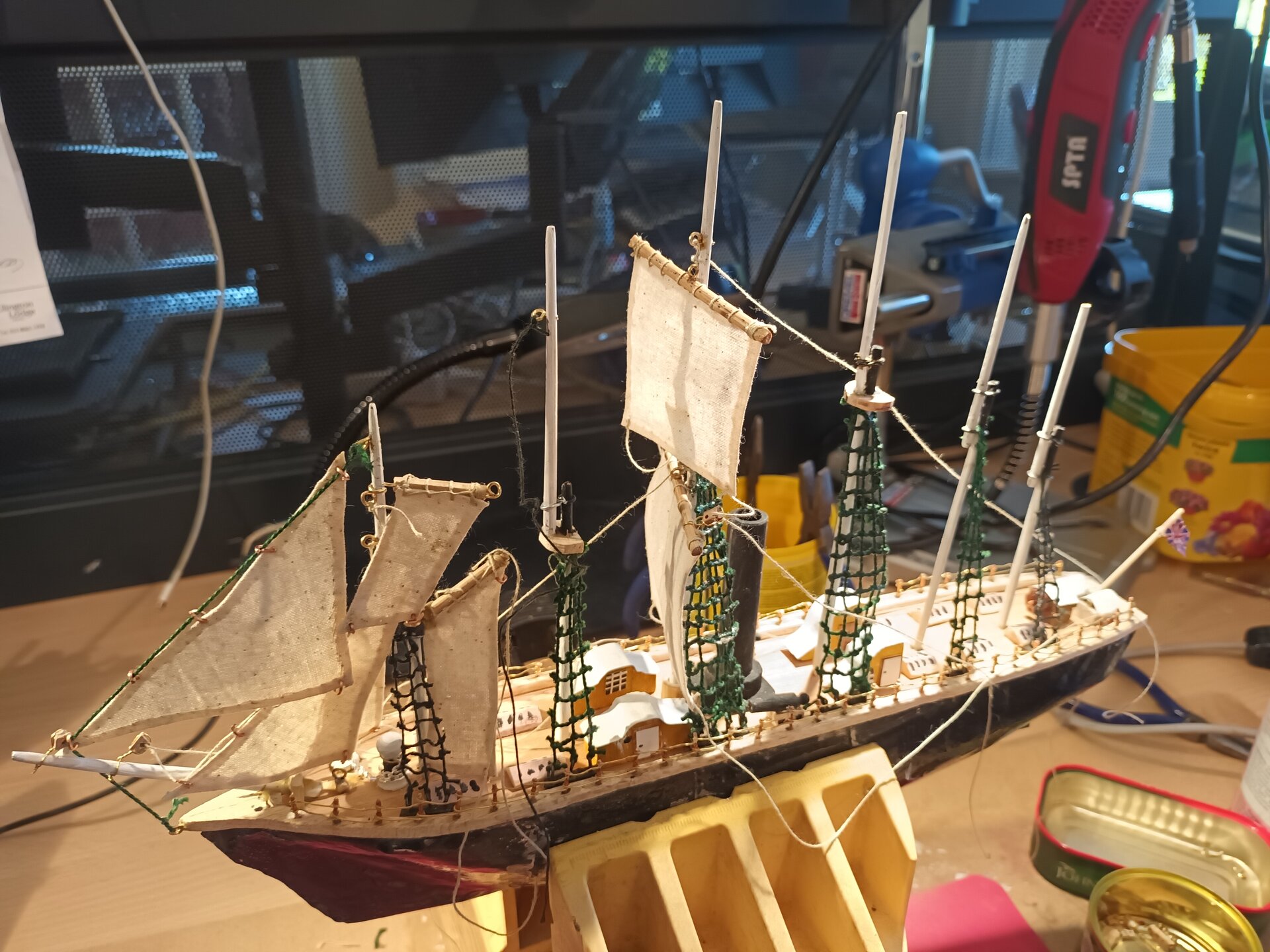
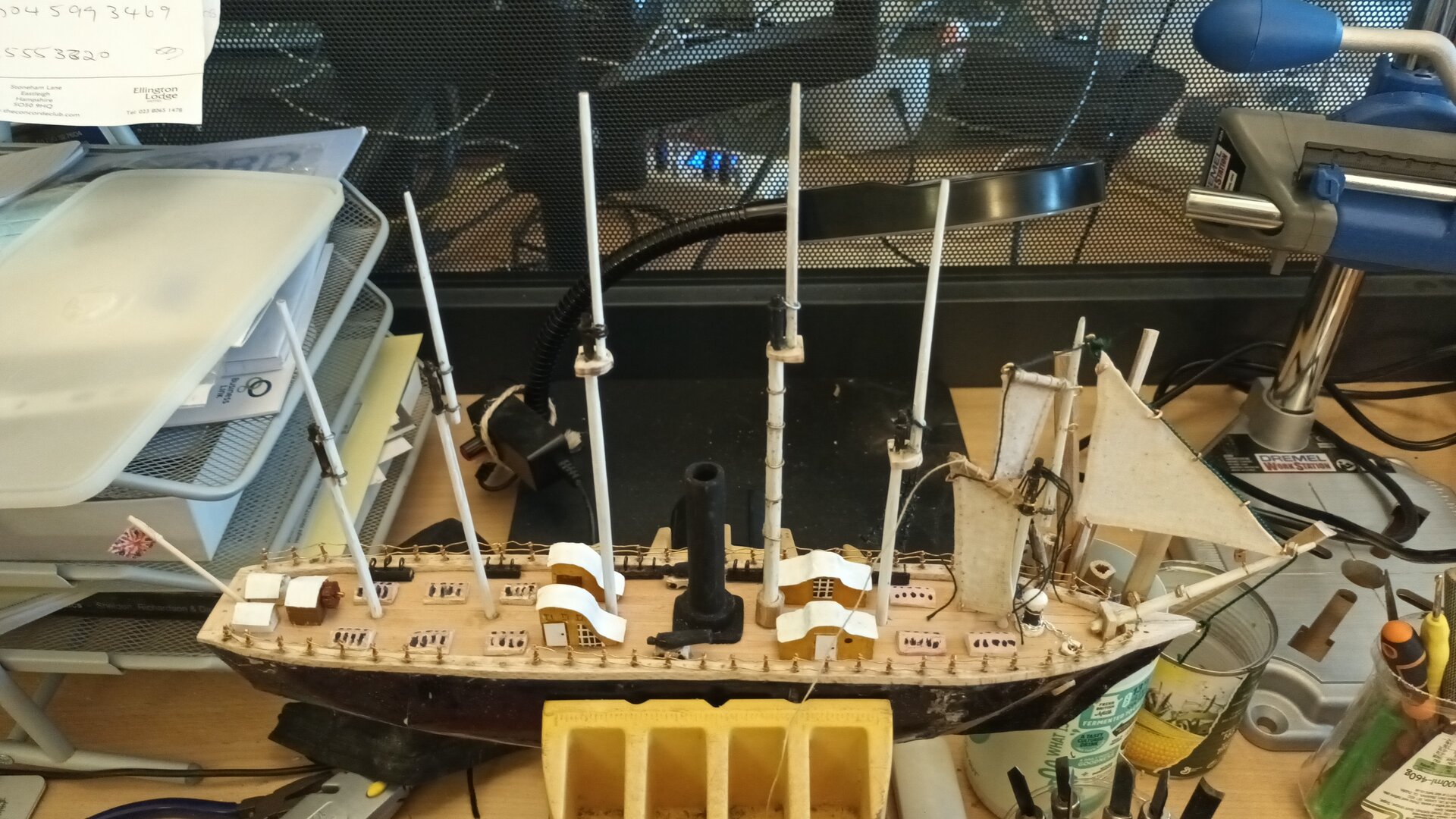
Installing the sails, rigging and tackle were a sigificant challenge. I bought and made several tools to help, including dressmaking scissors, crochet needles, sail cloth, green cotton string for the tackle and white cotton string for the ropes. The pullies was particularly difficult to manufacture due to its small size and drilling the 1 mm holes, get the rope trough it and tying to pullies to the masts presented much practice in miniature work under magnifiers. Patience and endurance were discovered in places where I did not think it existed.
Finalinally the completed ship was ready for final decoration and completion.
SS Great Britain Build Logs
-
SS Great Britain - Planning & Research
December 25, 2021 - Starting the ambitious SS Great Britain project with extensive research, reference gathering, and planning the build approach. -
SS Great Britain - Build Log: Hull Construction
February 10, 2022 - Hull construction phase - assembling the iron hull and adding structural details. -
Ss Great Britain - Build Log : Decking
March 13, 2022 - Deck construction and detailing work including planking, hatches, structural details and masts. -
Ss Great Britain - Build Log: Sails And Rigging
April 15, 2022 - Complex rigging work including six masts, sails, and associated lines and details. -
Ss Great Britain - Build Log: Decoration
May 15, 2022 - Decorative details, painting, and final detailing work before completion.
Have questions or feedback about this project? I'd love to hear from you.